
An island off an island, Tasmania is accustomed to weathering volatile economic conditions.
It comes with the added cost of shipping goods worth more than $6 billion out of the state.
And like other food bowls across the country, there is only so much its producers can carry in this fuel crisis.
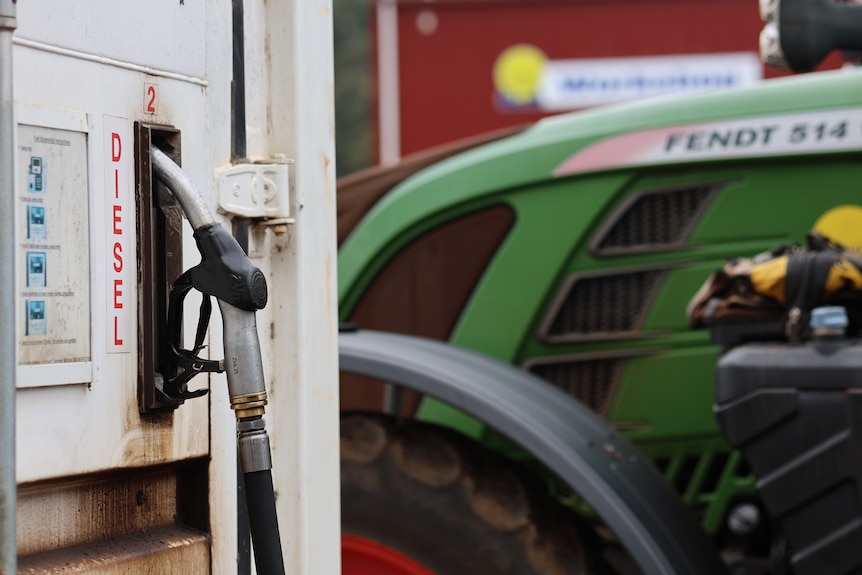
Prime Minister Anthony Albanese announced a cut to the fuel excise for three months — until June 30. (ABC Rural: Laurissa Smith)
Some feel that cutting the fuel price by 26 cents and scrapping the heavy vehicle road user charge for three months will have little bearing on skyrocketing fuel and freight bills.
Major vegetable grower Harvest Moon is in the thick of it.
Managing director Mark Kable admits abandoning some crops is now on the table.
“So it may get to that point where we won’t harvest broccoli or cauliflower,” he said.
“The crops are looking magnificent at the moment, and this is our time of the year that Tassie shines, especially with the leafy greens, so it is very disappointing.”
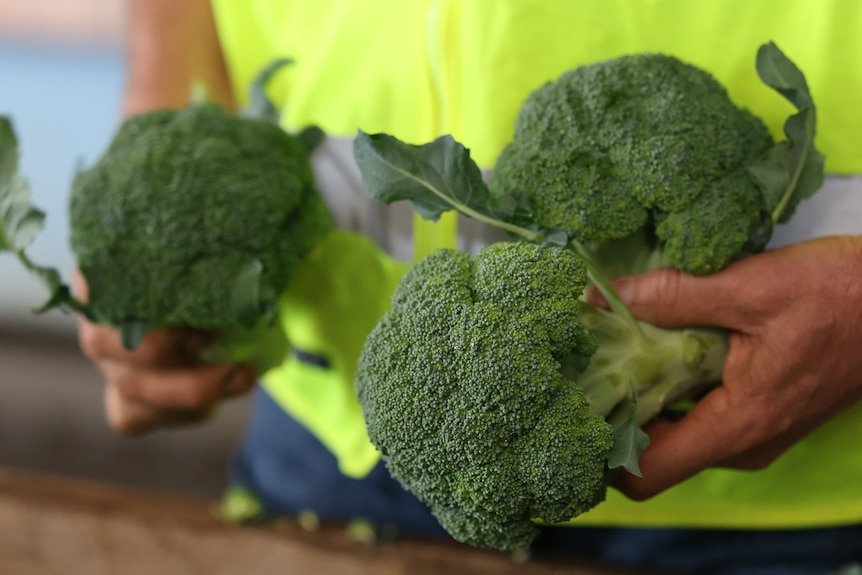
Mark Kable shows off some of his company’s product at the Harvest Moon processing plant. (ABC Rural: Laurissa Smith)
The company supplies roughly 90,000 tonnes of vegetables nationally and to overseas markets.
It uses about 3,000 litres of diesel a day between its network of Tasmanian farms and the Forth packing facility.
And its vegetable production also extends to Victoria, New South Wales and Queensland.
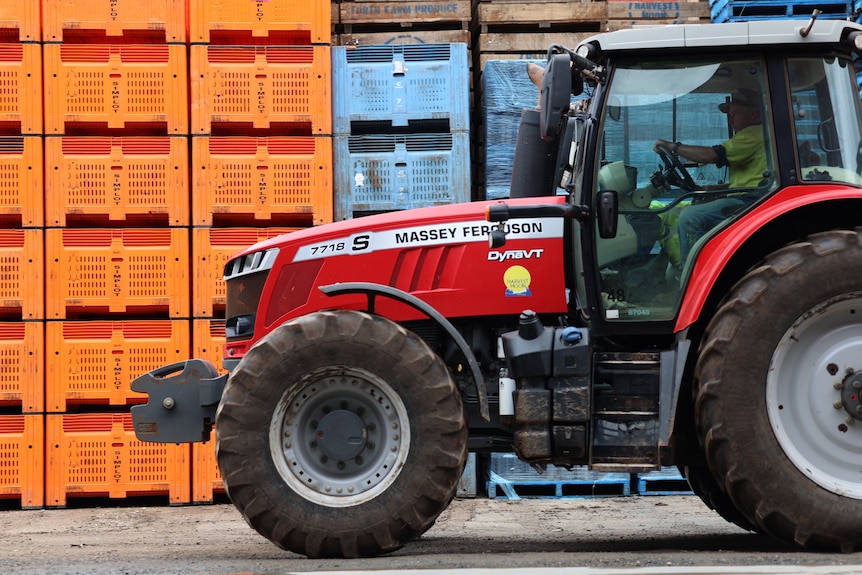
Inside the Harvest Moon vegetable processing site at Forth, in north-west Tasmania. (ABC Rural: Laurissa Smith)
Mr Kable said while there was room to negotiate prices with the major supermarkets, that opportunity did not exist in a wholesale market driven by supply and demand.
“The freight could be the tipping point,” he said.
The company is talking to shipping lines and trucking companies daily, but Mr Kable said they were all operating off different rates and surcharges.
“It’s bloody hard to put an accurate figure on it and go back to our major retailer, i.e. Woolworths, and go, ‘Well, here’s what it’s actually costing us per crate or per pallet,'” he said.
“We think it could hit $30 extra a pallet between here and Melbourne.
“It’s a bit of a dog’s breakfast, it’s all over the place.”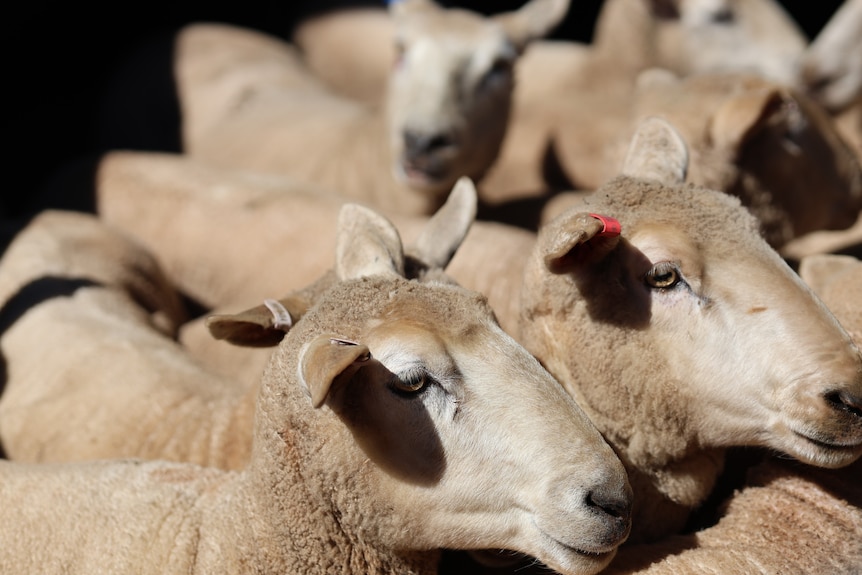
Tasmanian sheep about to board a livestock carrier bound for Victoria. (ABC Rural: Laurissa Smith)
Paddock to plate price squeeze
Massive spikes in fuel prices are also driving up the cost to move livestock off Tasmania, which includes major beef operations on King and Flinders Island.
It is also the peak time for autumn lambs in Tasmania, and each week, large numbers head across Bass Strait to meat processing plants across Victoria.
Page Transport is one of Tasmania’s largest livestock carriers, moving up to 6,000 lambs and mutton a day.
Its fleet of trucks churns through 25,000 litres of fuel a week.
Managing director Geoff Page said the price of that fuel has hit its operating costs hard.
“The impact of the price change between the 1st of March and the 31st of March has been about 105 per cent on our bills,” he said.
“It’s well in excess of $150,000 extra for our business, so it’s a lot of money.
“We have a shipping levy, so obviously everything that we move goes on a ship, and as to what the price of that impact of fuel is going to be will come through more in May.
“Farmers are the ultimate, I suppose, bearer of cost.”
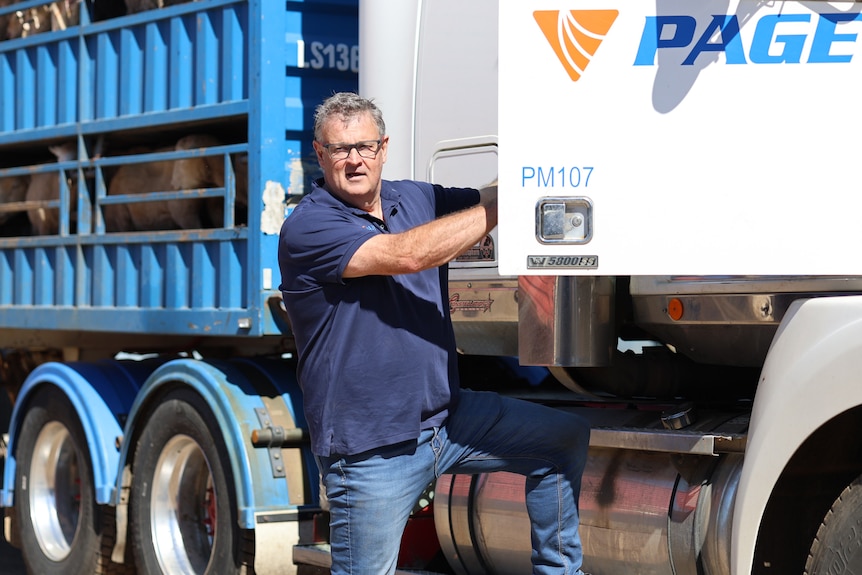
Geoff Page says, ultimately, farmers have to deal with the increased transport costs. (ABC Rural: Laurissa Smith)
Shipping surcharges heading northVegetable growers prune planting plans
Built into every item shipped across Bass Strait is an additional cost to cover the freight, and that’s generally either paid by the producer at one end, or by the customer at the other.
These surcharges fluctuate alongside fuel markets.
They are usually set monthly, but many sea carriers, like SeaRoad, have now adjusted to weekly.
“That’s the idea of a surcharge, so that it can respond; sometimes it’s good for the supplier and other times it’s good for the receiver,” managing director Chas Kelly said.

Brett Charlton has worked in international logistics for more than 30 years. (Supplied: Brett Charlton)
The situation is “rather dire” for domestic and international trade, according to Brett Charlton, principal at The Ship Consulting.
And it is playing out not only with fuel, but also products made from petrochemicals, like fertilisers and plastic packaging.
“The costs of goods should increase; there isn’t anything that touches our lips or our homes that doesn’t get impacted by transport in one regard,” he said.
“[Australia is] at the end of a supply chain, well, Tasmania is at the end of that supply chain, so we have another leg.
“The cost across Bass Strait is already a significant burden for our shippers, so trying to compete with higher costs in the market from a further distance certainly has its challenges.
“I expect that the exporters and indeed the importers will be looking very closely at what their cost impost is as well as their supply capabilities,” he said.
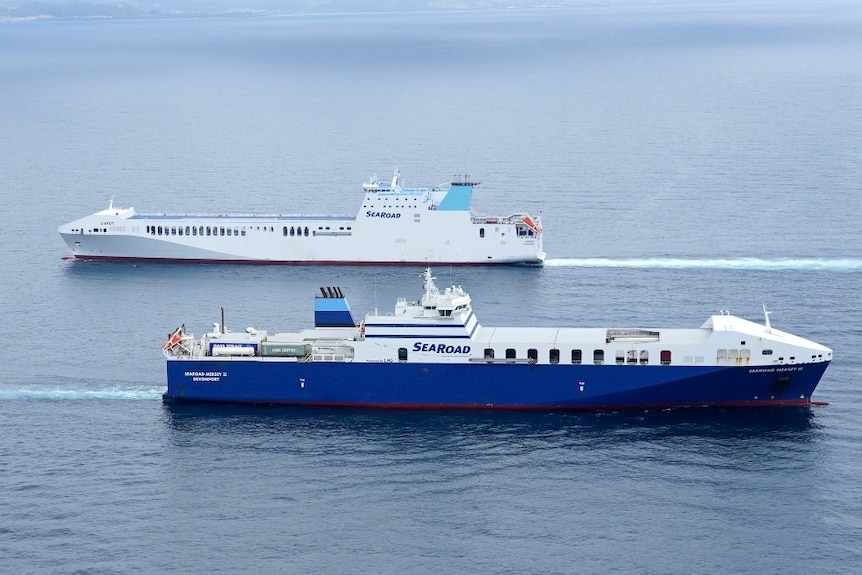
Sea road ships in action on Bass Strait (Supplied : Sea road)
The Tasmanian Freight Equalisation Scheme is meant to alleviate some of the financial burden of traversing the stretch of water, but it has long been criticised for being unfit for purpose.
It is currently before its second review in two years.
“It’s timely to remind ourselves that that particular scheme is essential for Tasmania, [and] will help us in the future when it comes to shocks like these, particularly if it’s going to be indexed, as we hope it will,” Mr Charlton said.
Loading…