
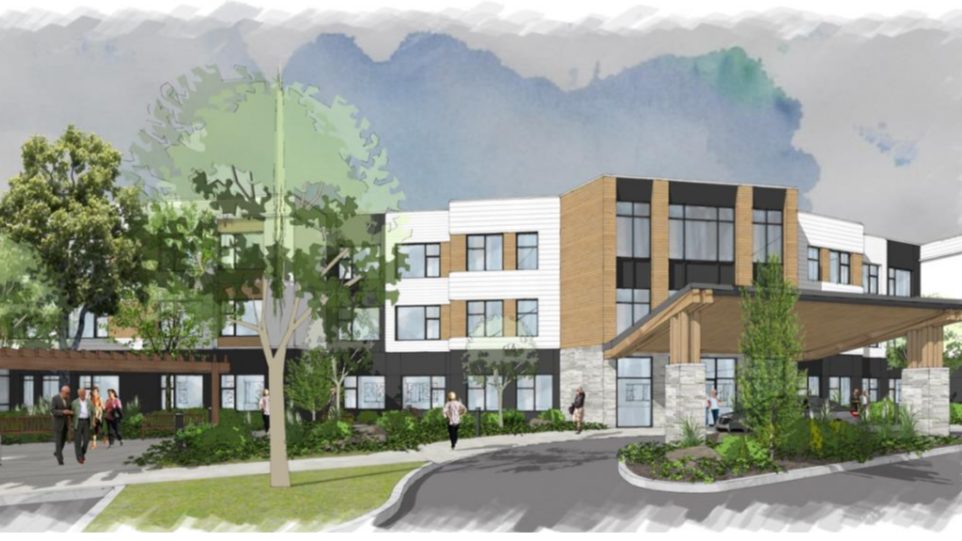
Nearly four years after the closure of the Madonna Nursing Home in Orléans, the company that operated the facility has submitted a plan to renovate and expand the vacant site into a 224-bed retirement and long-term care home.
Nearly four years after the closure of the Madonna Nursing Home in Orléans, the company that operated the facility has submitted a plan to renovate and expand the vacant site into a 224-bed retirement and long-term care home.
Sienna Senior Living, which operated the former nursing home, wants to convert the existing three-storey building into a 160-bed comprehensive long-term care facility. Additionally, it proposes the construction of a new two-storey addition to be used as a 64-bed retirement home.
Located in the Greenbelt portion of Orléans, the existing building is located on a 2.5-hectare property at 1541 St. Joseph Blvd. on the southern edge of the site.
The 1.19-hectare parcel at 1533 St. Joseph Blvd. has been vacant since 2005, when a previous Madonna Nursing Home building was demolished.
In addition to 224 new senior beds, the proposal calls for 92 vehicle parking spaces, 10 bicycle parking spaces and two loading spaces with pedestrian connections. There are also plans for landscaping and outdoor amenity spaces.
“The proposal aims to modernize the existing facility, enhance accessibility, site functionality and improve integration with surrounding landscapes,” the application summary for the development said.
The surrounding area is primarily occupied by farm land, with the White Sands Golf Course directly to the east and the Grace Hill Retirement Community located south on the other side of St. Joseph Boulevard.
An urban design brief for the project said the surrounding landscape was taken into consideration in the overall design.
“It creates interest in the streetscape and a strong sense of place. The second building is positioned to improve the street presence and make the most of the undeveloped portion of the lot,” the document said, adding the proposal represents “an efficient use of an existing developed site.”
Activity in retirement real estate sector heats up
The proposal comes as transactions in the senior living space are on the rise throughout the country.
According to a report from real estate services firm Cushman and Wakefield released in February, the seniors housing market is poised to see a record-setting number of deals in 2026.
“There is significant momentum from both Canadian and U.S. investors looking to capitalize on the seniors housing and long-term care sectors,” Sean McCrorie, vice-chair and practice leader for seniors housing at Cushman and Wakefield, said in a news release.
“With new entrants joining established firms in deploying capital, we expect to see even greater liquidity and deal flow across this active market.”
Last month, Toronto-based Spring Living Retirement Communities acquired five properties in and around Ottawa, bringing its total number of local properties up to 10.
The recently acquired properties include: Westwood Retirement Community on Carling Avenue; Grace Hill Retirement Community and Heritage Orleans Retirement Community in Orleans; Kanata Ridge Retirement Community in Kanata; and Maple Ridge Retirement Community in Carleton Place.
According to Statistics Canada, the proportion of the population aged 65 or over will continue to grow over the next 10 years. By 2030, one in five Canadians will be 65 or older. That growing population of older Canadians, combined with a gradual increase in life expectancy, means demand for retirement homes is likely to grow.
But the report from Cushman and Wakefield said new development activity in the retirement space has been at an all-time low. That trend, however, is likely to change in 2026 as market conditions improve and demand continues to grow.
“Fuelled by the sheer scale of opportunity that lies ahead, we expect a new development cycle will kick off later this year,” Heather Payne, the firm’s vice-president of seniors housing and health care, said in the release.
“We estimate the market requires nearly 200,000 new rental units over the next decade to remain balanced. As development lead times mean the impact won’t be immediate, there will be a prolonged period of strengthened market fundamentals driving rent growth and occupancy for existing residences.”