
Farmers are at the pointy end of rising fuel costs.
“The buck always stops with us,” Waikato Federated Farmers president Phil Sherwood said. “And we can’t pass it on.”
He said the recent spike in the cost of diesel and petrol was being passed on by contractors and services associated with the rural sector.
Fertiliser costs have already increased, with spreading charges likely to follow.
Sherwood said stock feed suppliers would act similarly, as would contractors involved in harvesting, re-sowing and planting.
“Winter crops are going in now,” he said. “It’s peak time.”
Suppliers were also struggling to give timeframes for on-farm deliveries.
Sherwood said farmers also obviously faced bigger bills for running their on-farm vehicles, such as tractors and quad bikes, along with private cars.
Added to this was “anything that’s imported”, such as minerals used for animal health.
“Shipping costs will come through.”
Sherwood said farmers also always face rising costs in areas such as staff remuneration.
“To get people, you need to pay them good money.”
Another area regularly on the rise for farmers was the cost of repairs and maintenance.
Sherwood said the bigger overall bill was tempered by increased returns to farmers from an increased payout and strong production.
This gave farmers “additional margin”.
“It’s a great position to have.”
Cash injection
Fonterra suppliers could also look forward to a cash injection through the dairy giant’s divestment of its global consumer business.
Sherwood said farmers should not be in “panic-buying mode” due to the current fuel issue.
Some may be able to “trim a little fat” in their costs by looking at feed conversion efficiency and pasture utilisation.
“It’s about doing the basics right.”
Driven by strong milk prices, DairyNZ estimates farmers will receive an average payout of $9.92 per kilogram of milksolids (kgMS) for the 2025-26 season.
With a forecast breakeven milk price of $8.36/kgMS, this points to an average surplus of around $1.56/kgMS for the season.
Season-to-date milksolids production (June 2025 to January 2026) is running 3.3% ahead of the same period last season, with Waikato showing a modest increase of 1.7%.
Forecast
Looking ahead to the 2026-27 season, DairyNZ forecasted a slightly lower average payout received.
Key costs were forecasted to come down marginally, reflected in a slightly lower breakeven milk price at $8.31/kgMS. The average surplus is forecast to remain above $1, at $1.07/kgMS.
“There are a lot of unknowns on the horizon on the global front that have the potential to adversely impact farmers,” DairyNZ head of economics, Mark Storey said.
“Rises in oil prices or shipping costs flow through into fertiliser, transport and on-farm input prices, and this is something to keep a close eye on. I’d advise cautious optimism.”
Bay of Plenty Federated Farmers president Brent Mountfort said farmers were “quite comfortable” with their returns at present, but the conflict in the Middle East could affect trade routes vital to New Zealand dairy exports.
On the home front, he agreed that rising fuel costs will undoubtedly be passed on to consumers, including farmers.
“Everything in New Zealand relies on diesel.”
Mountford said technology around electric vehicles was still developing.
“It’s not there yet for heavy machinery.”
He said urea, a byproduct of oil and widely used by farmers to aid pasture growth, was likely to spike the most.
Fencing costs – materials and contractors – have also effectively doubled in recent years.

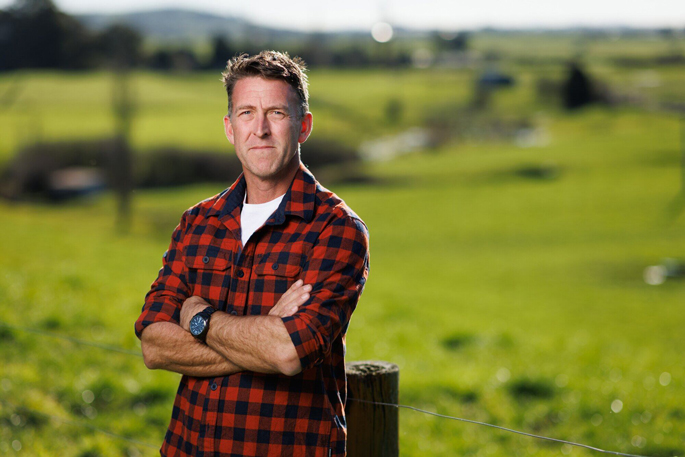
Federated Farmers Bay of Plenty president Brent Mountford.
Mountford said farmers were price-takers.
“We get charged for services we receive and told what prices we are going to receive for our products.”
Even with the current fuel issue, he believed farmers were not feeling “down”.
“I’m cautiously optimistic.
“You have to be realistic about what is happening on the other side of the world. Overall, I think we are in a pretty good space.”
He said the drought of 2020 and Covid were “a lot more concerning than what is happening now”.
Challenge
The Ministry for Primary Industries (MPI) said it has been meeting regularly with the primary sector, including business leaders and industry groups in the farming and horticulture sectors, since the Middle East conflict started.
“The sectors report that the increase in fuel costs is a challenge for businesses. Farmers and growers will face ongoing cost pressures if the volatility continues,” an MPI spokesperson told Coast & Country News.
“There is enough fertiliser supply to last until spring, although costs are expected to rise the longer the conflict continues.
“The bulk of primary sector product continues to reach international markets, but on a case-by-case basis we are helping exporters with certification to redirect product elsewhere if required.”
The spokesperson said the primary sector was resilient and extremely adaptable and it had dealt with major shocks in recent years.
“The sector is planning for any issues that might arise in the coming weeks.”