
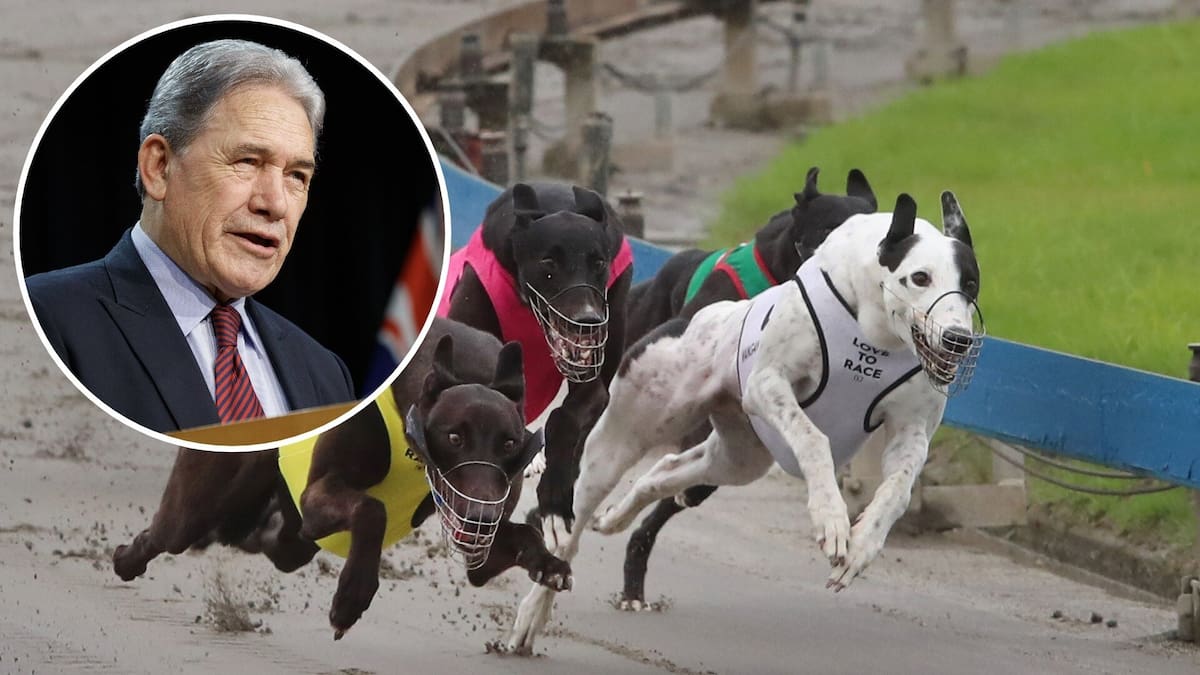
“This is a good day for greyhounds,” says Peters.
“This action wasn’t taken lightly, but independent reviews in 2013, 2017 and 2021 provided clear evidence of serious animal welfare concerns.
“While improvements were made, those gains plateaued and injury/death rates remained unacceptably high to the point the sport had lost its social licence. Action had to be taken.”
This decision reflects a wider global shift away from greyhound racing, with sport now surviving in only a small number of countries.
Since New Zealand announced its intention to end greyhound racing, further jurisdictions, including Scotland, Wales and Tasmania, have signalled they will also end the sport, says Peters.
While the ban or closure of an entire sport or industry is rare in New Zealand, Rennell says GRNZ are out of options.
“We think the decision is bulls***,” Rennell told the Herald.
“But now the amendment is passed we are out of options.
“Our attention will now have to move to helping our participants and working with the transition agency to get them adequate compensation.
“There are people who have bred dogs late in 2024 who are now going to only be able to race them for a few months before racing stops and their careers are over.
“We don’t have a lot of time, that runway is very short.”
Rennell says greyhound racing will continue right up until the ban starts, with around 1700 dogs still racing in New Zealand.
“We want to give those people who are invested in the industry the chance to win some money, to have an income, right up until we can’t anymore,” he says.
“But the pathway to legal challenges appears over. It is a sad day for greyhound racing and we believe a warning to the two equine codes about their future.”
Peters previously stated after announcing his intent to ban greyhound racing that horse racing will not be next and that industry is not under threat.
Peters said the end of racing is only one part of the Government’s responsibility, with equal focus being placed on ensuring a safe, orderly and compassionate transition.
“The passing of this bill enables the establishment of a transition agency to oversee the wind‑down of racing and the rehoming of dogs, and we are now moving into the formal set-up phase.”
The transition agency will be headed by the current members of the Ministerial Advisory Committee on greyhound racing, Heather Simpson (chairwoman), Murray Johnson and Dr Lindsay Burton, with a fourth member to be appointed later.
Key elements of the transition agency’s work include:
Assistance for greyhound owners to ensure dogs receive a high standard of care while awaiting rehoming, including housing, training and behavioural support for the dogs.Partnerships with existing rehoming agencies, with practical support in place to expand their rehoming capacity and the number of dogs adopted.Retraining and redeployment support for industry workers, delivered in partnership with the Ministry of Social Development, to help affected workers move into new jobs.Mental health and wellbeing support services for people whose daily lives have been closely tied to greyhound racing.
Peters rejected claims that those affected by the closure will be left without support, saying, “There has been a great deal of misinformation suggesting that people and dogs are being abandoned. That is simply wrong.
“This bill underpins a structured transition, with funding, agencies and support mechanisms in place.
“We are not walking away from our responsibilities; we are meeting them head-on.”
Michael Guerin wrote his first nationally published racing articles while still in school and started writing about horse racing and the gambling industry for the Herald as a 20-year-old in 1990. He became the Herald’s Racing Editor in 1995 and covers the world’s biggest horse racing carnivals.