
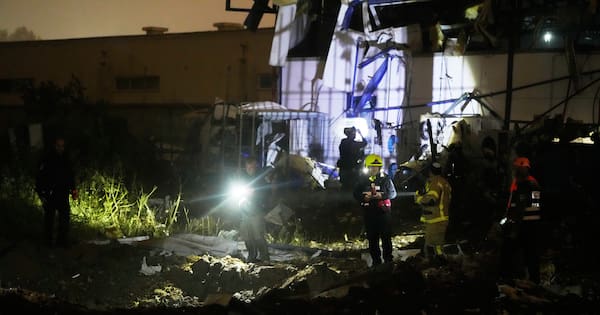
Two US military planes were shot down in separate incidents on Saturday, and while one crew member was rescued in Iran, the whereabouts of at least one other was unknown — marking a dramatic escalation since the war began nearly five weeks ago.
It was the first time US aircraft had been downed in the conflict and came just two days after President Donald Trump said in a national address that the US has “beaten and completely decimated Iran” and was “going to finish the job, and we’re going to finish it very fast”.
One fighter jet was shot down in Iran, officials said. A US crew member from that jet was rescued, but a second was missing.
The rescue occurred as the US military was conducting a search operation, a US official and an Israeli official said. Three people familiar also confirmed that a search had been underway. All spoke on condition of anonymity to discuss the sensitivity of the situation.
No official details were released.
But the Pentagon notified the House Armed Services Committee that the status of a second service member is not known.
In an email from the Pentagon obtained by The Associated Press, the US military said it received notification of “an aircraft being shot down” in the Middle East, without providing more details.
Separately, Iranian state media said that a US A-10 attack aircraft had crashed into the Persian Gulf after being struck by Iranian defence forces.
Earlier, a US official, who spoke on condition of anonymity to discuss a sensitive military situation, said it was not clear if the aircraft crashed or was shot down or whether Iran was involved. Neither the status of that aircraft’s crew, nor exactly where the aircraft went down was immediately known.
Those incidents came as Iran fired on targets across the Mideast on Saturday, keeping the pressure on Israel and its Gulf Arab neighbours, despite US and Israeli insistence that Iran’s military capabilities have been all but destroyed.
Neither the White House nor the Pentagon released public information about the downed planes. But the Pentagon notified the House Armed Services Committee that the status of a second service member from the fighter jet was not known.
In an email from the Pentagon that obtained by The Associated Press, meanwhile, the military said it received notification of “an aircraft being shot down” in the Middle East, without providing more details.
Iran’s attacks on Gulf energy infrastructure and its tight grip on the Strait of Hormuz, through which a fifth of the world’s oil and natural gas transits in peacetime, have roiled stock markets, sent oil prices skyrocketing, and threatened to raise the cost of many basic goods, including food.
Downed jet could mark a new level of pressure on the US
Prior to word of the rescue, social media footage showed American drones, aircraft and helicopters flying over the mountainous region where a TV channel affiliated with Iranian state television had said earlier Saturday that at least one pilot bailed out of the fighter jet.
An anchor had urged residents to hand over any “enemy pilot” to police and promised a reward.
It was the first time the US has lost aircraft in Iranian territory during the conflict, and could mark a new level of pressure being placed on the US military.
Throughout the war, Iran has made a series of claims about shooting down piloted enemy aircraft that turned out not to be true. Saturday was the first time that Iran went on television, urging the public to look for a downed pilot.
Iranian state media said in a post on X that Iran’s military shot down a US F-15E Strike Eagle. The aircraft is a variation of the Air Force fighter jet that carries a pilot and weapons system officer.
Alan Diehl, a former investigator for the Air Force Safety Center, said the Strike Eagle has an emergency locator beacon in a survival kit that can be set to activate automatically or manually.
The Pentagon did not respond to repeated requests for comment.
White House press secretary Karoline Leavitt said in a previous statement that Trump had been briefed but did not offer additional information.
Iran targets a desalination plant and a refinery
The claim came after Kuwait’s Mina al-Ahmadi oil refinery came under Iranian attack, and the state-run Kuwait Petroleum Corp said firefighters were working to control several blazes.
Kuwait also said an Iranian attack caused “material damage” to a desalination plant. Such plants are responsible for most of the drinking water for Gulf states, and they have become a major target in the war.
Sirens also sounded in Bahrain, Saudi Arabia said it had destroyed several Iranian drones, and Israel reported incoming missiles.
Authorities in the United Arab Emirates shut down a gas field after a missile interception reportedly rained debris on it and started a fire.
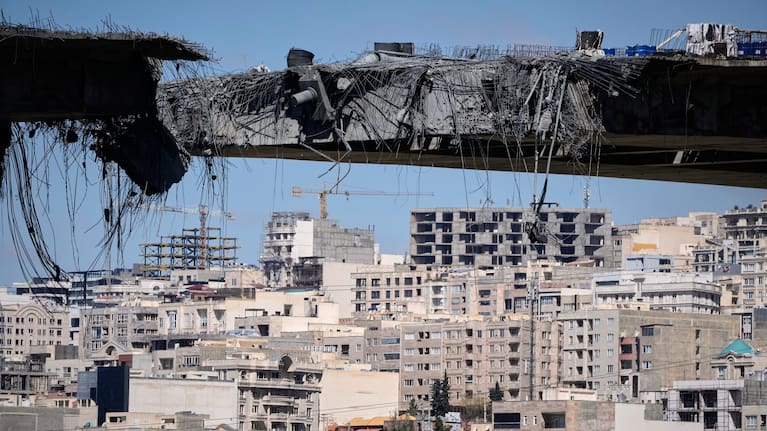
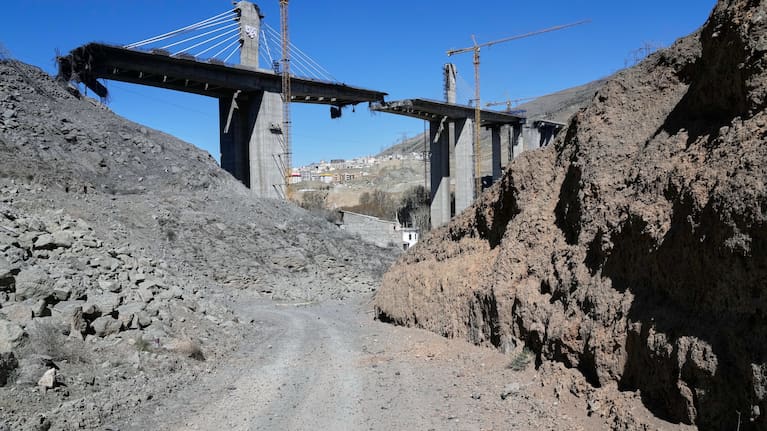
Activists reported strikes around Tehran and the central city of Isfahan, but it wasn’t immediately clear what was hit. A day earlier, Iran said the US hit a major bridge, which was still under construction, killing eight people.
In Lebanon, where Israel has launched a ground invasion in its fight with the pro-Iranian Hezbollah militant group, an Israeli drone strike on worshippers leaving Friday prayers near Beirut killed two people, according to the state‑run National News Agency
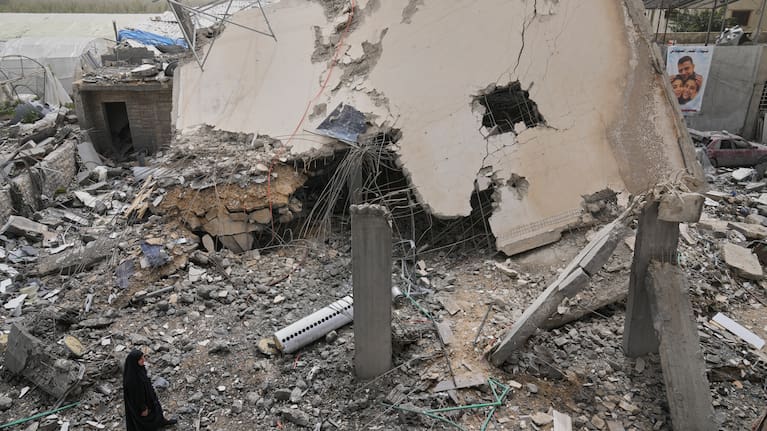
More than 1900 people have been killed in Iran since the war began on February 28 with US and Israeli strikes. In a review released Saturday, the Armed Conflict Location and Event Data, a US-based group, said it found that civilian casualties were clustered around strikes on security and state-linked sites “rather than indiscriminate bombardment” of urban areas.
More than two dozen people have died in Gulf states and the occupied West Bank, 19 have been reported dead in Israel, and 13 US service members have been killed.
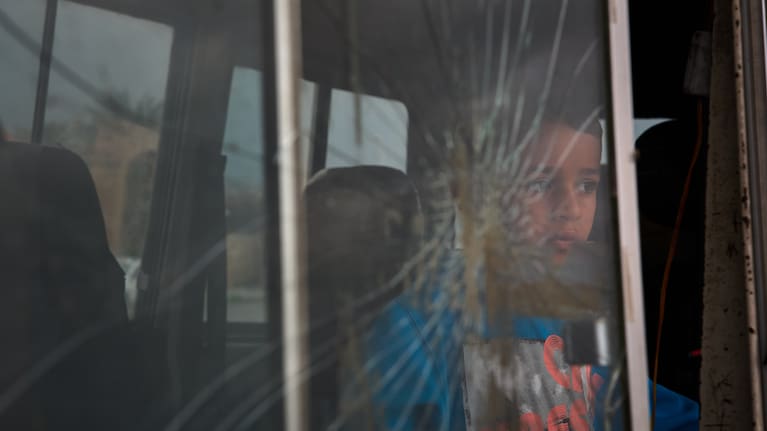
More than 1300 people have been killed and more than 1 million displaced in Lebanon. Ten Israeli soldiers have also died there.
Iran is keeping a chokehold on the Strait of Hormuz
World leaders have struggled to end Iran’s stranglehold on the strait, which has had far-reaching consequences for the global economy and has proved to be its greatest strategic advantage in the war.
The UN Security Council was expected to take up the matter on Sunday.
Trump has vacillated on America’s role in the strait, alternately threatening Iran if it doesn’t open the waterway and telling other nations to “go get your own oil”. On Saturday, he said in a post on social media that, “With a little more time, we can easily OPEN THE HORMUZ STRAIT, TAKE THE OIL, & MAKE A FORTUNE”.
Spot prices of Brent crude, the international standard, were around US$109 Saturday, up more than 50% since the start of the war, when Iran began restricting traffic through the strait.