
By South-East Asia correspondent Tim Swanston in Manila, Philippines, for ABC
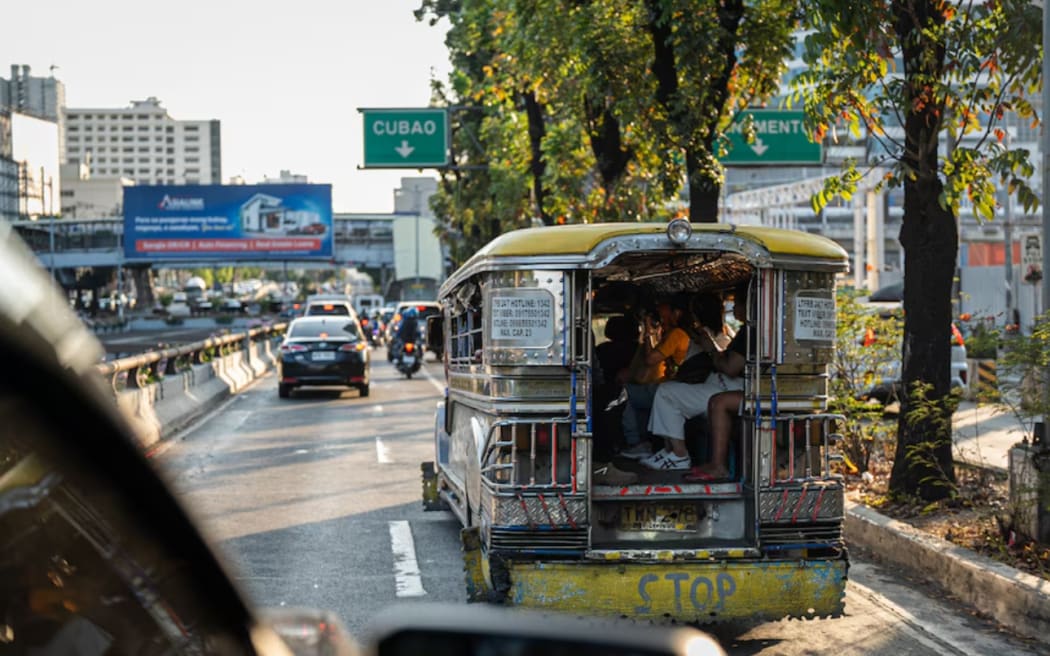
A jeepney full of passengers in Quezon City in the Philippines: Some parts of Philippines are becoming quieter due to the unfolding energy crisis.
Photo: ABC News/ Tim Swanston
A “nationwide energy and economic crisis” is unfolding in the Philippines, which was the first country to declare a national energy emergency since the Iran war broke out.
While soaring fuel prices are impacting the entire globe, the Philippines is especially vulnerable because almost all of its oil is imported from the Persian Gulf.
What’s next? The Philippines government says it is taking steps to safeguard supply, while experts are calling for more to be done, such as increasing investment in renewables.
Across metropolitan Manila the usual cacophony of bumper-to-bumper traffic is gone.
Astronomically high fuel prices have forced motorists off the road and, instead, the city’s bus stops are chaotic and crowded.
While the United States and Israel’s war on Iran is a world away, the economic hardship in the Philippines is painfully real.
This crisis quickly struck a deep blow to public transport drivers who operate the country’s fleet of Jeepneys, a low-cost, very popular mode of public transport.
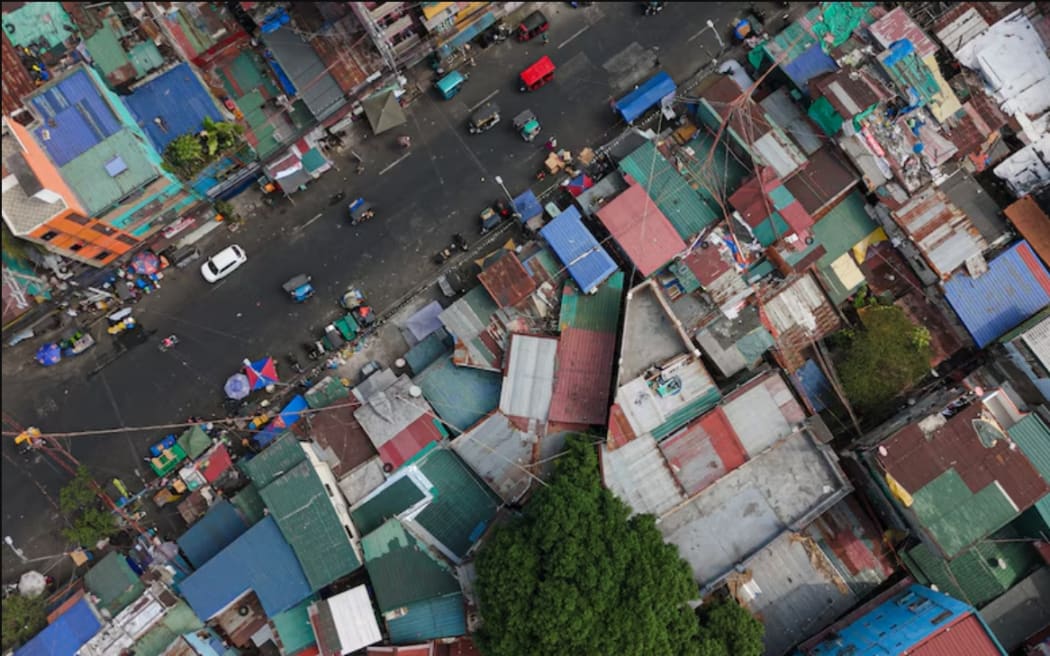
A birds-eye view of an unusually quiet street in Manila.
Photo: ABC News/ Tim Swanston
Usually ubiquitous across Manila’s vibrant streets, many Jeepneys – brightly coloured, repurposed US army jeeps – are parked by the side of the road with drivers unable to afford fuel.
Before the war, a litre of diesel set you back 55 Philippine pesos ($NZ1.60).
At the bowser today, it has more than doubled to 130 pesos ($NZ3.77).
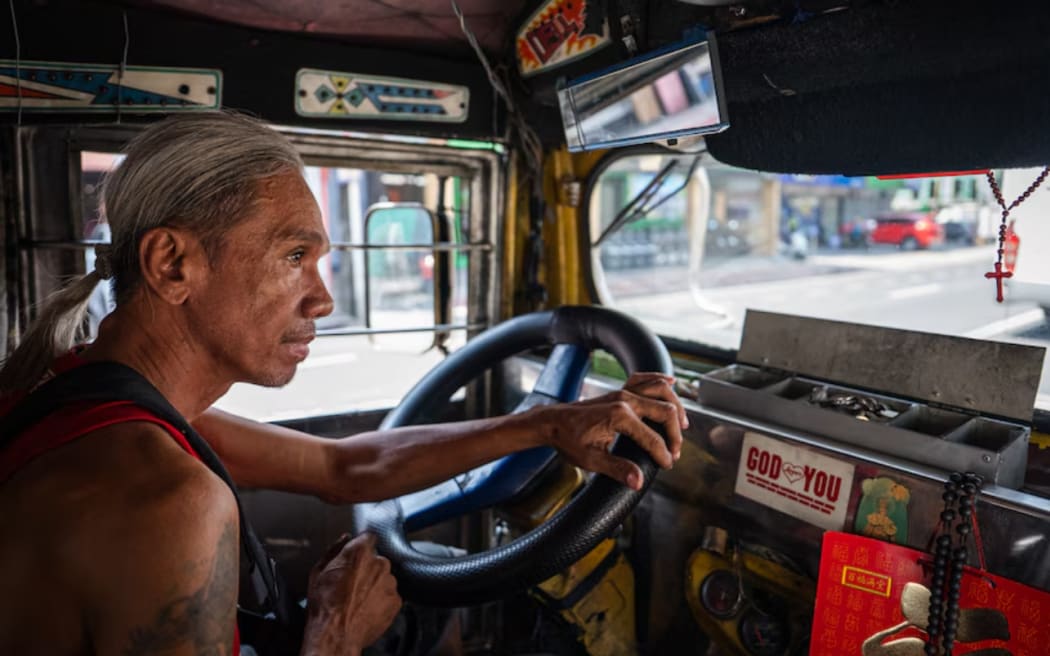
Jeepney driver Eddie Ramos has been acutely affected by rising fuel costs.
Photo: ABC News/ Tim Swanston
Eddie Ramos, 53, has been driving a jeepney for 20 years, but he may soon be forced to stop.
“Our daily earnings barely cover fuel costs,” he said.
“I need to keep driving so my family has money for food.
“We’re renting a house and it’s difficult to keep up with the payments. I’m living day by day.”
If fuel prices keep rising he says he may have to give up the home he shares with his two children.
“I feel really sad about this situation, the prices are so high,” he said.
Philippines reliant on imported fuel
Soaring prices are impacting the entire globe, but the Philippines is especially vulnerable to this crisis as almost all of its oil is imported from the Persian Gulf.
As one newspaper put it, the Philippines “stands at the precipice of an unprecedented national crisis” and “every Filipino household faces an existential threat that extends far beyond the inconvenience of rising pump prices”.
“The gravity of this situation cannot be overstated,” the Philippine Daily Inquirer wrote last week.
The Philippines last week became the first country to declare a national energy emergency.
Philippines declares energy emergency over Middle East conflict risks
While fuel prices are comparable with Australian prices, Filipinos, on average, earn a fraction of the salary, making fuel deeply unaffordable for the country’s residents, let alone the transport sector’s millions of workers.
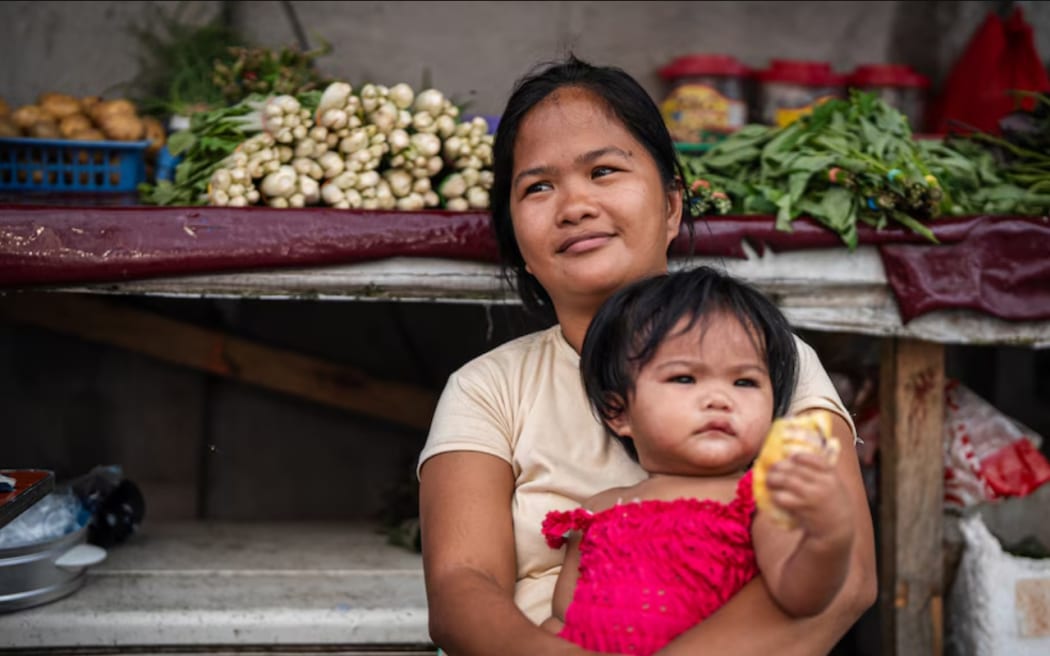
Mother of four Mary Jane Hutalla is among those trying to survive on a small income.
Photo: ABC News/ Tim Swanston
The government has had to scramble, organising alternative supplies of more than one million barrels of oil for the month of April to bolster dwindling stockpiles.
But that’s done little to relieve pressure for Filipinos at the petrol station as prices continue to mercilessly tick up.
Jeepney drivers went on strike last week, protesting the Philippines government response to the crisis and calling for fuel prices to be lowered.
Subsidies have been given to drivers, but many feel they’re not enough.
“Some drivers who used to rent homes can no longer afford it. There are cases of families sleeping in their jeepneys because they cannot pay the rent,” said Modesto Toque Floranda, head of the jeepney drivers’ association.

Driver Modesto Toque Floranda warns that if fuel prices keep increasing it will bring Manila to a standstill.
Photo: ABC News/ Tim Swanston
Floranda is warning that if fuel prices keep increasing, Manila will be brought to a standstill.
“If diesel goes up again, we’ll have to stop operating,” he said.
“The economy would suffer more, people would have no transport.
“How would workers get to their jobs? How would students go to school?”
Filipino economist Ser Pena Reyes, from Ateneo De Manila University, said this war has laid bare the structural reliance of the Philippines on imported fuel.
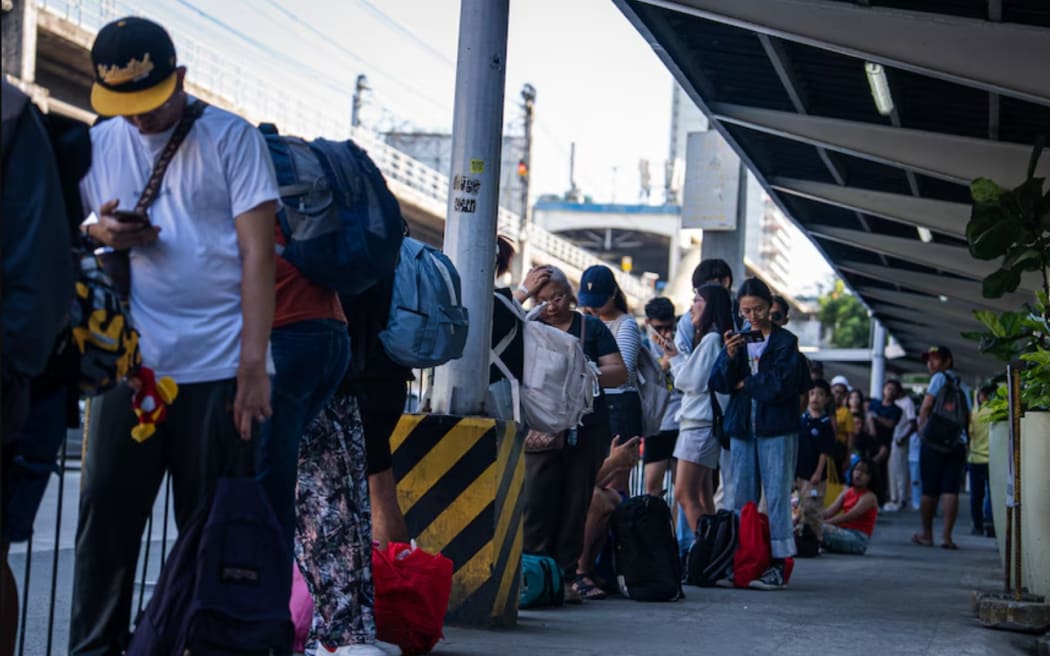
Manila’s bus stops are becoming increasingly busy as people flock to public transport.
Photo: ABC News/ Tim Swanston
“Our huge import dependence has become even more undeniable right now. A single geopolitical choke point can trigger a nationwide energy and economic crisis,” he said.
“This is a sobering reminder of what we ought to have invested in a long time ago.
“We should have made efforts to wean ourselves away from oil dependence.”
Slums on the brink
The fuel crisis wreaking havoc across the Philippines transport sector is threatening to escalate into an economy-wide crisis, with fears rising inflation will hit the country’s poorest families hard.
The nation’s central bank has forecast inflation could average above 5 percent this year.
A government analysis of worst-case scenarios revealed the Philippines could even experience a double-digit inflation figure if crude oil averages $US150 a barrel.

JC Punongbayan says the poor will take the brunt of the crisis.
Photo: ABC News/ Tim Swanston
Filipino economist at the University of the Philippines, JC Punongbayan, said he expected a “very fast increase” in inflation during the coming months.
“As we’ve seen in past inflation episodes the poor will really take the brunt of the impact of this inflation increase,” he said.
“I’m afraid that if the crisis continues, maybe some families will stop sending their children to school, they might reduce consumption, some may go deeper into debt as they borrow from family and friends.”
In Manila’s Baseco slum, life is somehow getting even tougher for families as fuel, gas and food price increases bite hard.
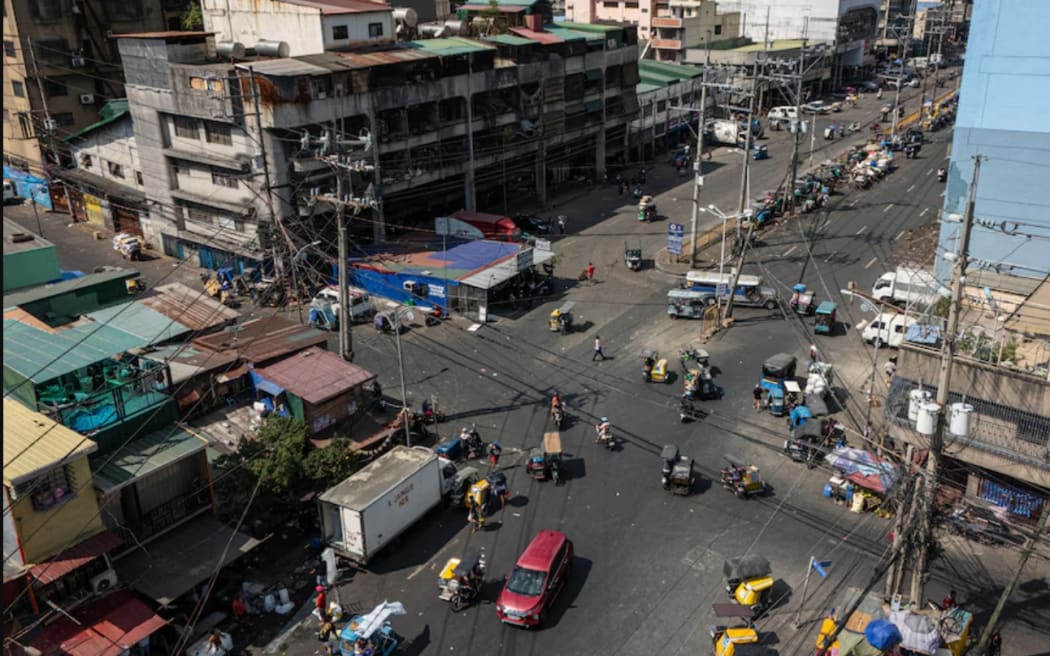
The Baseco slum settlement has high poverty rates, and a dense population.
Photo: ABC News/ Tim Swanston
Their homes are powered by liquefied petroleum gas (LPG) which has also been impacted by the global energy crisis.
Under the beating Manila sun, 48-year-old mother of six Wallen Robredillo was cooking skewers of meat to earn a bit of extra cash to desperately keep up with rising costs.
“During the day we’re using just one electric fan to save on power,” she said.
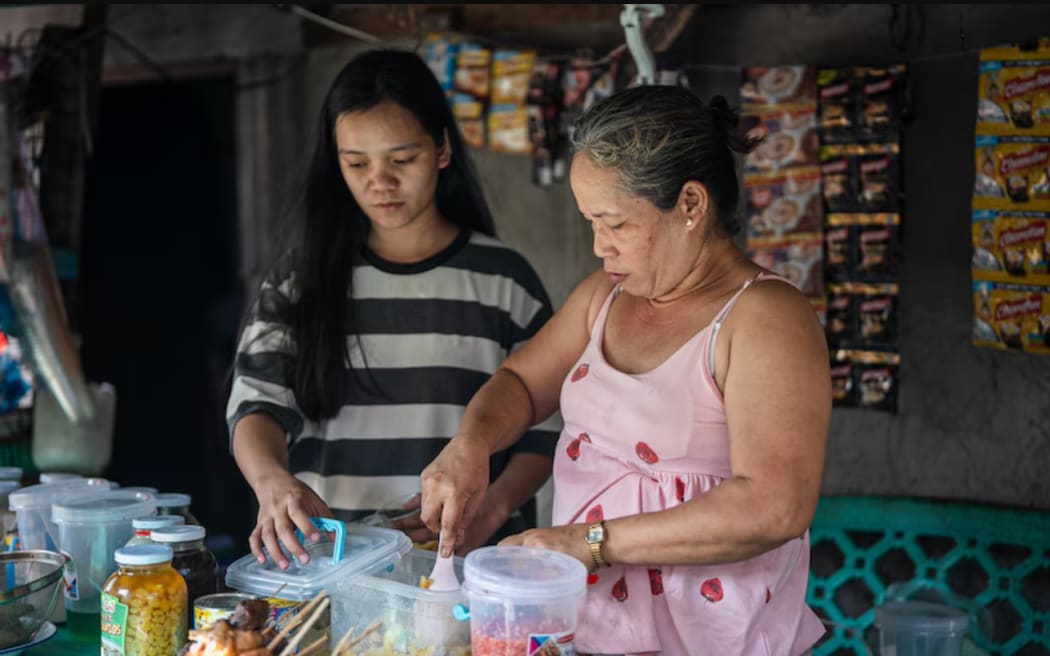
Wallen Robredillo (right) prepares food at her stall in the Baseco slum settlement.
Photo: ABC News/ Tim Swanston
“We sell goods on the side just [to] get by with our daily expenses, especially with the high cost of goods now in the market.
“We only go out when we have to, otherwise we stay home. Life is difficult now.”
Mother of four Mary Jane Hutalla, 38, said that her husband was earning less at the market so the family was trying to survive on an income of $20 a day.
“The prices of electricity and rice have gone up, almost everything has become more expensive,” she said.
Mary Jane Hutalla at a vegetable stall.
Photo: ABC News/ Tim Swanston
“Life is harder now. Fuel prices are high, we expect them rise further.”
She and other families are no longer cooking on stovetops or with gas, instead building small fires to cook dinner.
“We want the war to stop. Life is already hard and it’s becoming even more difficult,” Hutalla said.
Many Filipino economists are bracing for the worst, some even warning of possible stagflation – a combination of high inflation, sluggish economic growth and rising unemployment.
Thawing relationship with China
Perhaps one of the more unusual impacts of this energy crisis is that it seems to have prompted Philippines and China to begin resolving tensions in the South China Sea to enable oil and gas exploration.
The pair have had frosty relations for years over China’s growing assertiveness in the West Philippine Sea, part of the South China Sea.
Chinese ships have been frequently confronting Filipino fishermen and the nation’s coast guard.
A tribunal at The Hague in 2016 that examined China’s claims to the West Philippine Sea found overwhelmingly in favour of the Philippines.
But in a recent interview with Bloomberg, Philippines President Ferdinand Marcos Jr appeared to flag an interest in renewing joint oil and gas exploration with China in the South China Sea.
Filipino security analyst Chester Cabalza said there was an opportunity to tap into “huge deposits” of oil.
“We know we’ve been struggling with our relations with Beijing because of the 2016 arbitration,” he said.
“But I think this is a moment for us to be more pragmatic on how we reconsider our relationship with China.
“Some are saying that we should not close an energy deal with Beijing, because it means we are submitting on our claims in the South China Sea.
“But given the situation and the energy crisis … I think this is a wakeup call for us for how we should treat China.”

Chester Cabalza said the Philippines should rethink its relationship with China.
Photo: ABC News/ Tim Swanston
Bilateral talks were held between the two countries just last week.
Ser Pena Reyes said that the war would not likely herald a full reset in relations between China and Philippines, but would make for “more dialogue and practical cooperation”.
“Perhaps this Iran war-driven oil crisis is likely to push the Philippines and China toward more pragmatic, limited cooperation,” he said.
“It’s a situation where shared economic needs temporarily outweigh political tensions.”
Across the Philippines, experts are calling for a mix of policies like increasing investment in renewables, developing alternative fuel sources, deepening fuel reserves and improving energy efficiency to better safeguard the country from the next crisis.
In a statement, the Philippines Department of Energy said while the country “remains vulnerable to external developments that can affect both price and supply”, “the government continues to move with urgency and discipline to strengthen fuel availability, maintain orderly market conditions, and safeguard consumer welfare”.
The government has released hundreds of millions of dollars to secure additional supplies and subsidise fuel costs for transport workers.
This crisis, however, continues.
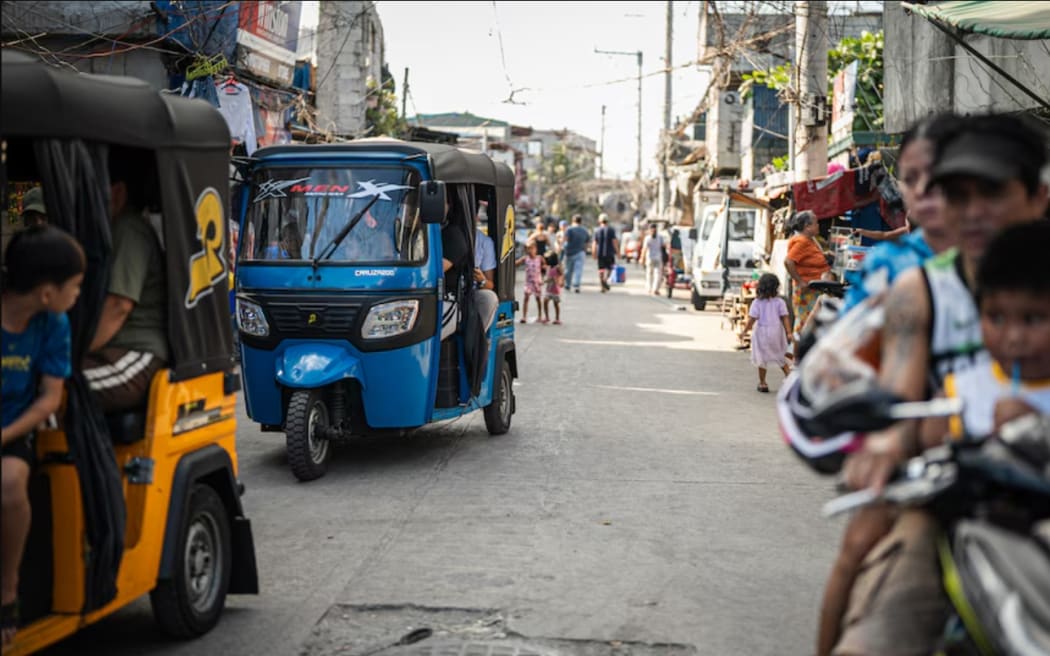
Impacts of the gas crisis on the Philippines’ transport sector could be just the beginning.
Photo: ABC News/ Tim Swanston
Even if the war ended tomorrow, economists believe the impact on the economy would have a long tail, with the effects to be felt for months.
On the streets of Manila there’s little support for the United States and Israel, given the spectre of further economic pain as the war on Iran enters its second month.
Finishing his shift transporting passengers around one of the world’s most congested cities, Eddie Ramos said he hoped US President Donald Trump would think about people’s livelihoods.
“The situation should be fixed and actions that would affect many people, especially us, should be avoided,” he said.
“I hope our welfare is taken into consideration in the decisions being made.”
– ABC