
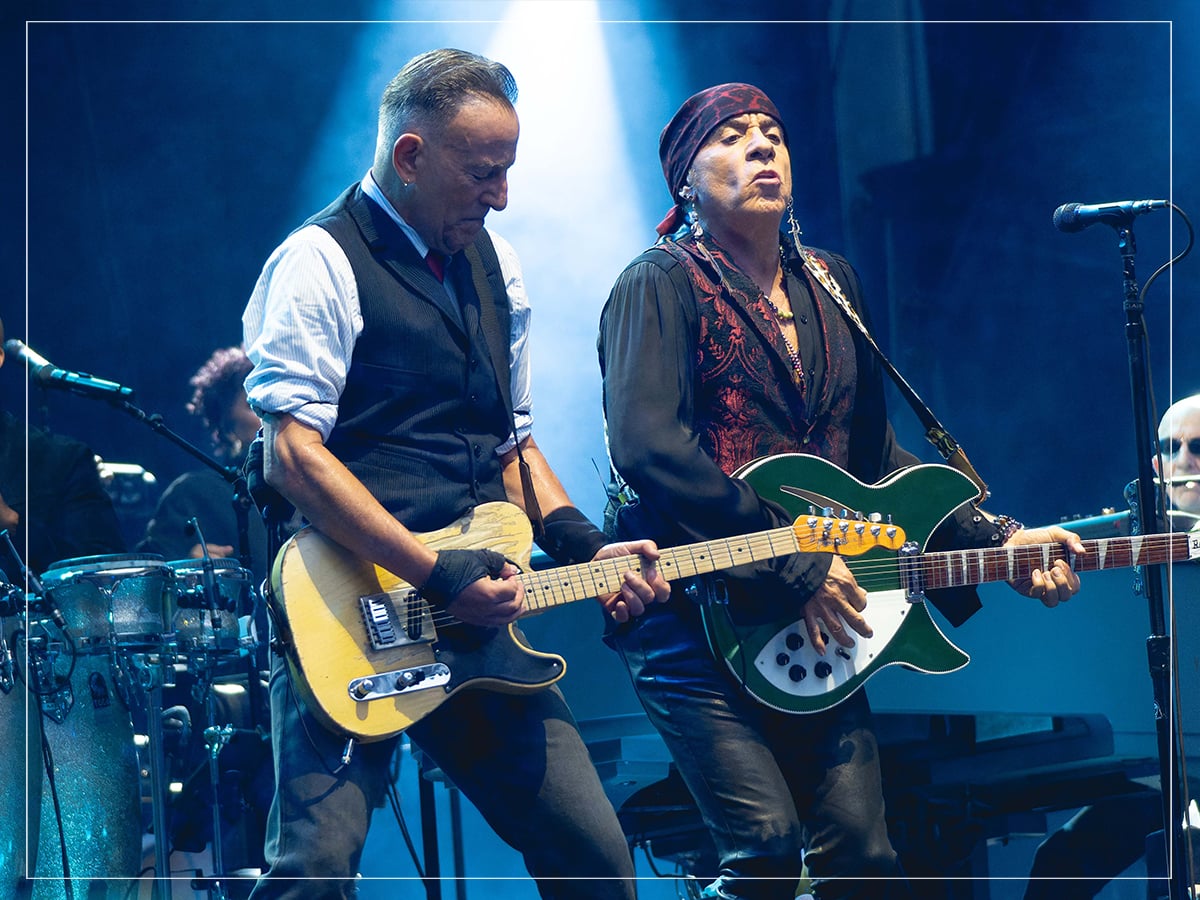
(Credits: Far Out / Raph Pour-Hashemi)
Sun 5 April 2026 16:30, UK
Even as a multimillionaire musician, Bruce Springsteen is still revered as a man of the people.
In sold out stadiums all over the world, The Boss has the everyman singing the chorus of ‘Dancing In The Dark’, knowing that under his stewardship, the nuances and struggles of their daily lives are recognised. Because Springsteen himself grew up on the same broken streets as the rest of us, his music has become something of a guidebook for making it through modern life.
While Springsteen operated best in that narrative territory, he was an artist like many others, who wanted to innovate his own style. After dominating the art of penning the blue-collar anthem, he wanted to move even further into universal territory and deliver the world a catalogue of heartbreak songs to get stuck into.
His 1987 album Tunnel of Love was inspired by the breakdown of his marriage to actress Julianne Phillips and offered some rather considered reflections on the complex nature of relationships. Naturally, those songs warranted a level of intimacy that saw Springsteen step away from his trusted arena rock and into something more intricate.
The E Street Band were not best pleased, however. Feeling confident and empowered in the sound of the former, they questioned their leader’s decision to step away from a big anthemic chorus and into the murkier waters of abstract ballad writing. The album triggered a blazing response from Steve Van Zandt, who had left the outfit a few years earlier but remained in Springsteen’s orbit as something of a confidant.
After listening to the cycle of the record, which began with a desperate sense of lust before moving through the turbulence of the marriage and then ending with doubt. Van Zandt questioned Springsteen’s direction. A feeling that sparked right from the outset, after listening to the opening song, ‘Ain’t Got You,’ which showcases Springsteen adopting an Elvis Presley persona to narrate on top of a Bo Diddley-style beat.
“I’m, like, ‘What the fuck is this?’” Van Zandt said in an interview with The New Yorker. “And he’s, like, ‘Well, what do you mean, it’s the truth. It’s just who I am; it’s my life.’ And I’m, like, ‘This is bullshit. People don’t need you talking about your life. Nobody gives a shit about your life. They need you for their lives. That’s your thing. Giving some logic and reason and sympathy and passion to this cold, fragmented, confusing world — that’s your gift.’”
Springsteen clearly took Van Zandt’s scathing assessment on board, as the flipped the narrative style of some of the tracks on the album to be more third person oriented, but nevertheless it remained as a stark departure in style for The Boss.
His die-hard fans still got what they always wanted from his music, a sense of belonging and understanding that can be injected into the experiences of their own daily lives. But part-timers were as put off by the record as Van Zandt and patiently waited for his return to arena rock.
