
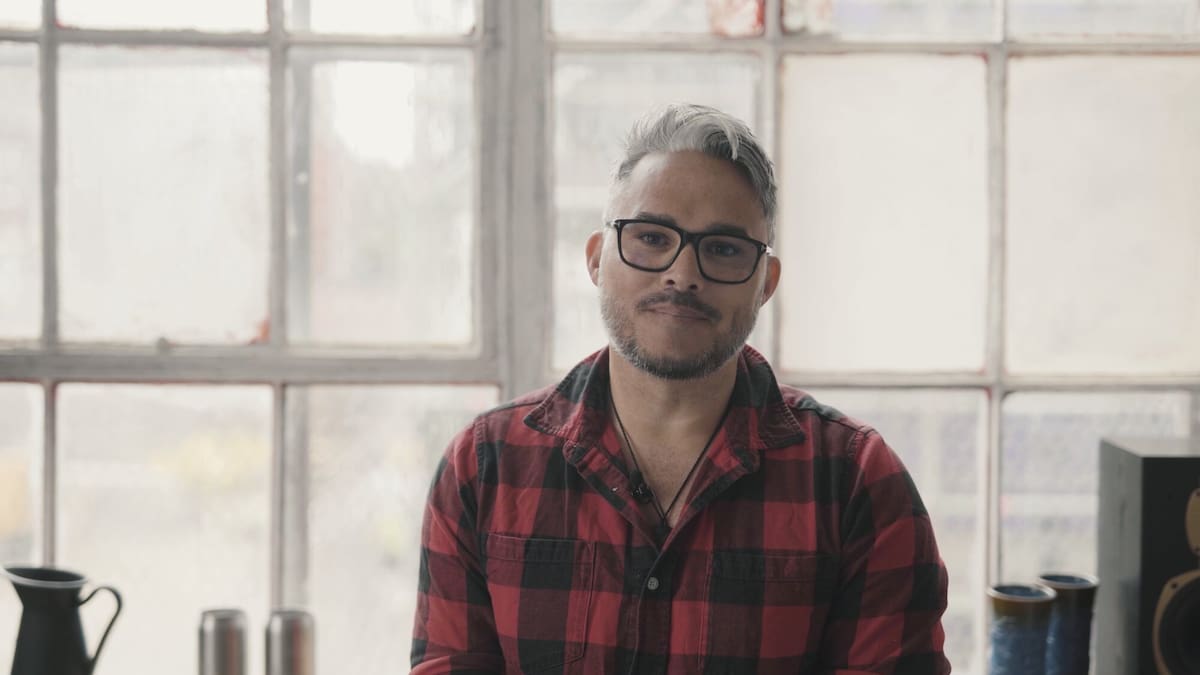
Meet the Auckland-born whisky maker taking on Scotland’s strictest traditions.
After a stint in the New Zealand Navy after high school, Nick Ravenhall (Tapuika) realised a career in combat perhaps wasn’t his future. Instead, the Aucklander turned to hospitality, working in a series of bars where his love for whisky
was ignited.
At Ponsonby Rd’s The Whiskey bar, he realised “no one really knew anything about anything”.
“Our customers coming in thought whisky was just bourbon or Jack [Daniel’s], and we were trying to peddle single malt,” Ravenhall says. “But we had this duty manager who would pull out a bottle every Friday or Saturday night and open it up and try to teach us kids what single malt was all about. And that was where it all started [for me].”
Ravenhall is the co-founder of Woven Whisky, an Edinburgh-based business creating groundbreaking bottles of blended whisky.
Founded in 2020 with his friends Peter Allison and Duncan McRae, Woven Whisky was born from the trio’s complementary experience in the industry, and a desire to revisit the much-judged category of blended whisky.
Woven Whisky’s co-founders, Pete Allison, Duncan McRae and Nick Ravenhall.
In the six years since the business started, they have already made waves in the industry, ruffling feathers not only with their blended product but also in their attempt to trademark the previously contentious term “Pure Malt”.
The Woven team was hauled in front of the famously rigid Scottish Whisky Association for an explanation on what, exactly, they were doing in their warehouse in the waterside neighbourhood of Leith.
Their decision to trademark the term “Pure Malt” came a few decades after the term was surreptitiously used by the premium drinks brand Diageo. In 2003, Diageo quietly discontinued Cardhu single malt and replaced it with a blended malt using the same label and bottle, labelling it a “pure malt”.
Other whisky makers cried foul and accused the brand of using a misleading description – “pure malt” suggested the whisky was a single malt when, in fact, it was blended.
Diageo ultimately discontinued the product, relaunching Cardhu’s single malt. The controversy ultimately led to a change in regulations around Scottish whisky and a ban on the term Pure Malt.
By comparison, Woven Whisky’s use of the term is almost factually correct; the term is used to label the Kiwi team’s blend made exclusively from various single malts sourced from around the world, marrying a classic Speyside single malt with liquid from Australia, Taiwan, and India. Purely single malt – just not Scottish single malt.
Ravenhall laughs when he recounts this story, one that perfectly represents this slightly maverick whisky brand, led by a series of whisky professionals who are set on bending the industry’s often firm framework. Or, as they say in the description for Pure Malt, “a new, borderless future for whisky”.
Woven Whisky has been making waves in the industry with its blended products.
“Borderless” is also a good description of Ravenhall’s career path. From Auckland, he moved to Perth to play sport, bartending on the side, where he met a Diageo rep who changed the course of his career path entirely.
Taking a job as a Diageo merchandiser, he would travel the city setting up “Bundy and cola displays”.
“But I had a great boss, and I talked to him about what I wanted to do, and everything for me was just obsessively whisky.”
Admitting he wanted to become a distiller and learn how to make whisky, Ravenhall’s boss moved him to Scotland, where he was given a field sales role in the Perthshire and Tayside regions, an area full of distilleries.
Suddenly, Ravenhall had a front row seat to some of the best producers in the world and, on his admission, did hardly any work. Instead, he “drove to a bunch of distilleries, just being a bit of a pest really.”
His approach paid off; Morrison Bowmore offered him an export role selling into a region that covered Scandinavia, Russia, the Baltic states and the Balkans, which saw him travelling regularly
And, as the classic Kiwi overseas story goes, he met a girl in Oslo, fell in love, and moved to Norway.
He spent five years there working for a company that was an importer of some of Japan’s best single malts.
“It was quite a good education, not living in an Anglo country,” he says. “And I think I was one of only three Māori in the whole country.”
After five years, the opportunity arose to move back to London with online retailer Master of Malt on its brand side, Atom Brands. Here, he was finally brought together with Woven co-founders Duncan McRae and Peter Allison, whom Ravenhall brought on to the team at Atom Brands.
“That was kind of where the first seeds of Woven started,” Ravenhall says. “Duncan and I had worked in bars when I first moved to Edinburgh, and we were the only people who were drinking whisky at staffies – everyone else was drinking agave or super cool rums, and we were like the Dungeons and Dragons kids in the corner.
Woven Whisky’s Pete Allison, Nick Ravenhall and Duncan McRae.
“We’d always talk about making and blending, especially as we were both living in Leith at the time, which is historically the home of blended whisky in Scotland.”
The trio were drinking some samples after work one day, and as Ravenhall says, “chatting crap about the whisky business of dreams”, when the idea for Woven first bobbed up.
At first, the idea was to “ask the question around why these ideas around blended whisky making don’t represent quality and deliciousness”.
They wanted to open conversations in the whisky industry around perceptions of the drink; the idea that a single malt is superior to a blended whisky, and testing the boundaries of whisky’s rigid limits.
Take, for example, the fact that anything Woven blends that includes international liquid has to be done across the border in Northumberland – it’s illegal to blend a whisky in Scotland if the liquid isn’t 100% Scottish. It’s something that would require government legislation to be changed, and costs the company tons in time and petrol money.
Woven Whisky, co-founded by Kiwi Nick Ravenhall, is creating groundbreaking bottles of blended whisky.
“We’re really here for people who want to share whisky, and have a good time, and drink something of quality,” Ravenhall says.
“We felt the whisky industry had really lost touch with the customer, releasing these ridiculously expensive bottles that people don’t have access to and then jacking the prices up on releases that then the quality doesn’t match the promise.
“So we decided to put the customer front and centre, and the experience front and centre. But then we were like, okay, well, we’re kind of the customer, so, what do we like to do? We like to discover yummy things.”
Growth was slow and steady.
“We had odds and sods, these ingredients that we were just kind of blending together and then putting out as a collection of four at different price points … from easy, approachable drinking to complex, old whiskies and a mish-mash of stuff in the middle,” Ravenhall says.
“We did that four times and had 16 recipes, so every time it would be like blend, bottle, run out of money, sell the s*** out of it, get it back in, go get some more money, and then do another series.”
After two years, they got to a place of confidence in what they were making and “turned our hands to a permanent expression”.
That now looks like a series of dynamic blended whiskies that capture the Woven ethos: delicious, high-quality blended whisky from Scotland and abroad.
Woven Whisky’s Hemispheres blends Thomson Manuka Smoked Single Malt from Thomson Whisky in Auckland’s Riverhead with a single grain from North British Distillery in Edinburgh.
One that’s particularly close to home for Ravenhall is the Hemispheres release, which sees Thomson Manuka Smoked Single Malt from Thomson Whisky in Auckland’s Riverhead, blended with a single grain from North British Distillery in Edinburgh; a liquid marriage of Ravenhall’s two worlds.
He rhapsodises about Thomson’s Manuka-smoked whisky and this blend in particular, with the manuka smoke giving it a genre-bending herbaceousness that often perplexes even the most educated of industry insiders.
It’s just one leading light in a growing New Zealand whisky scene that was labelled the world’s most exciting by Food & Wine Magazine in 2025.
And the growth in our local distillery industry has been the signal to Ravenhall that it’s time to come back to New Zealand.
Woven Whisky co-founder Nick Ravenhall is being encouraged to return by the growth of NZ’s whisky scene.
The day after we talk, he’s heading to a plot of land in the hills near Waihī that he’s looking at buying to set up his own distillery, and speaking to local heirloom corn growers in Ruatoria who have been cultivating the old corn varieties that came over in the 1770s.
“Part of why I went away is that I wanted to bring whisky-making back home,” Ravenhall says. “I want to look at how we can make something that uses Te Ao Māori and Te Ao Pakeha to make something that embraces all elements of our culture and expresses who we are.”
More inspiring New Zealanders overseas