
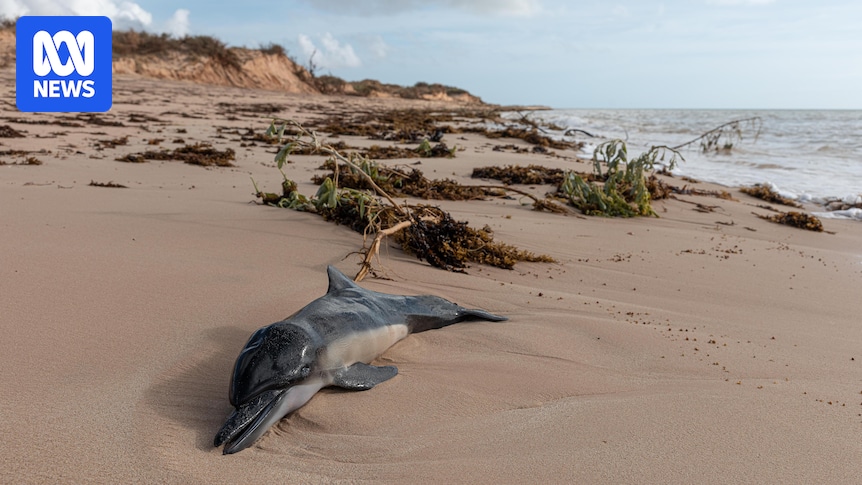
The sheer number of marine life carcasses washed ashore by ex-tropical Cyclone Narelle has shocked many, but it is what lies beneath the ocean’s surface that has scientists most worried.
The system arrived at the Ningaloo Reef as a category four cyclone during the marine park’s first coral spawning event since a record-breaking marine heatwave in 2025.
Experts fear the consequences could be serious for the future of the World Heritage site.
Wildlife carers and volunteers are still counting the cost of ex-Tropical Cyclone Narelle. (Supplied: Brooke Pyke)
Animals injured or killed by the ex-cyclone littered the rugged coast of the North West Cape, with authorities reporting up to 200 dead shorebirds on every beach and at least 30 dead marine mammals.
The massive storm brought gale-force winds and a year’s worth of rain to Exmouth within 24 hours, badly damaging homes, businesses and the local airport.
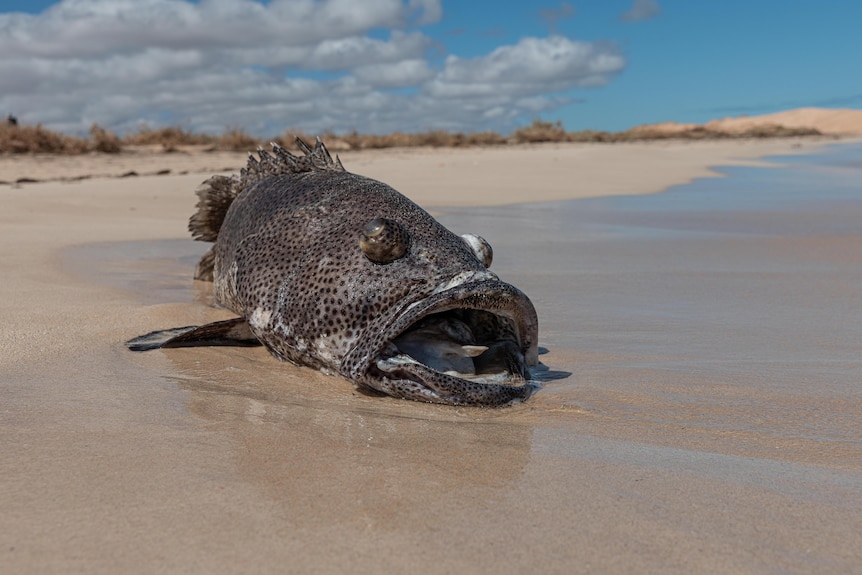
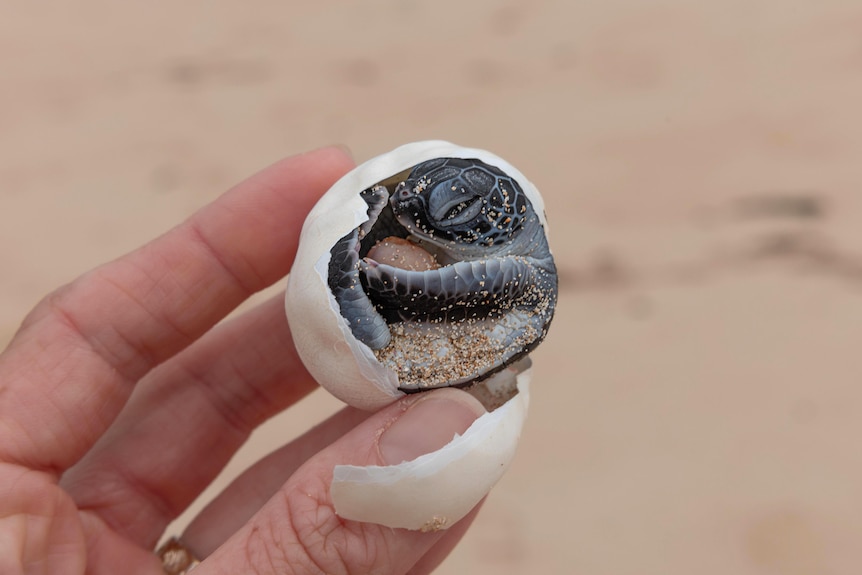
Fish, sea snakes, and turtle hatchlings were among the dead. (Supplied: Brooke Pyke)
The town, about 1,200 kilometres north of Perth, is the main gateway to the Ningaloo Reef, famed for its crystal clear waters, stunning coral and rich biodiversity.
Exmouth has been forced to close its doors to visitors as it takes stock of the damage — including to the prized reef and surrounds, the jewel in the region’s tourism crown.
How Severe Tropical Cyclone Narelle became a historic storm
Fragile reef
Months of warmer-than-usual water temperatures off Queensland set the stage for what was an especially large and intense cyclone, according to data from the Bureau of Meteorology.
“Even though she passed over land a couple of times, [ex-Tropical cyclone Narelle] was able to quickly regain her strength because of the very warm ocean temperatures,” said Marji Puotinen, an ecological data scientist at the Australian Institute of Marine Science.
The ex-cyclone was the first in 21 years to make landfall three distinct times at severe category-level strength.
Dr Puotinen warned the weather system’s impact on the reef may have been exacerbated by the marine park’s already fragile state.
Loading…
“When a coral’s been recently damaged and weakened [by bleaching], that makes a big difference,” she said.
“The dead coral creates a source of rubble, so the waves come and pick up this dead coral … if you’re in the water, it’s not just big waves smashing on you, it’s big waves full of rocky debris.”
Coral spawning fears
Ex-Tropical Narelle coincided with one of the largest research endeavours ever undertaken on the Ningaloo Reef.
A self-described “brains-trust” of scientists from the Minderoo Foundation, Curtin University and the Taronga Conservation Society were studying the reef’s annual coral spawn.
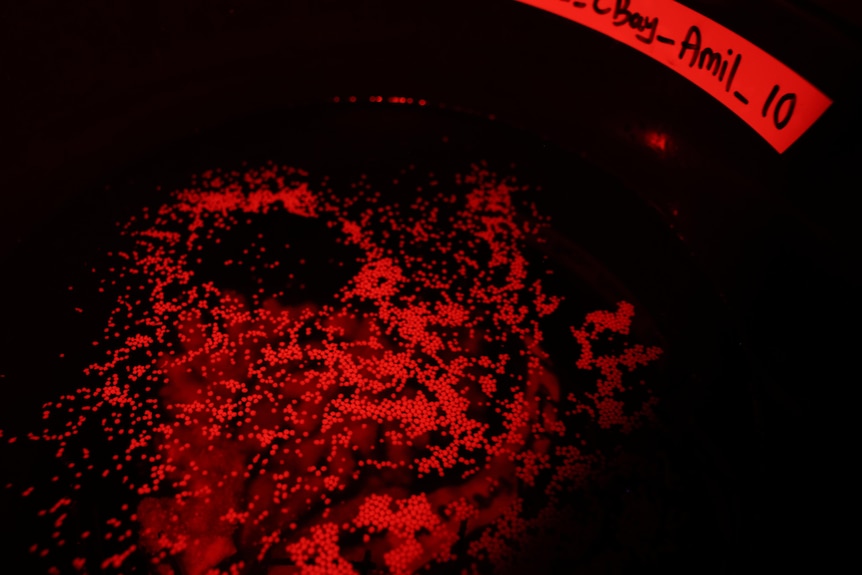
Spawn bundles rise to the water’s surface in a laboratory experiment. (Supplied: Minderoo Foundation)
Beneath the light of a full moon, hundreds of species of corals release a maelstrom of eggs and sperm, which merge into bundles and rise to the water’s surface.
These embryos then spread along the reef like pollen, before descending again to take stony root on the seabed.
Minderoo Foundation senior research scientist Kate Quigley said sections of this year’s spawn had activated at unexpected times, thought to be a sign of stress.
Now many of those newly born youngsters will have been washed away entirely.

Lab-grown corals being subjected to heat-stress tests. (ABC Pilbara: Alistair Bates)
“Having the cyclone come through right when those baby corals were finding their new homes could potentially set back recovery,” Dr Quigley said.
“This is really a double whammy for the reef.”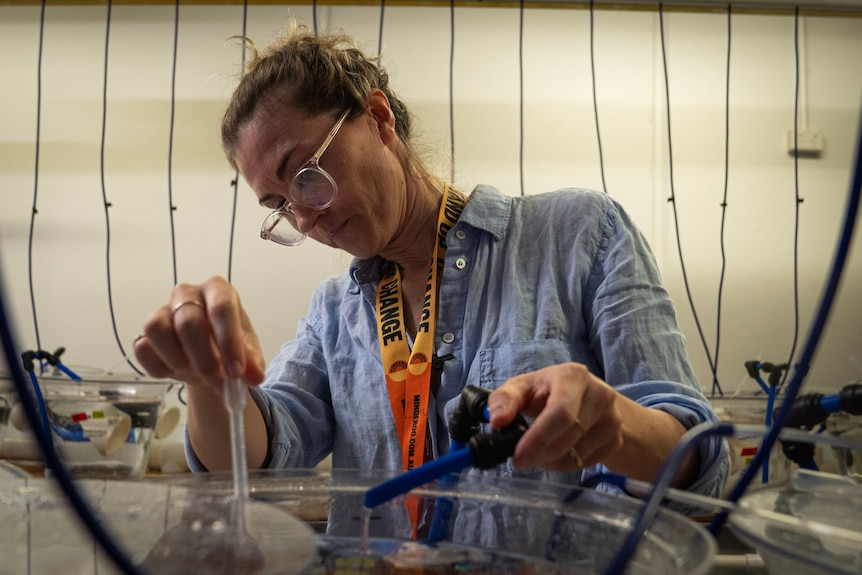
Minderoo Foundation researchers say a marine heatwave off WA last year may have triggered the worst bleaching event recorded in the world. (ABC Pilbara: Alistair Bates)
Her team had been implementing a pioneering cryopreservation technique prior to the cyclone — freezing coral spawn for future research and reef restoration projects.
“This really underscores the urgency of acting now … year after year with these really big shocks, the reef can only go on for so long,” she said.
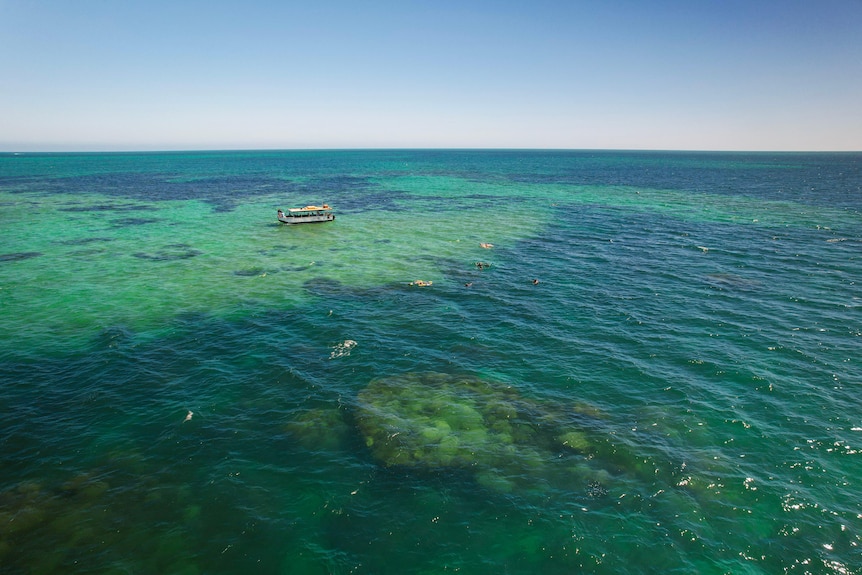
A glass-bottom boat company has offered families a free snorkel on the reef. (ABC Pilbara: Alistair Bates)
Bouncing back
With fuel still being rationed in Exmouth, few residents have been able to fill their vessels and survey the state of reef for themselves.
Among the first is a boatload of young families taken out free of charge by a local tour company.
The excursion is a welcome reprieve from the hardship of recent days — several passengers were still without power at home.
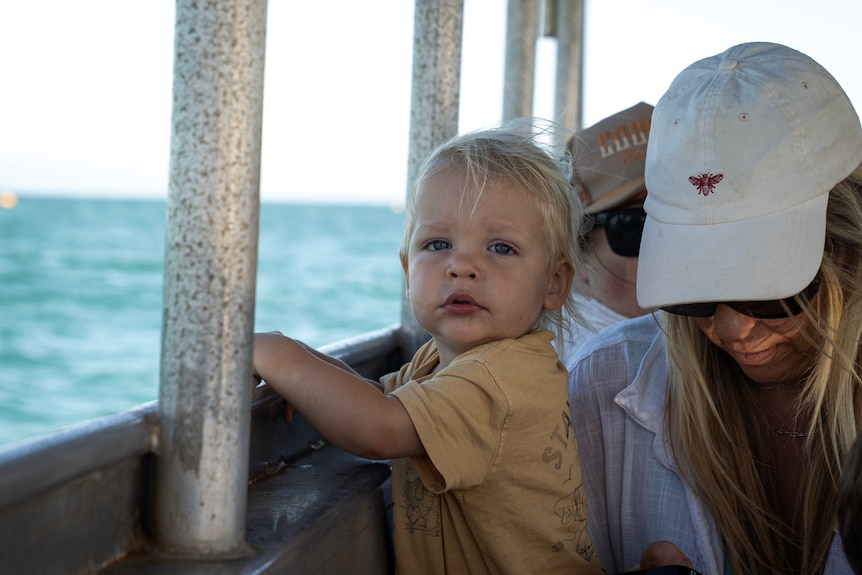
Families on board say they are not shying away from the changes in the reef that sustains their town. (ABC Pilbara: Alistair Bates)
Skipper Kimberley Rowe said the reef and the parade of life it supported were already bouncing back.
“It actually looks really good … like there’s so many fish, there’s turtles,” she said.
“We have to remember that there’s so much still out there.”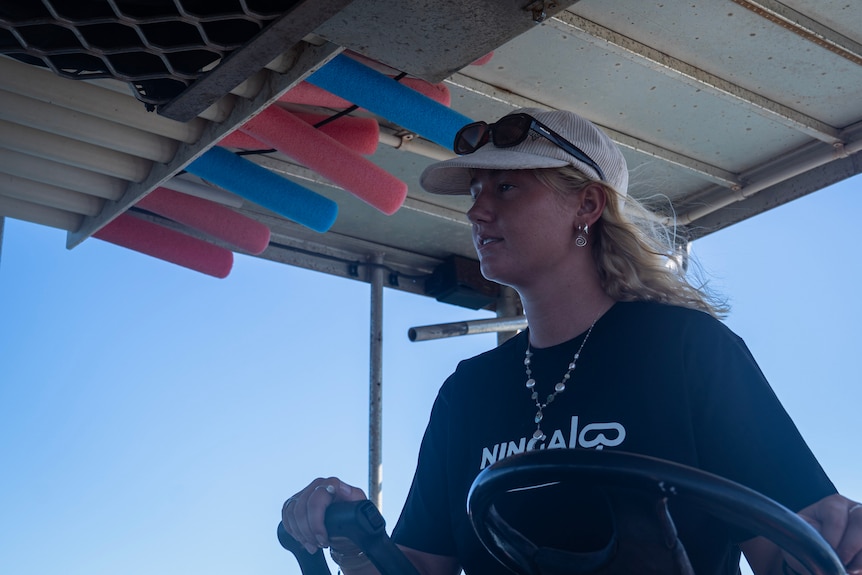
Kimberley Rowe says she has been pleasantly surprised by the toughness of the reef. (ABC Pilbara: Alistair Bates)
While the underwater visibility was still clearing, snorkellers at the Tantabiddi Sanctuary Zone were treated to teeming schools of parrot fish and no obvious signs of damage.
With another coral spawn expected later this month, Ms Rowe hoped the reef would get the clear run it needs.
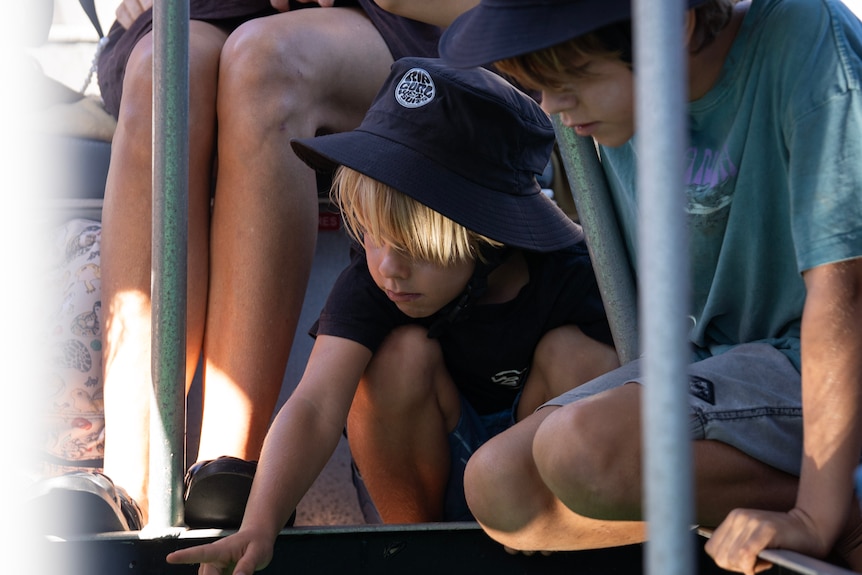
Exmouth’s youngest residents were eager to check in on their “backyard”. (ABC Pilbara: Alistair Bates)
And surrounded by children gazing through her boat’s glass floor, she said the community was far from giving up.
“It’s super hard to see our backyard go through so much in such a short amount of time,” Ms Rowe said.
“People tend to protect the things they love … hopefully [these kids] fall in love with it and they want to protect it like we do.”