
The most telling change to the structure is that All Blacks head coach Rennie will no longer report directly to the chief executive but, instead, the high-performance director. This shift alone signals the influence and power the new role entails.
“The CEO will always have a special relationship with the head coach. That won’t change but the change in reporting line recognises it needs a much more singular focus and the breadth of the CEO’s role,” interim New Zealand Rugby boss Steve Lancaster said.
Codie Taylor leads the haka ahead of the first test against France last year. Photo / Photosport
“The All Blacks coach should have someone they report to that is accessible, available and able to readily engage as meaningfully as possible and that’s not always possible with the demands of the CEO’s role and the commitments elsewhere.”
While that’s true, the change is also driven to address the turbulence that forced Scott Robertson to leave his post and the All Blacks to start afresh under Rennie and his new coaching team 18 months out from the next World Cup.
Having an experienced set of eyes and ears effectively embedded in the All Blacks, chatting to coaches, players, and backroom staff on a weekly basis should allow NZ Rugby to be better informed about everything that environment encompasses, and allow changes to be made swiftly, if needed.
“It’s a fine line in terms of having someone close to the environment that has a trusted relationship with the coaches and those running the team and not overstepping it but that will all be valid,” Lancaster said.
“Once we’ve made the appointment, that person will determine how they will operate and what that looks like but we certainly expect they will spend more time in those team environments than has been the case to date. That’s why we’re creating a dedicated role and increasing our resources in that area.”
NZ Rugby’s new high-performance director is best compared to the role former Wallabies head coach David Nucifora fulfilled during a successful decade with Irish rugby before traversing to a similar position with Scotland.
“We benchmarked internationally in terms of what other roles exist – not just in rugby but across sport,” Lancaster said. “The role isn’t comparable to a director of rugby role at an English club but there are other roles with national unions that have similar traits.
“Every country has their nuance so it’s not a case of cutting and pasting by any means but we made sure we understood what models are operating effectively and what we could draw from those.”
The big question, then, is who Rennie will report to when his All Blacks tenure kicks off in July.
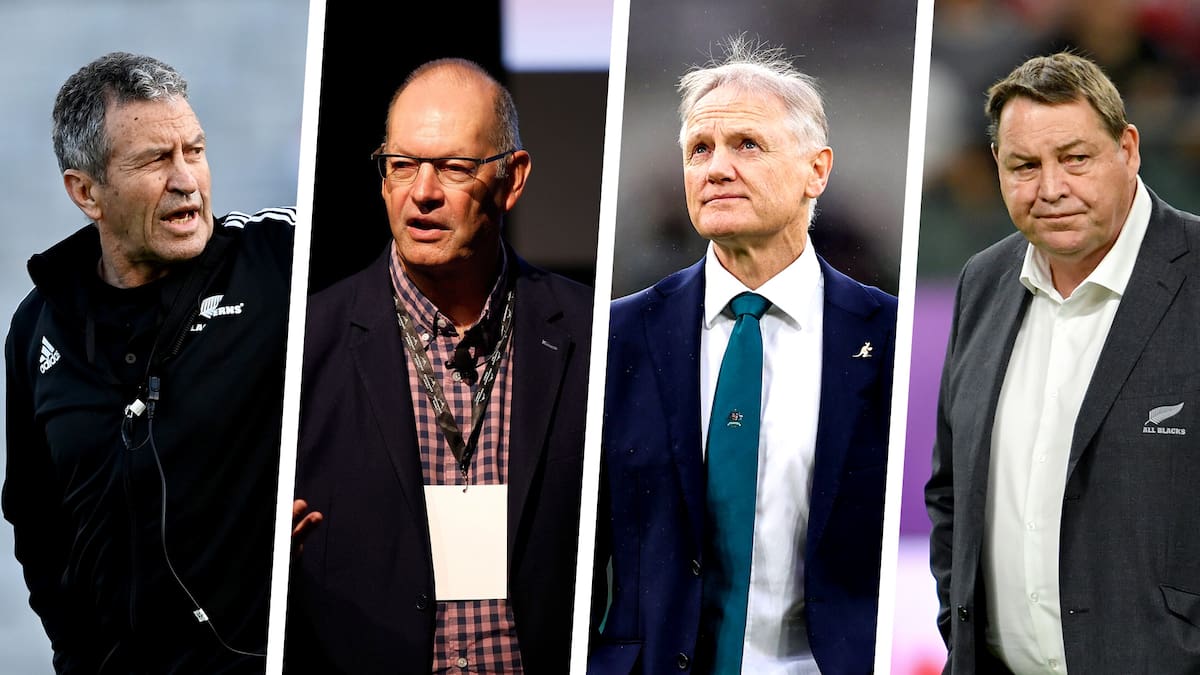
Qualified candidates aren’t in vast supply but Joe Schmidt, Sir Steve Hansen, Wayne Smith and Don Tricker are among the few who fit the specific credentials.
Schmidt, with his level of dedication and detail, would be the ideal recruit. He finishes leading the Wallabies in July and is then expected to visit his family in Ireland but could potentially be lured home.
Schmidt ruled out contesting the All Blacks job at the start of this year after citing loyalty to the Wallabies – and Rugby Australia will be desperate to retain his services in a consulting capacity for incoming head coach Les Kiss through to the 2027 World Cup.
NZ Rugby, though, are certain to gauge Schmidt’s interest.
Smith is another vastly experienced guru who boasts a long-standing existing relationship with Rennie but, at this stage, he is committed to returning to Japanese club Kobe.
Hansen is expected to conclude his involvement with Toyota and return home when the Japanese season finishes in May.
Despite a difficult time in Japan where Toyota have struggled, Hansen’s unprecedented success with the All Blacks and knowledge of NZ Rugby’s systems mark him as a leading contender but he may not be willing to step back into the fulltime demands this role would require.
That leaves Tricker as the likely frontrunner.
Don Tricker was the director of player health and performance for the San Diego Padres. Photo / Photosport
While he lacks rugby coaching experience, the former softball world champion as a player and coach with the Black Sox remains highly regarded after serving as NZR’s high-performance leader from 2010-2017.
Tricker left NZ Rugby to lead player health and performance with Major League Baseball’s San Diego Padres but was coaxed back late last year to assist in the All Blacks review that culminated in Robertson’s exit.
That involvement could now open the door to take on the high-performance director position.
“I won’t speak to individuals or any conversations we’re having but the person we want to appoint will have world-class experience in leading high-performance teams and systems,” Lancaster said.
“They will also need to understand and have good experience in coaching and coach development.
“Those people you’ve mentioned all have those attributes but we’re casting a wide net and not ruling out anyone at this stage.”
NZ Rugby’s first high-performance director is seen as long overdue but with an appointment expected by May, change is imminent.
While Rennie will have autonomy to run his All Blacks as he sees fit, forming a strong working relationship with his new boss will be imperative to rectifying the team’s turbulent form.