
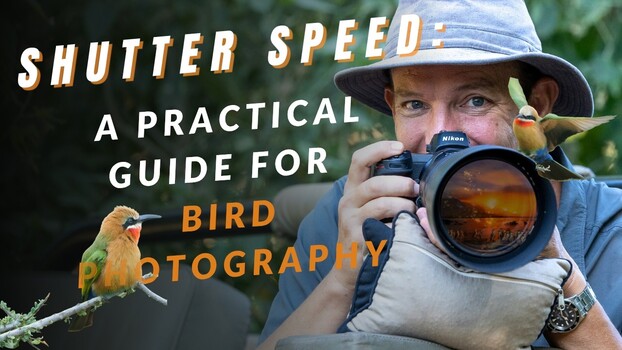
Most bird shots live and die at 1/2,000 of a second or faster. That single setting works, but it locks you into one type of image and leaves a huge range of creative possibilities completely untouched.
Coming to you from C4 Photo Safaris, this remarkably practical video walks through the full shutter speed range, from 1/8,000 of a second down to 25 seconds, showing what’s actually possible at each stop along the way. He shoots primarily in Africa and Antarctica, and the footage he uses to make his case is drawn from decades of field work. The core argument is simple: modern cameras with strong ISO performance give you options that film shooters never had, and most people aren’t using them. At 1/8,000 of a second, you freeze every water droplet off a diving penguin and every individual wing beat of a carmine bee-eater. At 1/2,000 of a second, you have a reliable default for most mid-sized birds in flight, with enough flexibility to add aperture and get real depth of field into the frame.
Where the video gets genuinely interesting is when it starts talking about the slower end of the range. At 1/1,000 of a second, lens choice becomes critical. He demonstrates shooting fast-moving carmine bee-eaters with a 100mm lens rather than a long telephoto, which lets the birds move more slowly through the frame and actually makes the shot possible at that speed. At 1/500 of a second, tight portraits and wide environmental compositions become your main tools, and he shows flamingos shot at f/11 or f/16 where every bird across the entire frame is rendered sharp because they’re small enough in the composition that the shutter speed is sufficient to freeze them. At 1/250 of a second, you’re thinking about storytelling and context, placing birds in their landscapes rather than isolating them against a clean background.
The section covering 1/100 of a second and slower is where the field experience really shows. A nightjar perched against a rising moon, shot on a tripod at 1/100 of a second, is one of the strongest images in the video. A starling bathing works at the same speed because the head stays still while the wings create the motion. At 1/50 of a second, flowing water becomes an active element in the composition, with king penguins standing still in a South Georgia river while the current blurs around their feet. He also demonstrates panning with large groups at 1/5 of a second using a 24-70mm lens, which produces a result that looks nothing like a standard bird-in-flight shot. The exposures beyond one second, including a 25-second shot of penguins with fires burning in the background mountains, are something most bird shooters would never attempt.
The images throughout aren’t illustrations of what’s theoretically possible. They’re from real shoots in difficult light and challenging conditions, which makes the advice land differently than a list of settings ever could. Check out the video above for the full breakdown, including the slower shutter speed techniques and the specific field strategies that make them work.