
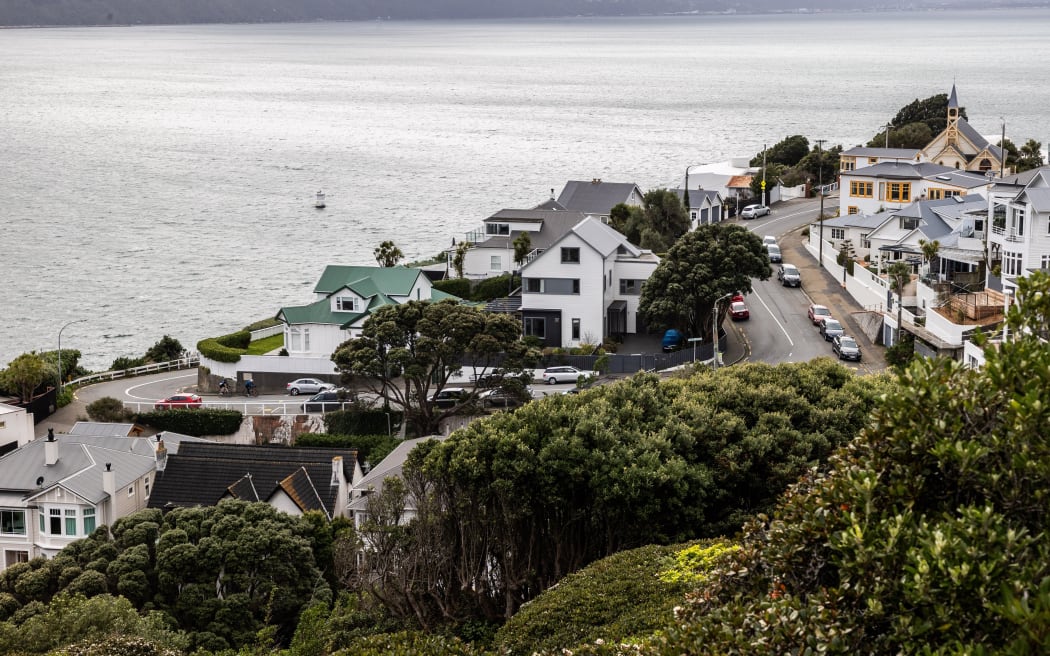
Wellington City’s residential rates have more than doubled since 2012, according to a report.
Photo: LDR/SUPPLIED
Wellington City’s residential rates have more than doubled since 2012, making them among the highest and least affordable in the country, a new council-commissioned report says.
Including the levy for the new $511 million Moa Point sludge-minimisation plant, median Wellington City residential rates soared from $1985 in 2012 to $5177 last year – far outpacing the 56 percent rise in median household wages over the same period, according to an Infometrics rates-affordability report commissioned for the council’s next long-term plan.

The report shows residential rates made up 2.2 percent of Wellington City household incomes in 2012, rising to 3.8 percent by 2025.
Once regional council rates are included, Wellington City households spend 4.7 percent of median incomes on rates – tying with Porirua as the second least affordable in the country, just behind Tauranga and Dunedin at 4.8 percent.
The Government’s 2007 independent inquiry into local government rates set an affordability benchmark at 5 percent, with rates deemed unaffordable once they exceed that share of household income.
Infometrics chief executive and principal economist Brad Olsen told councillors at a Tuesday briefing that the report looked only at superficial dollar figures, without factoring in council services or value for money.
The council’s recently-adopted triennium plan had pledged to “strive to keeping rates as low as practicable in an effort to make Wellington more affordable, while acknowledging there will always be a range of views about what that means”.
Mayor Andrew Little said the council had a responsibility to control costs, raise revenue where possible and keep rates increases as low as practical.
“Wellingtonians have given the council a clear message that rates affordability is a major concern, and I’m determined to respond to that.”
Across the capital, rates affordability worsened in every suburb, the Infometrics report found, with rates rising from 1.8-3 percent of household incomes in 2012, to 1.9-3.5 percent in 2017, and up to 2.3-5.2 percent by 2025.
In Oriental Bay – which has held the unenviable title of Wellington’s least affordable suburb for rates since 2012 – the share of household income going to rates has climbed from 5.2 percent to 7.5 percent over 13 years.
In Berhampore and Mount Victoria, rates made up 2.8 percent and 3 percent of household incomes in 2012, but have climbed to 5.2 percent by 2025 – making them jointly the second-least affordable suburbs for rates.
The Infometrics report also found Wellington’s median commercial rates – $13,000, putting the city in the national “middle of the pack” – become the most unaffordable once measured as a share of capital value, at 2.4%. By comparison, commercial rates in Auckland and Christchurch sit at 0.9 percent of capital value, making them the most affordable.
Little had earlier pledged to reduce the capital’s commercial rate differential, which currently charges commercial building owners 3.7 times more than residential ratepayers.
His triennium plan also included lobbying to axe a law that exempted Crown buildings such as Parliament, schools and hospitals from paying rates.
LDR is local body journalism co-funded by RNZ and NZ On Air.