
“I really enjoy the way Parliament works, the way the House operates. Chris Bishop has been amazing to work with, he has been very generous in teaching me the ropes,” she told the Herald.
“To me, this is the next step of being able to show leadership, to be able to demonstrate that we can operate in Parliament well and women can succeed.”
There have been 14 leaders of the House since the role was established in 1978 under the Muldoon Government, with Upston the first woman to hold the role.
“For young women who are interested in serving their community, absolutely it is the best job in the country. I love it,” she said.
“Any young woman who has a desire or an ambition to make their country better, I would encourage them to do so.”
The Leader of the House is a senior Government MP appointed by the Prime Minister to manage the Government’s business in the House. This includes determining the order of the Government business and its law-making programme.
Prime Minister Christopher Luxon and Minister for Social Development and Employment Louise Upston during an announcement on Jobseeker in Ellerslie in October last year. Photo / Dean Purcell
Māori representation
During a term when some have described the Government’s policies as anti-Māori, Luxon has at times pointed to the number of Māori around Cabinet across the coalition.
Speaking at Tuesday’s post-Cabinet press conference, Luxon said he was okay his party only had one Māori MP in Cabinet, again pointing to the wider Cabinet make-up.
“We have got tremendous Māori representation in our coalition Government and Cabinet,” Luxon said.
“I appreciate that may sit with people from other parties but the way we think about ourselves as a government – we have good representation at Cabinet.”
He said his reshuffle decisions were based on merit.
“What’s really important is competency and merit and it is actually about making sure I have got the right people in the right seats at the right time. I have said that consistently and that is at the forefront of my considerations.”
Overall, there are six Māori MPs in Luxon’s Cabinet (one National MP, two Act MPs and three from New Zealand First).
Earlier on Tuesday, Luxon appeared flustered after he fumbled answers to questioning from TVNZ’s Breakfast. When asked how many Māori MPs he had in his Cabinet, Luxon initially said James Meager – a Māori minister outside Cabinet – before being reminded of Tama Potaka.
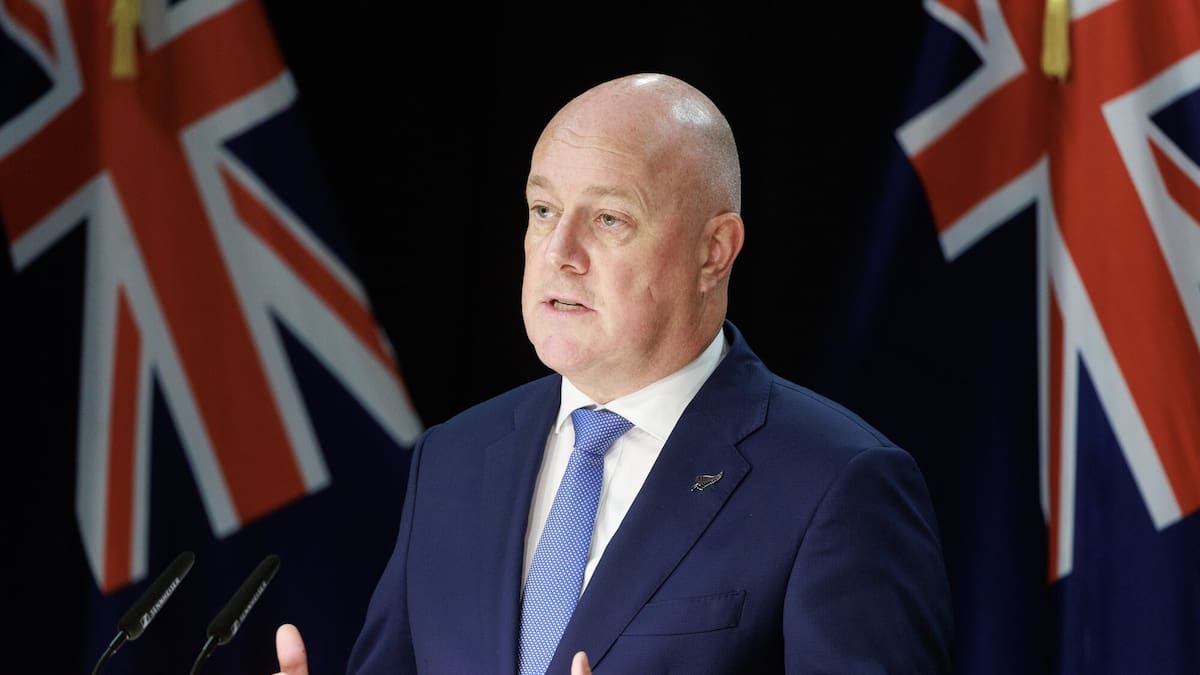
Prime Minister Christopher Luxon arriving for his post-Cabinet press conference in the Beehive theatrette at Parliament yesterday. Photo / Mark Mitchell
Dr David Jenkins, a senior lecturer of political theory at the University of Otago, said there were several ways to mark diversity in politics, including identity factors like gender, as well as an MP’s background, upbringing and avenue (different groups a person is associated with) into politics.
But despite the differences in identity and background within a party, those MPs were still largely constrained by their party’s programmes and ideology, he said.
“I don’t think that is necessarily a bad thing; that’s just the nature of party politics. But if there are so few women or Māori in your Cabinet, that is perhaps demonstrating that you are not necessarily attractive as a party to these groups.
“The individuals are only going to matter to an extent; it is about how represented people feel by the party as a whole.”
Immediately after the reshuffle last week, questions were raised about Paul Goldsmith’s appointment as Minister for Pacific Peoples. In response to questioning, Act leader David Seymour said, “I know what you are going to say: can you represent a person if you are not the same race?
“The answer is absolutely you can. Your ability to do something is not predicated on your ethnic background, that’s called racism, that’s what we are opposed to.”
Julia Gabel is a Wellington-based political reporter. She joined the Herald in 2020 and has most recently focused on data journalism.