
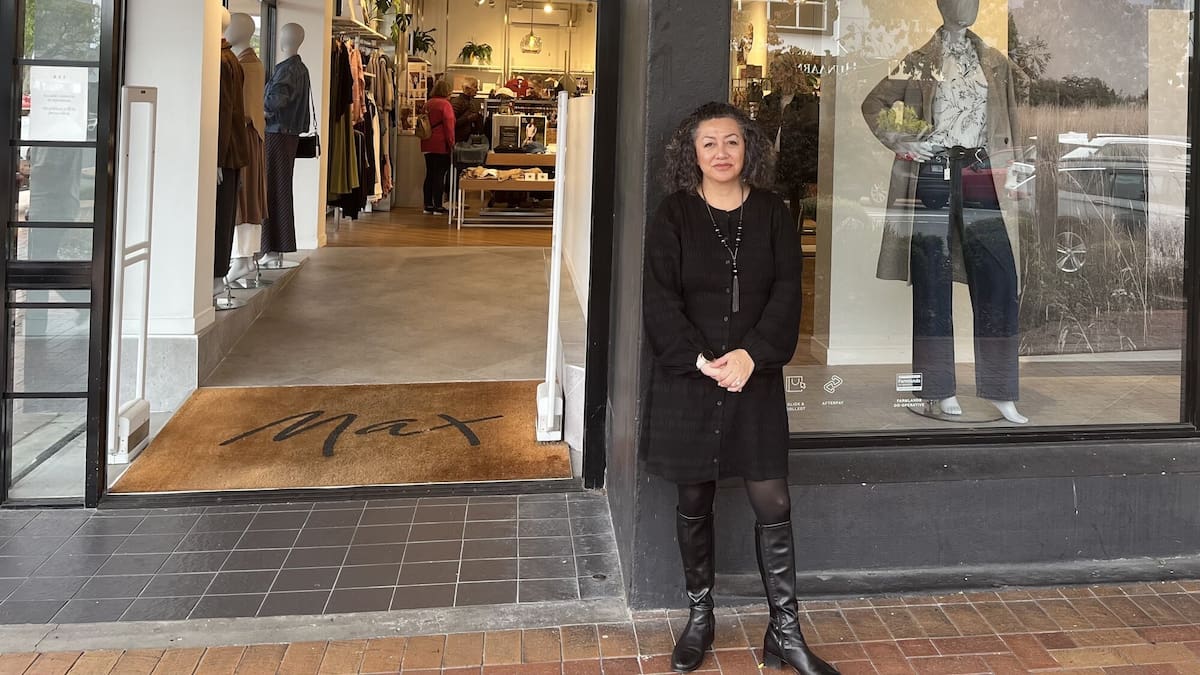
Fredrick said the guardians pointed to information on the council’s website saying retailers could not trade.
They warned she could be fined up to $1000.
Fredrick contacted the Max head office.
She said they didn’t want to risk a fine and decided “there was just no point in arguing”.
Fredrick and another staff member went home.
She said they were “not very happy”.
“I had people lining up, wanting to come into store, and I had to shut my doors,” Fredrick said.
“I lost a lot of money on Sunday.”
She said the Rotorua CBD was “packed”, with Easter weekend “absolutely” one of the busiest times of year – second only to Christmas.
She said there would be a significant “ripple effect” from having to close.
Lost sales had to be made up, adding pressure on staff and the business for the rest of the month.
“It’s not good for Rotorua … the economy’s tough enough as it is.
“We don’t want to be one of these empty stores around here,” she said.
Fredrick said the guardians saw “every single retailer” in the CBD.
She said most closed. “We all suffered.”
A few doors down, Toyworld stayed open.
Store manager Mark Sherman said staff were approached about 11am.
Toyworld Rotorua store manager Mark Sherman says mixed messaging led them to “wing it” and stay open. Photo / Annabel Reid
They called the owner and checked the official policy online. It showed they could be open.
He said they thought, “We’re 95% sure … we’ll just wing it and stay open.”
Sherman said the rules were “extremely confusing”, with council messaging not matching what was written in law.
“There’s conflict in information … every year it’s the same problem.
“It’s a stupid system.”
He said they had the same issue last year.
Sherman said he called the council on Sunday to confirm. They checked and told him the store should be closed.
Clearer communication was needed before Easter each year so businesses knew what to do, he said.
Toyworld’s Sunday duty manager Reuben Hagger said he noticed a couple of other stores remained open but “everywhere else” closed.
In response to questions from the Rotorua Daily Post, Rotorua Lakes Council chief executive Andrew Moraes said the Safe City Guardians had incorrect information.
“Our Safe City Guardians visited stores on Sunday as part of overall efforts to keep the inner city hospitable, [and] spoke with some operators, mistakenly believing shops were not permitted to be open on Easter Sunday.
“They were not instructed to do this but were using their initiative to protect business from potential fines.”
Moraes said the Rotorua Lakes Council Easter Sunday Shop Trading Policy had been in place since 2017.
It permits stores to be open for trading on Easter Sunday.
The policy “specifically aims to meet demand for goods and services on Easter Sunday to cater for locals and visitors”, Moraes said.
“Unfortunately, our Guardians were unaware of this policy and we sincerely apologise to those retailers who were spoken to and given the wrong information, particularly those who acted on that information and closed.
“While the Guardians’ actions were well-intended, the information they had was incorrect and we will ensure this does not happen again in future.”
Rotorua’s Safe City Guardians team is a council-run community safety patrol. The council’s website says its Safe City Guardians work as a roving link between the council, CBD businesses and visitors.
Easter Sunday is a restricted trading day in New Zealand, meaning, in general, stores must close. This does not apply to shops in areas such as Rotorua where the council has instituted a local Easter Sunday shop trading policy.
Businesses can be fined up to $1000 for opening on a restricted trading day if they do not have an exemption or a local trading policy.
Annabel Reid is a multimedia journalist for the Bay of Plenty Times and Rotorua Daily Post, based in Rotorua. Originally from Hawke’s Bay, she has a Bachelor of Communications from the University of Canterbury.