
He said the rivers’ “constantly evolving landscape” were home to vulnerable populations of ground-nesting birds, like the banded dotterel.
Pests found in these areas range from animals like rabbits, feral cats and mustelids to plants like climbing spindleberry, Chilean needle grass and woolly nightshade.
Telford said with limited habitat left for the dotterel, there’s substantial pressure on the birds from predators and weeds changing the habitat.
But Telford said there are pests in Hawke’s Bay that can be eradicated, like the rook – a large, crow-like bird.
He said the rook arrived in Hawke’s Bay from other regions and had a “significant economic impact” on growers by turning over the ground looking for grubs and pulling out plants.
“The population size is such that we deem eradication a strong possibility.”
Telford said the region’s rabbits had an “anecdotal” spike this summer and the council was keen to see landowners “get on top of them”.
“Especially when they’re in small to medium populations before they get really bad.”
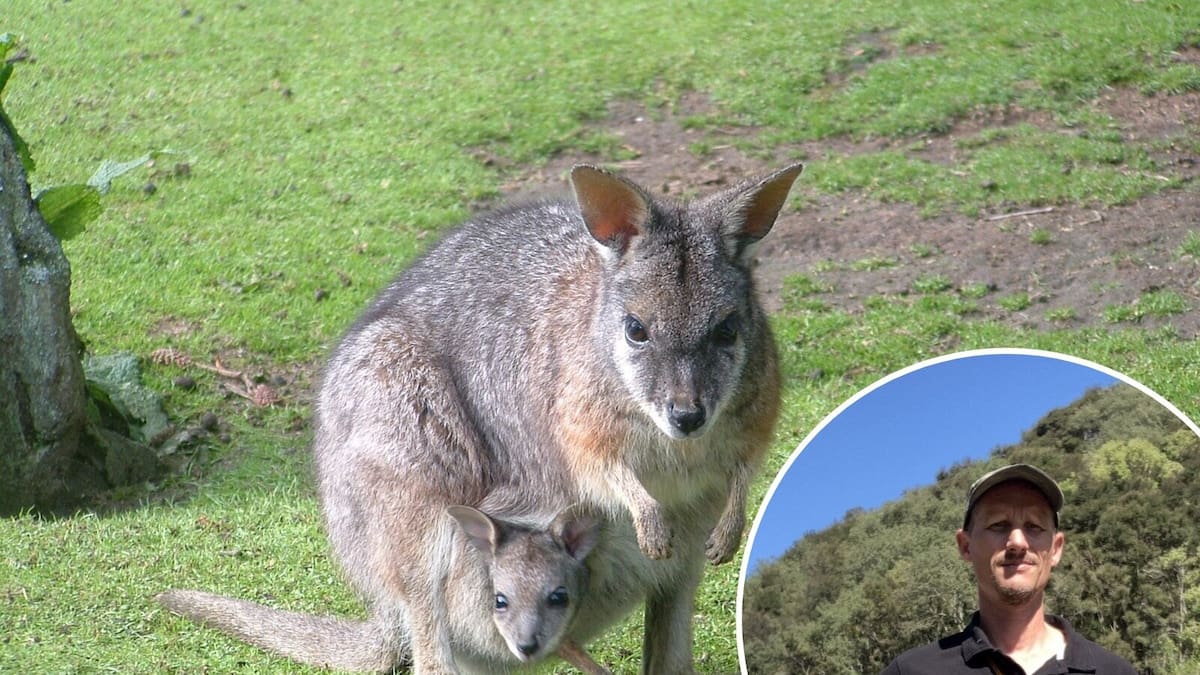
But Telford warned wallabies in Hawke’s Bay “would be like having rabbits on steroids”.
“They’re going to change the nature of the ground directly through burrowing and very close cropping of the grass to the point that it can become bare.”
Telford said the wallabies’ arrival would add pressure on pastoral land and ecosystems while deforesting areas and preventing the reestablishment of trees.
Telford said wallabies would most likely cross into Hawke’s Bay from the north and northeast, near the Rangitāiki Plains.
“We don’t want them here. We don’t want them establishing here. And as soon as they step toes on our border, we want to know where it is.”
Thus far, there had been several reported sightings of wallabies in Hawke’s Bay, but nothing confirmed.
Telford said currently, the likelihood of wallabies populating Hawke’s Bay was low.
However, any sightings need to be reported through the website reportwallabies.nz.
He also encouraged Hawke’s Bay hunters to shoot any wallaby.
“If they do shoot an animal, keep it, stick it in the freezer. Samples will be taken by us for MPI [Ministry for Primary Industries] and then we can source where that animal comes from.”
Telford said hunters should also record the GPS location where the animal was found and take a photo of the carcass.
Telford’s Forest and Bird talk is free and on at 7.30pm at St Andrew’s Presbyterian Church lounge on April 9.
Jack Riddell is a multimedia journalist with Hawke’s Bay Today and has worked in radio and media in the UK, Germany and New Zealand.