
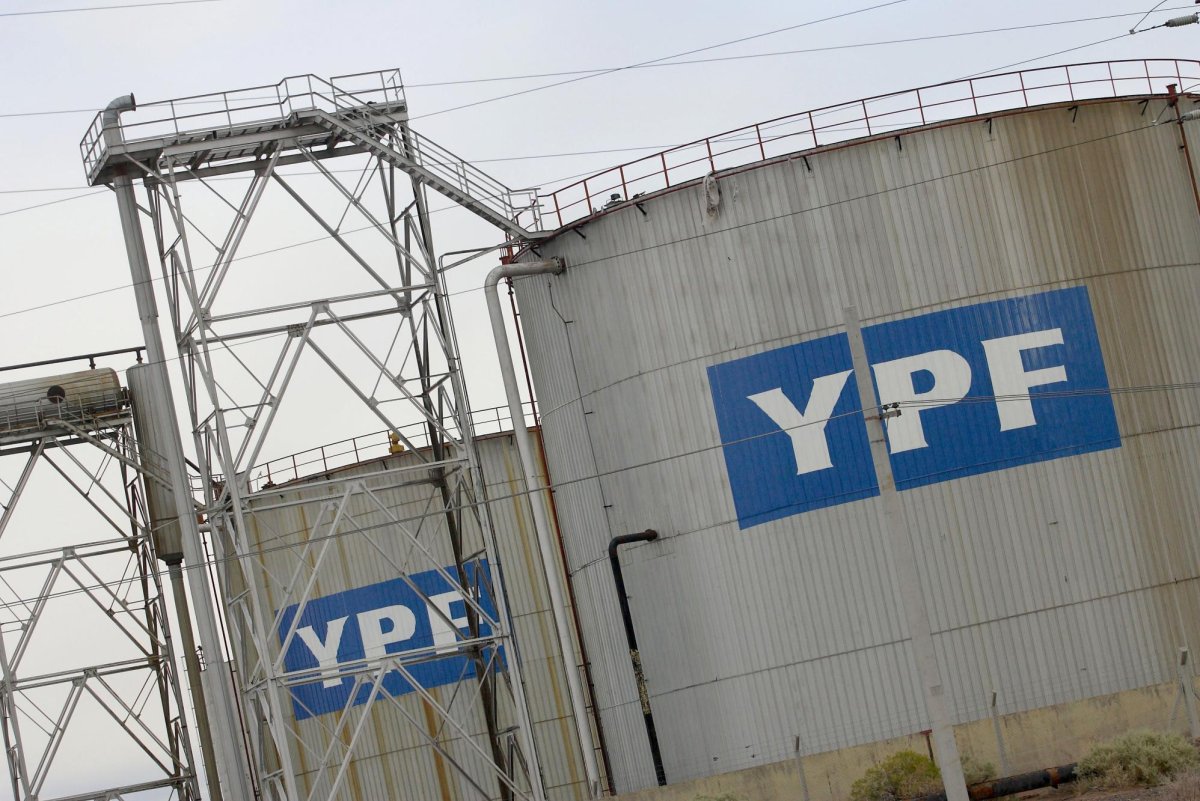
Argentina reached record oil production levels, with output climbing to 874,000 barrels per day, a 15.9% increase from a year earlier. File Photo by Juan Macri/EPA
April 8 (UPI) — Argentina reached record oil production levels, with output climbing to 874,000 barrels per day, a 15.9% increase from a year earlier, a report by consulting firm RICSA ALyC states.
The study attributes the expansion largely to the development of Vaca Muerta, one of the world’s largest unconventional hydrocarbon reserves.
Located in Neuquén province, the formation accounts for 68% of Argentina’s oil production and 56% of its natural gas output. It has 4,470 active wells and continues to show steady growth.
The Neuquén Basin, the country’s main producing area, represents 77.4% of national output and posted a 30.4% year-over-year increase.
The surge comes amid sustained global energy price increases, reinforcing the strategic value of hydrocarbon-producing nations and positioning Argentina as an emerging reliable supplier.
“The rise in Brent crude prices due to the conflict in the Middle East has had a direct and positive impact on Argentine exports. In this context, the country has a strategic opportunity to advance liquefied natural gas development and position itself as a secure supplier for Asia and Europe,” the report said.
Gustavo Delbon, structuring and capital markets manager at RICSA ALyC, told UPI the growth reflects more than a decade of development.
Companies such as YPF, along with international operators including Chevron and Vista Energy, have played a key role.
“Sustained work has reduced extraction costs and improved efficiency. Today, Argentina’s unconventional oil and gas production is among the most competitive globally,” Delbon said.
He added that these gains have supported continued investment in Vaca Muerta, even under less favorable price conditions.
Delbon also pointed to recent economic liberalization measures and investment incentives, including the RIGI framework, designed to attract capital for large-scale energy projects.
Economist Daniel Dreizzen, director of Aleph Energy and a former energy planning secretary, said Argentina is among a limited number of countries that have successfully developed unconventional resources.
“The country has more than a century of oil industry experience. From the start, Vaca Muerta attracted local and international companies that moved quickly in its development. That learning curve explains current production levels,” he said.
Juan José Carbajales, former hydrocarbons undersecretary and director of energy consultancy Paspartú, told UPI that growth has remained steady for more than a year and is likely to continue.
“The largest production increase will occur between late this year and early 2027, when the new VMOS pipeline, developed by YPF, becomes operational. This project will allow more crude transport and push output beyond 1 million barrels per day,” he said.
Carbajales added that global tensions are relevant in shaping the value of higher production volumes, creating additional revenue that could support large-scale infrastructure such as the Vaca Muerta Oil Sur project.
“In the case of liquefied natural gas, international volatility is decisive. Argentina needs to secure financing, finalize long-term contracts and position itself as a reliable supplier away from high geopolitical risk areas,” he said.
Delbon said higher energy prices are improving Argentina’s energy trade balance and could translate into increased foreign currency inflows, as the country seeks to strengthen its dollar reserves.
Dreizzen highlighted the country’s long-term potential, estimating crude production could reach between 1.5 million and 2 million barrels per day.
“Argentina has abundant resources and infrastructure projects underway to transport that volume. It is also a country with low geopolitical risk, making it an attractive supplier,” he said.
Analysts agree that sustained growth will depend on macroeconomic stability, clear regulatory frameworks and continued investment incentives.