
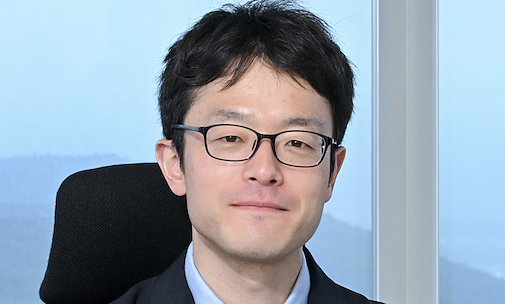
He says a rival offer delivered roughly three times his Japanese pay and a research budget about 10 times larger than what his home institution could provide.
His departure, laid out in his own words in an interview with the business daily Nikkei this week, has been an illustration of the structural gap between Japan’s rigid, underfunded national universities and the aggressive, well-resourced recruitment now being run out of Hong Kong.
Watanabe took up a dual appointment at HKUST in March as professor of physics and a professor at the university’s Jockey Club Institute for Advanced Study, according to the institute’s official faculty page.
A fellow condensed matter theorist, Ohio State University’s Masaki Oshikawa, told Nikkei that Watanabe ranked among the world’s ten strongest mid-career researchers in quantum many-body theory. Oshikawa is a longtime collaborator who co-authored with Watanabe an influential 2014 paper on the thermodynamics of time crystals.
Watanabe said he had spent seven years as an associate professor at the University of Tokyo’s Department of Applied Physics and was hoping to move up to a full professorship, according to Nikkei. With no opening at his home institution, he applied to Kyoto University and several other Japanese national universities while also looking abroad.
HKUST, which he had visited repeatedly on research trips, eventually returned an offer that made the decision straightforward, he told the paper.
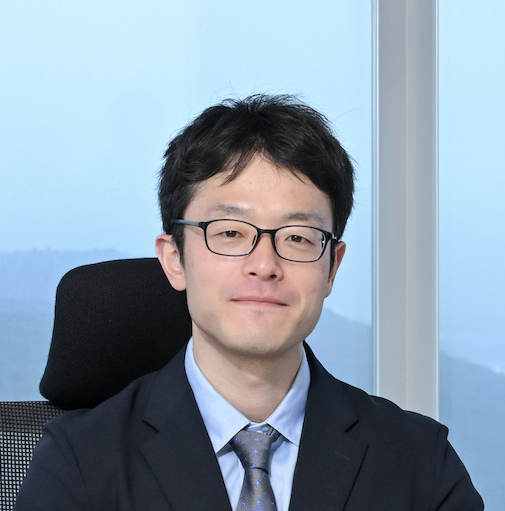
Japanese physicist Haruki Watanabe. Photo courtesy of Haruki Watanabe
The funding gap was the widest of the disparities. HKUST offered Watanabe startup funds of about 100 million yen (US$629,000) over his first five years, roughly 20 million yen ($126,000) a year, to build his laboratory, according to the Nikkei interview.
Full professors at the University of Tokyo, by contrast, typically receive about 2 million yen ($12,600) a year for research, with another 2 million yen of preparation money in the first year, Watanabe said. He described the level as nowhere near enough to run a modern theoretical physics group.
He had been supplementing his Tokyo budget with Japan’s competitive KAKENHI grants, averaging about 5 million yen ($31,000) a year. But even that fell short of the 5 to 8 million yen annual salary needed to hire a single postdoctoral researcher. For years, he had gone without.
At HKUST, he is now recruiting his first postdoc.
The pay gap was also large. As an associate professor in Tokyo, Watanabe earned roughly 10 million yen a year, he told Nikkei. Even full professors at the University of Tokyo, he said, rarely earn more than about 20 million yen annually.
Counting salary, housing allowance, health insurance, pension contributions and relocation expenses, his total package at HKUST came to about three times what he had been receiving in Japan.
The way the two offers were presented mattered, too. Japanese national universities, Watanabe told Nikkei, do not disclose the actual salary figure before a faculty hire begins work. A government-set pay scale exists, but allowances vary by institution, and the real total only becomes clear when the first paycheck arrives.
HKUST, by contrast, spelled out every line of the compensation package in writing before he accepted. That transparency, he said, was itself part of why he took the offer.
Aggressively poaching and counter-offering for top researchers is normal in international academia, particularly in the U.S., where universities routinely raise salaries to retain scientists courted by rivals, Watanabe told Nikkei. Japan’s national universities, bound by civil-service-style pay rules, have no comparable mechanism.
Watanabe earned his bachelor’s and master’s degrees with honors from the University of Tokyo before completing his PhD at the University of California, Berkeley under Ashvin Vishwanath, then held the Pappalardo Postdoctoral Fellowship at the Massachusetts Institute of Technology before returning to Japan.
His move lands against a backdrop of sustained Hong Kong spending on senior academic recruitment. The city’s Global STEM Professorship Scheme, announced in the 2020 policy address, was designed to fund about 100 mid-career hires at Hong Kong’s publicly funded universities, according to a Hong Kong Legislative Council research brief.
In May 2025, the Legislative Council approved an additional HK$3 billion ($386 million) Frontier Technology Research Support Scheme to help the city’s eight government-funded universities recruit top international researchers and expand basic research facilities, a government statement said at the time.
A separate HK$6 billion ($772 million) has been earmarked for new Life and Health Technology Research Institutes.