
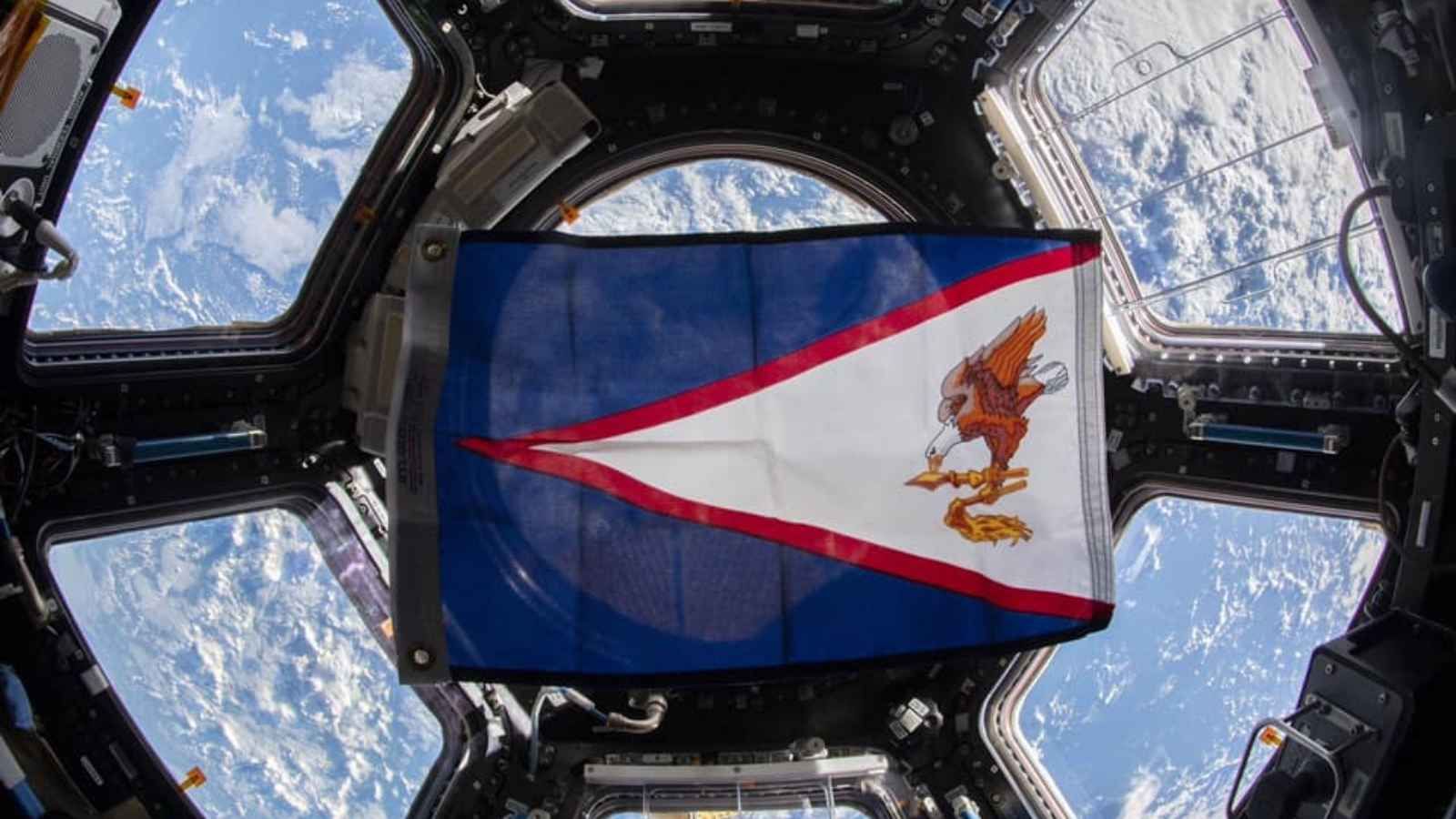
As the Artemis II crew prepares for splashdown, Pacific eyes are on Dr Christina Koch, the first woman to travel into deep space and her unique connection to the people of American Sāmoa.
Koch has long celebrated her ties to the islands. On a previous National Aeronautics and Space Administration (NASA) mission in 2020, she carried the American Sāmoa flag to space and shared on Instagram: “I will never forget my Sāmoan friends… Great memories exploring new waves, trails, and reefs. One step closer to that umu [earth oven] on Mars! Fa’afetai lava! [Thank you!]”
Her connection to the islands is more than symbolic. Before joining NASA, Koch served as the Station Chief at the National Oceanic and Atmospheric Administration (NOAA) American Sāmoa Observatory near Tula.
She monitored atmospheric baselines and climate trends. It was while living there that she learned she had been selected as an astronaut.
Congresswoman Aumua Amata, the United States Representative from American Sāmoa, said on Facebook that Koch’s journey is more than a personal milestone.
“We are proud of her connection to American Sāmoa and what it represents for our people and this historic journey. We are proud of [Koch’s] connection to American Samoa and what it represents for our people.
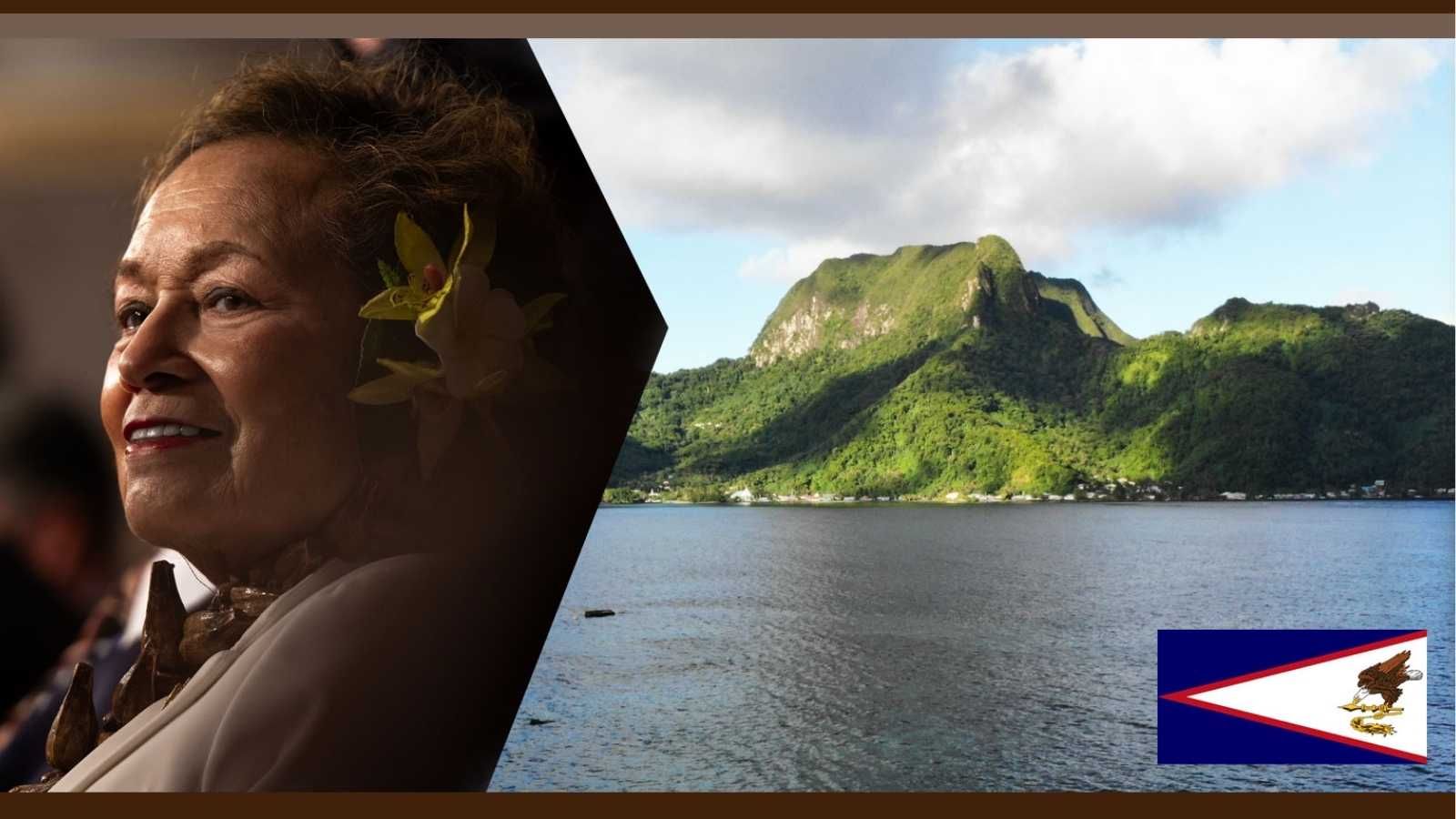
Congresswoman Aumua Amata. Photo/Facebook
“Especially for our young men and women pursuing opportunities in science, service, and exploration, and thankful to all these dedicated astronauts. Fa’afetai lava, and continued prayers for a safe and successful mission.”
Koch’s work in “remote” and challenging locations including American Sāmoa, Ghana, Greenland, and Alaska helped shape the skills she needed for space.
She also fondly remembers outdoor adventures that connected her to local communities in American Sāmoa. It was also in American Sāmoa that she met her husband Robert Koch.
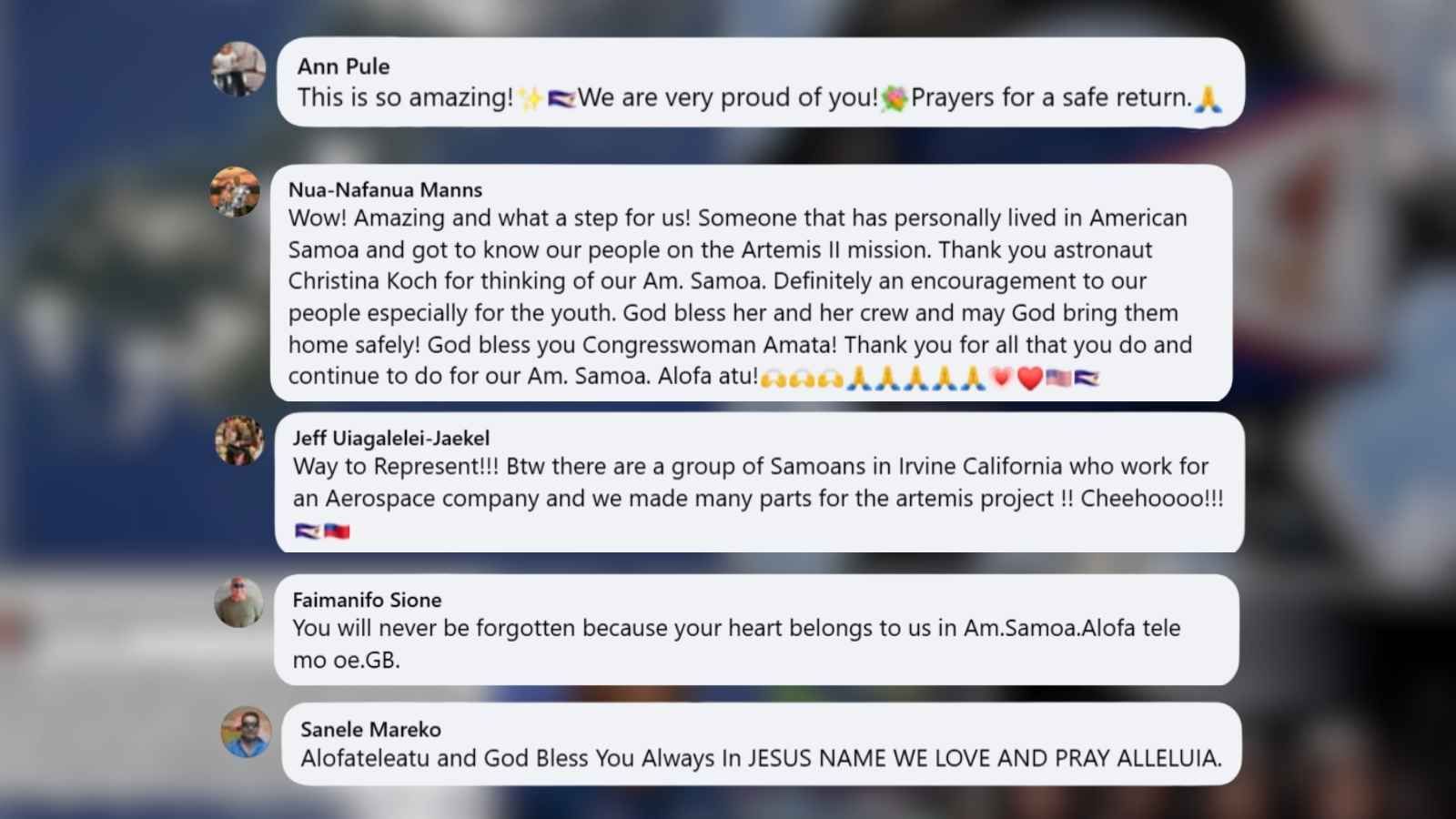
Some comments from Congresswoman Aumua Amata’s Facebook post on Dr Christina Koch. Photo/Facebook
“Learning how to thrive with a small group of people. Getting to know people really well, having them feel like you’re family and then getting to do really neat science,” she told the Resident Extreme podcast.
Koch says there was plenty to do in American Sāmoa in regards to outdoor adventure. She says it was a “beautiful place”, from the mountains to the ocean.
“Working seasonally, so having time off to do some of my outdoor hobbies, I’m between seasons working in those places. The overall lifestyle, incorporating science and those opportunities, was really great.
“So a lot of paddling, hiking, scuba diving, surfing obviously. I wasn’t a surfer yet at that point but Bob was really big into surfing. So just tons of adventure.”
Even her support network in American Sāmoa played a role in her astronaut journey. “Only two flights [left] American Sāmoa per week. So it was no small feat just getting back to the States. Bob was really supportive.
“He got some friends together before my interviews, made me cards, made sure that everybody was rooting for me back home in American Samoa,” Koch says.
The Artemis II mission is historic. The four-person crew of Reid Wiseman, Victor Glover, and Jeremy Hansen travelled 252,756 miles (406,771km) from Earth, the furthest humans have ever ventured into space.
While they did not land on the Moon, their 10-day flight, which started from Florida on Thursday, 2 April (NZT), is testing life-support and navigation systems for future lunar missions.
The latest mission also marks the first human journey beyond the Moon since the Apollo programme ended in 1972.
For the Pacific community, Dr Christina Koch’s story is symbolic. Her work in American Sāmoa, her memories of local life, and her journey to the Moon highlight how roots in the Pacific can help shape extraordinary opportunities.
It is also a reminder to young Sāmoans that science, exploration, and service are within reach, and that their culture and communities can travel far – even beyond the Moon.
The Artemis II crew is due to splash down in the Pacific Ocean on Saturday, 11 April 2026, completing a milestone journey for humanity and for the Pacific eyes watching proudly from afar.