
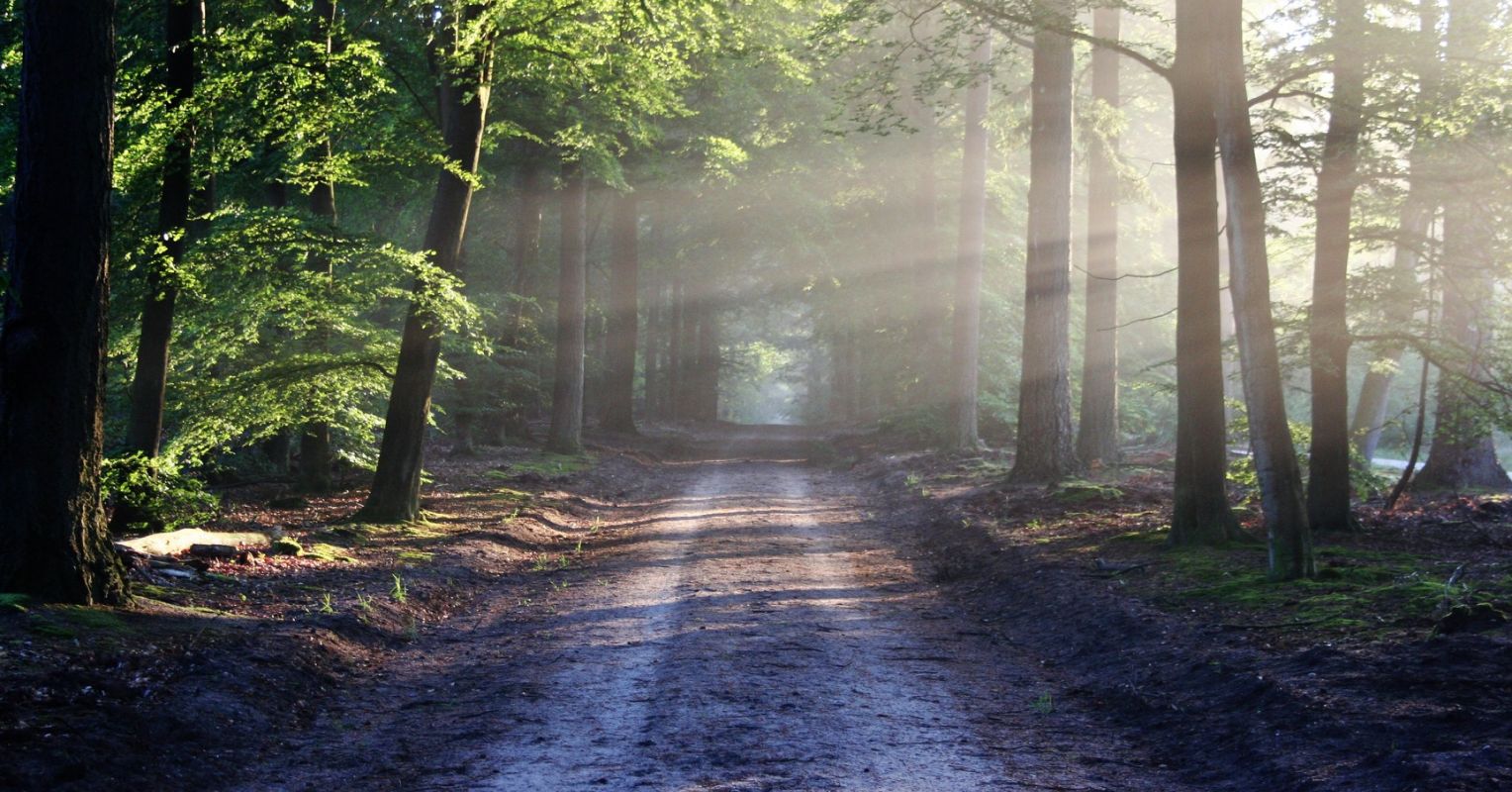
It’s a well-known and well-studied fact that Mother Nature isn’t just beneficial to your wellbeing, but it’s also nigh on essential. Just 20 minutes spent in a forest, for instance, can significantly reduce your stress levels. It is also known (and studied) that spirituality — a connection to something larger than yourself — is also very good for your health and wellness. Both subjects are things I have written about here previously. But what happens when the two things merge? What goes down when the environmental meets the spiritual?
The answer, it seems, is that very good things go down indeed. A recent study published in the Archive for the Psychology of Religion found that people who felt a deep spiritual connection to a specific physical location had better mental health outcomes than those who did not. Not only that, but that connection acted as a protective buffer for a person’s mental health. 1
The research explored how spiritual ties to a specific location related to mental health in the context of the Covid-19 pandemic. It involved 3640 US adults who reported on their experience of ‘mattering struggles’ (feeling like you don’t matter, for example, as well as feelings of loneliness and isolation) versus their spiritual ties to a place or area.
Mattering struggles were, perhaps unsurprisingly, associated with a decline in mental health whilst the spiritual ties were – equally unsurprisingly – linked to a statistically significant improvement.
However, the authors also noted a two-way interaction between the mattering struggles and the spiritual connections in that the spiritual ties to a place could attenuate both the struggles themselves and their associated decline in mental health.
On a personal note, I sailed through the pandemic myself by spending as much time as I could over my local park. I consider nature as my sacred space. Seeing the seasons play out daily, with an uninterrupted regularity I’d not known before, was a massive source of inspiration to me. I often cite this ability to connect with nature daily as integral to my positive mental health throughout the lockdown.
However, the participants in the study didn’t just reference nature as their sources of spiritual connection. Cathedrals, memorial grounds, burial sites, and private home ‘spaces’ were also referenced.
Study author and associate professor and director of the office of research and sponsored programs at Regents University Victor Counted said, “I have always been fascinated by the intersection of our physical environment and our inner spiritual lives.”
He pointed out that historically, environmental psychology explored ‘place attachment’ (emotional bonds to buildings and neighbourhoods) whilst religious psychology focussed on ‘spiritual attachment’ (bonds to the divine and/or sacred).
“The two rarely spoke to each other,” Counted said.
However, during the pandemic, with most communal spaces closed, people spent more time either stuck at home or out in nature. It’s no small wonder then, that an interest in all forms of nature-based spirituality – including Shamanism, Druidry, and Wicca – are on the rise, as all these practices advocate a connection to the sacred, either in the house or out in the wider world, as a path to wellness.
A sacred space does not have to be a traditional spiritual building (although it can very much be one); it can also be a bench under a tree in a park (or, if you are like me, the whole hecking park including all the trees and benches), or a forest, or the beach — and even your own home.
With the latter, this often involves a dedicated corner of the living room, typically one adorned with knick-knacks and mementos. These could be photos of loved ones, religious or spiritual iconography and objects, or your favourite collection of crystals and rocks, or other items.
In both spiritual and religious traditions, these dedicated spaces are also often known as altars. People do indeed consider them sacred and do indeed build personal connections to them. In fact, the effects of altars on our spiritual and mental health have been researched, and the consensus is that they work for people who like them. 2
Spirituality Essential Reads
Most forms of ancient wisdom advocate ties to specific places – including forests, lakes, specific trees, interesting little natural cubby holes, and altars in the home – and it seems like they were on to something.
With this worldview, anywhere and anything is (or can become) sacred and so anywhere and anything can become integral to your mental health and wellbeing.
Something to think about the next time you’re wondering what to put on your shelf or windowsill.