
Vegetable sector performance
The Ministry for Primary Industries’ latest Situation and Outlook for Primary Industries report gives some insight into New Zealand’s fresh and processed vegetable sector in the year to June 30, 2025.
Export revenue for New Zealand’s overall vegetable sector rose 2% to $735 million after a slowdown in the previous 2023/24 season, despite price pressures throughout the year.
Breaking that down with data from the Fresh Facts 2025 report by industry organisation United Fresh, fresh vegetable exports equated to roughly $275m with $469m of processed/prepared vegetable exports.
In comparison, New Zealand imported $32m of fresh vegetables in the financial year ended June 30, 2025.
The top four export markets for fresh and processed vegetables remained the same as in 2024.
Australia and Japan were the consistent top two markets, with China and the European Union third and fourth. Combined, these markets made up 58% of fresh and processed vegetable export value in the year to March 31, 2025.
In total New Zealand exported $343.2m worth of fresh and processed vegetables (excluding potatoes) over the period, with peas the largest segment at roughly $163.6m.
Of the produce grown in New Zealand, around 80% of it is consumed locally.
Despite most of the produce found on grocers’ shelves being grown and sold here, local processors like Wattie’s and McCain continue to feel the pinch.
Wattie’s New Zealand managing director Andrew Donegan said rising energy, commodity and labour costs all contributed to the companies decision to shut several plants.
Are we spending more on vegetables?
When looking at domestic demand, the Situation and Outlook for Primary Industries report details that retail spending on fresh vegetables reached $1.3 billion in New Zealand.
That demand appears to counter Wattie’s managing director Andrew Donegan, who said that the company had experienced volume declines of around 20% over the last five years.
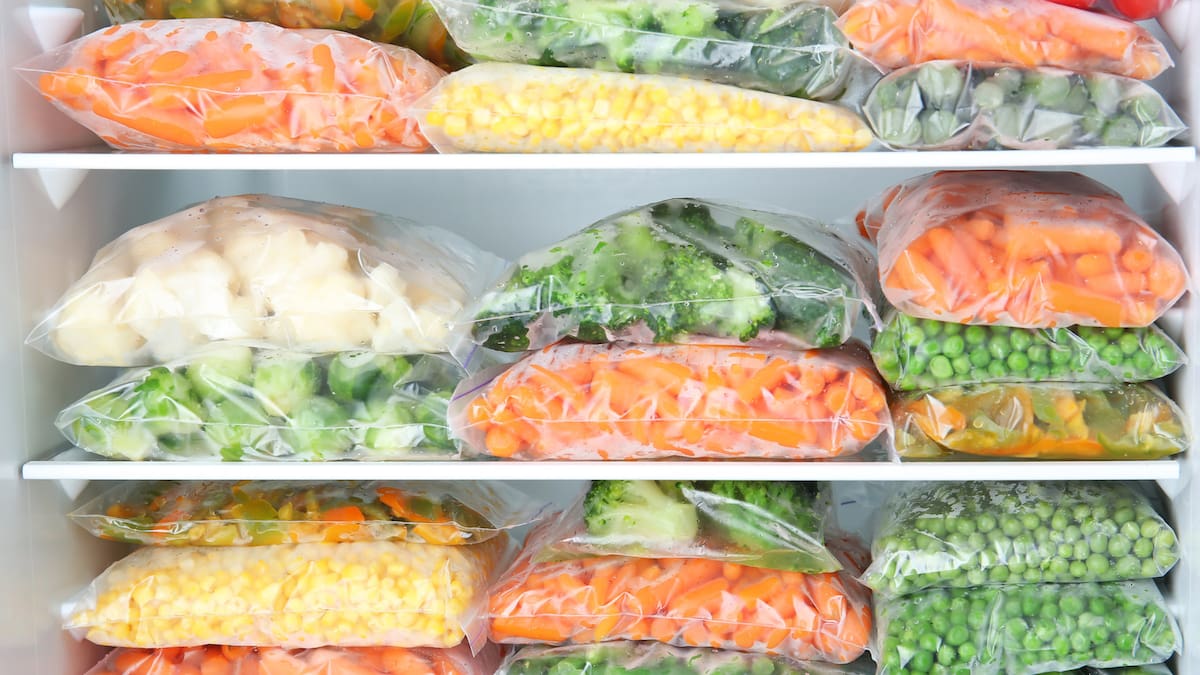
However, data from Stats NZ gives some insight into frozen vegetable demand in New Zealand, although the figures are only as recent as 2023.
Based on the Household Expenditure Survey from Stats NZ, total weekly expenditure on frozen vegetables and other preserved or processed vegetables by all households equated to just over $6m, or roughly $312m a year.
This increased by 32.6% between 2019 and 2023, where it had remained relatively steady for the previous nine years.
The average weekly spend per household on frozen vegetables and other preserved or processed vegetables equated to just $3.10 a week, up 19.2% between 2019 and 2023.
The aggregate annual expenditure by all households on vegetables and other preserved or processed vegetables was $316.85 per year, up 32.6% between 2019 and 2023.
When looking specifically at frozen peas, the proportion falls steeply.
Total weekly expenditure by all households on frozen peas equated to just $260,000 – the lowest food item of all measured by Stats NZ.
As for aggregate annual expenditure by all households on frozen peas, that equated to just $13.57 per year – once again the lowest item of all measured by Stats NZ.
What the data shows is a steep increase in expenditure on frozen/processed vegetables between 2019 and 2023, matching a steady rise in price for products over that period.
The supermarket duopoly supported the findings but gave different responses as for demand.
A spokesperson for Woolworths confirmed that sales of frozen vegetables (including Woolworths’ own brand) have been declining, and that about 45% of its brand frozen vegetables is grown in New Zealand.
A spokesperson for Foodstuffs said that customer demand for staple frozen vegetables like peas, beans and corn has been relatively steady over time, and New Zealand-grown options continue to be the first choice for many shoppers.
Most frozen vegetables sold in its stores, Pak’nSave and New World, are grown in New Zealand.
Manufacturing impact
Key to the argument made by Wattie’s and McCain behind their decisions to close certain plants was the rising cost of manufacturing in New Zealand.
In his interview with the Herald, Donegan said the price for gas had increased 300% over the last seven years, with prices for energy and diesel roughly doubling in the last five.
ManufacturingNZ executive director Joshua Tan said New Zealand’s food manufacturers are operating in a high-cost environment.
“Rising energy, labour, compliance, and logistics costs are all compounding. At the same time, local food manufacturers also have to respond to global trends and local preferences, which pressures them to invest more in sustainability, traceability, and innovation,” Tan said.
“That’s becoming increasingly difficult to absorb in a highly competitive global market.”
Tan said that overseas producers often benefit from lower input costs, larger production runs, and scalability, which can lower the per-product cost and create a material price advantage over local producers.
He said that New Zealand can be a challenging market to grow in given the relatively small consumer base and high-cost environment but didn’t believe retailers like Foodstuffs and Woolworth had much influence.
“In many cases, it comes down to cost, both the cost of production for businesses and the price paid by consumers. Over the past five years, the sustained inflationary environment has made balancing those cost-price pressures increasingly difficult.”
As to whether food manufacturing/processing has a future in New Zealand, Tan was adamant that it does.
“I expect other local manufacturers will look at how they fill the void left by Wattie’s and McCain. New Zealand does have a reputation for producing high-quality, safe, and trusted food and beverages. But there are significant cost issues that need to be addressed if we want to see the sector thrive.”
Tom Raynel is a multimedia business journalist for the Herald, covering small business, retail and tourism.
Stay ahead with the latest market moves, corporate updates, and economic insights by subscribing to our Business newsletter – your essential weekly round-up of all the business news you need.