
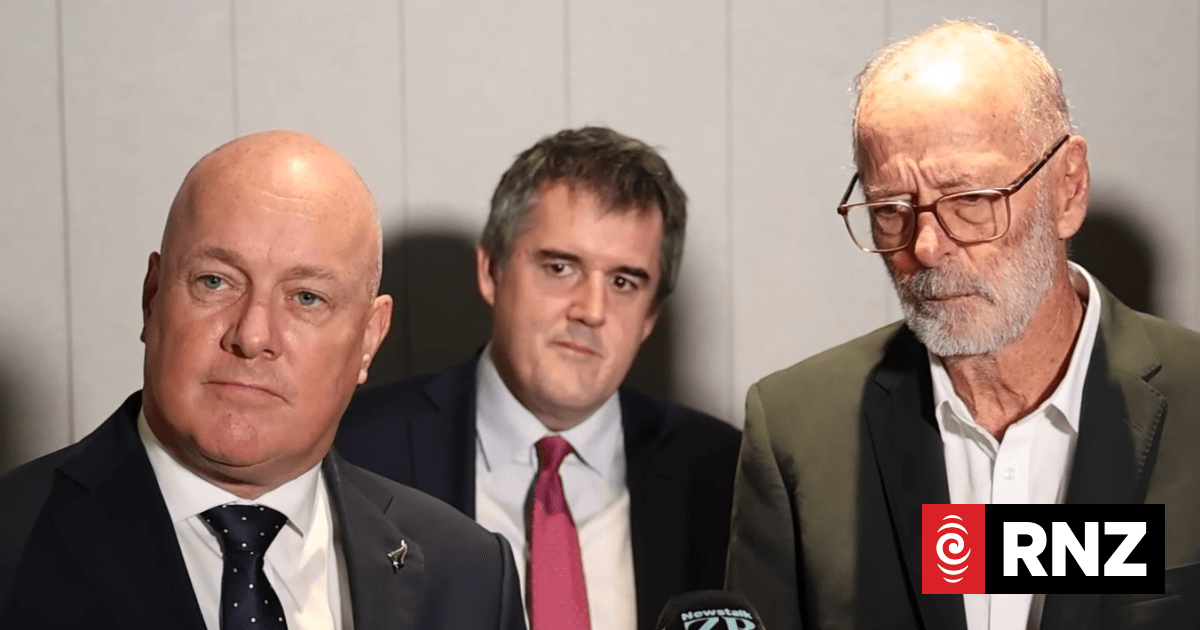
Auckland has finalised and signed its city deal with the government, including a promise to consider a bed tax, but not till next year at the earliest.
Prime Minister Christopher Luxon and Auckland Mayor Wayne Brown signed the arrangement – which is the first of its kind in New Zealand – on Friday morning, setting out a plan for greater cooperation over the coming decades.
The two leaders heralded the “landmark” deal as a “major win”, with both indicating it was largely about formalising a more mature relationship. Most of the listed commitments were either high-level or already underway.
Key agreements included a joint $10 million dollar investment towards relocating Auckland Cricket to Colin Maiden Park, as well as wider review of how Eden Park is run.
The plan promised long-term strategic planning around transport, infrastructure and innovation, and the possibility of additional Crown funding for “mutually agreed, high-priority” projects.
It also guaranteed three annual meetings between the prime minister and mayor, as well as more frequent meetings with ministers. A senior official on both sides would be made accountable for delivering on the deal.
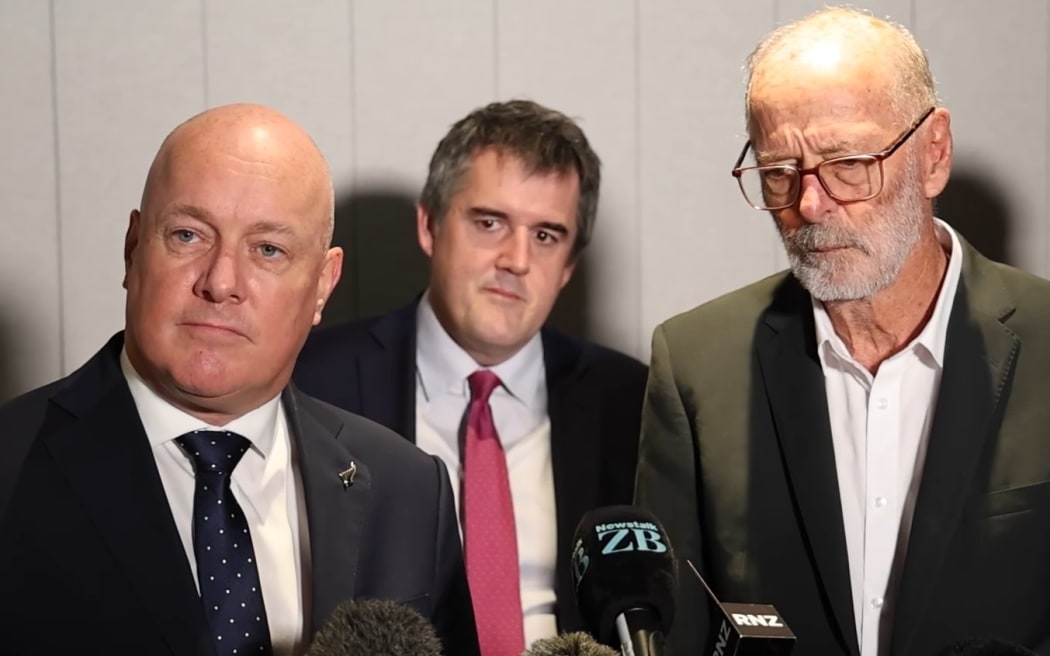
Christopher Luxon, Chris Bishop and Wayne Brown.
Photo: RNZ
Bed tax kicked for touch again
Brown has long agitated for a bed tax for the super city, arguing that the government would eventually drop its resistance. He reiterated that when speaking to media on Friday: “A bit like the CRL [City Rail Link], it will ultimately happen.”
The deal released on Friday made no firm commitment but stated: “central government [would] explore an accommodation levy policy in 2027”.
It also said the two parties would work together on long-term and sustainable funding arrangements for hosting major events in the city.
Speaking to reporters at the event, Luxon said an accomodation levy had not been a priority for the coalition this term, but Tourism Minister Louise Upston had already begun thinking about how it might work in future.
Brown told reporters the deal represented a new “grown-up relationship” but did not mean they would not continue to have areas of disagreement.
He said he believed ACT leader David Seymour was the “fly in the ointment” in terms of securing a bed tax.
“We’ve got minor parties here that have got a lot of weight. Most of them got less votes than I got, so we’ve got to put it in perspective.”
Brown said he took a long-term view of the world – “like Māori and like Chinese” – so did not mind waiting a little longer to get the bed tax over the line.
‘There’s been too much Punch and Judy’
Standing alongside the prime minister, Brown also voiced his opposition to some of National’s “unaffordable” roading projects.
“I don’t like rushing into projects that are ill-thought out and there are a few of those on the go at the moment,” Brown said.
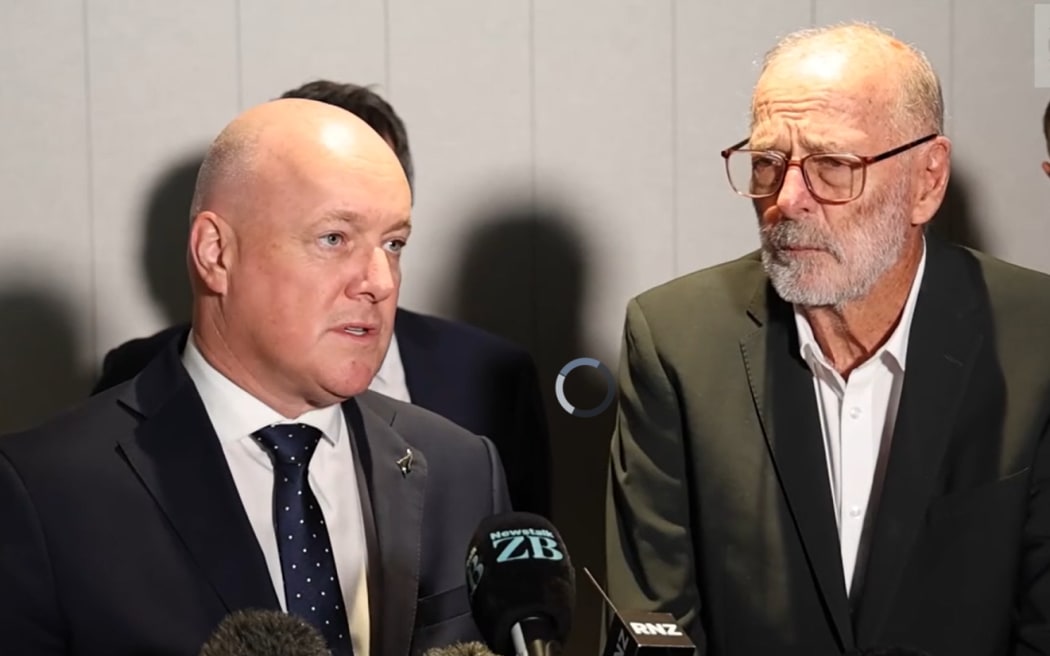
Christopher Luxon, left, and Wayne Brown at today’s announcement.
Photo:
And Brown said the two sides were not able to reach agreement on the government’s promised rates cap.
“If we’d known it was coming, I’d have pointed out that I didn’t think it was a particularly clever thing to do,” he said.
“These guys are in a scrap with other political parties… I’m not in that scrap, so it’s probably quite a good idea to include us.”
Local Government Minister Simon Watts said the coalition was “absolutely” going to push ahead with the rates cap but had agreed to disagree with Auckland Council: “We’re going to work our way through that.”
Luxon told reporters that the Auckland-government relationship needed to mature beyond what had become something of “a Punch and Judy show”.
“Why wouldn’t you want to work together and be aligned? And yes, it’s going to require some tough conversations… but we’re up for that,” Luxon said.
“There’s been too much short-termism. There’s been too much Punch and Judy. Too much parent-child. We’ve got to move this relationship to the next level.”
Infrastructure Minister Chris Bishop acknowledged the deal included “very limited funding commitments”, but he said the government had taken on board the Auckland Council’s priority list for transport projects.
“That is now recognised by the government,” Bishop said. “It’s about that respectful relationship.”
Brown said his inclusion in such conversations was vital because he – “as opposed to these guys” – had built infrastructure for most of his life.
“The government’s been doing its best, but Wellington’s not good at big projects, because there’s not a lot of engineers in Parliament.”
“We have to bring policy and practicality together, and that’s been missing. And that’s possibly because they haven’t listened to us. And I’m hard to ignore.”
The ‘key commitments’ highlighted in the deal
The so-called city and regional deals were a key National Party election policy and also featured in its coalition agreement with ACT.
The government began negotiations with Auckland, Otago and Western Bay of Plenty in July and had hoped to complete the first by the end of last year.
Luxon said Auckland was the country’s “economic engine room” and had huge potential for growth.
“This deal is about getting that engine room firing on all cylinders so that we can lift incomes, create more jobs and make Auckland, and therefore New Zealand, more prosperous.”

Restoring the biodiversity of the Hauraki Gulf features in the deal.
Photo: Dan Burgin / WMIL
Brown described it as a “major win” for Auckland which recognised its size and significance
“We are more like an Australian state than any other local authority in New Zealand,” Brown said. “The deal better reflects Auckland’s contribution to the national economy. It’s clear; when Auckland does well, New Zealand does well.”
A statement released alongside the signing named the following “key commitments” :
Establishing a long-term partnership between government and Auckland Council, including regular meetings between the Prime Minister, Ministers and the Mayor. There will also be a senior official from both government and council who will be accountable for delivering on the deal.
Reviewing Eden Park’s ownership and operating model, recognising Eden Park as the national stadium, and contributing $5 million each toward relocating Auckland Cricket to Colin Maiden Park.
Investing in the redevelopment and roofing of the Auckland Tennis Centre to support international events.
Developing a strategy for innovation precincts in areas such as the Fisher and Paykel precinct and around University of Auckland’s flagship innovation centre in Newmarket (including MedTech-iQ); and strengthening Auckland’s global trade and investment links.
Jointly developing a destination and major events strategy to grow tourism, events, and hospitality in Auckland.
Establishing a coordinated 30-year transport strategy for Auckland, with priority projects reflected in the Government Policy Statement on Land Transport 2027 including the North-West Rapid Transit project, Botany to Airport public transport, Mill Road, and CRL level crossings.
Working together on the additional Waitematā Harbour crossing project, time-of-use charging, and more efficient transport network management.
Introducing a new Crown uplift funding tool for mutually agreed, high-priority projects. The Crown will consider contributing funding for projects where the Council raises new funding significantly above current Long-Term Plan and BAU funding levels (e.g., from council asset recycling or targeted rates).
Working together on Predator Free 2050, Pest-Free Auckland, the Auckland Indigenous Biodiversity Strategy, and restoring the biodiversity of the Hauraki Gulf.