
NEED TO KNOW
A relocated female grizzly bear in Wyoming gave birth to two cubs, marking a milestone for conservation efforts
The birth supports efforts to improve genetic diversity between Montana and Wyoming’s grizzly populations
Experts caution that cub survival rates are low, but say the mother is in good condition and likely will reproduce again
A female grizzly bear relocated to the Greater Yellowstone Ecosystem (GYE) as part of a multi-state conservation effort has given birth to two cubs, marking a major milestone for the species’ long-term survival.
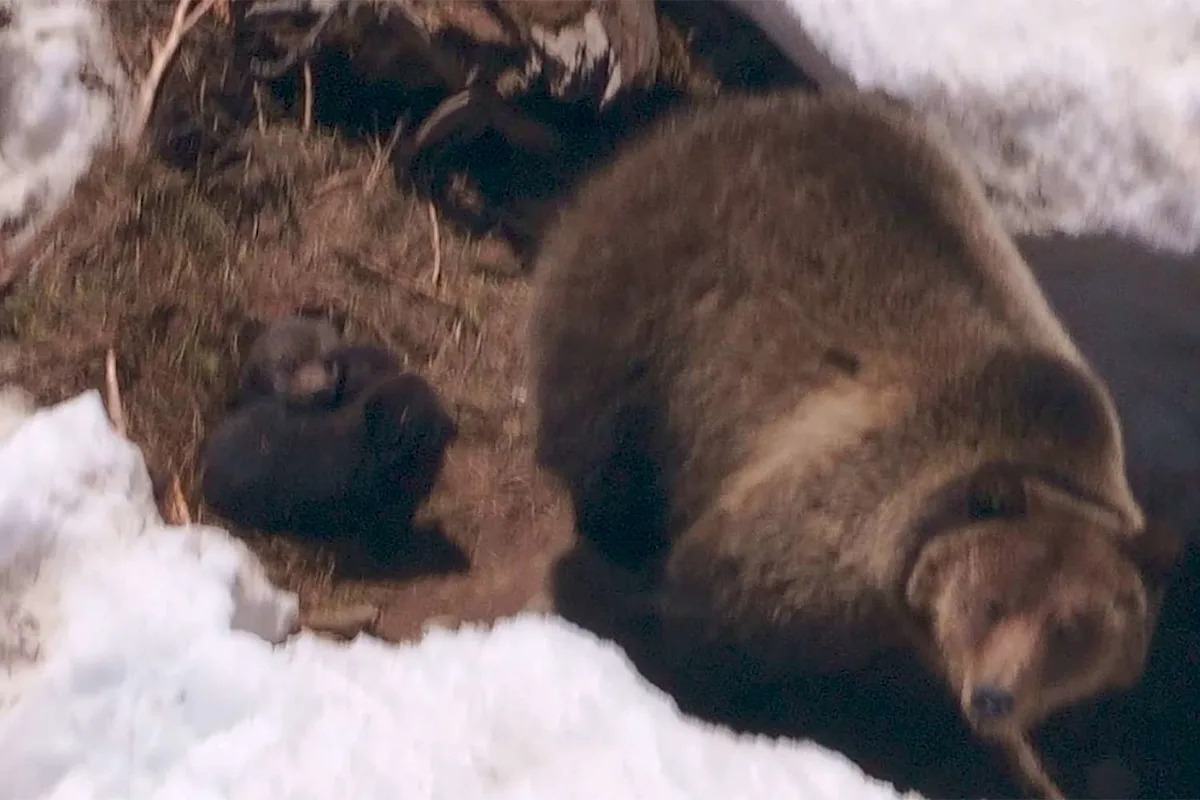
According to a Wednesday, April 8 press release from Montana Fish, Wildlife & Parks (FWP), the bear, originally from the Northern Continental Divide Ecosystem (NCDE), was spotted this spring emerging from her den with two cubs, just two years after being relocated to Wyoming. The cubs are believed to be the mother bear’s first since her release into the GYE.
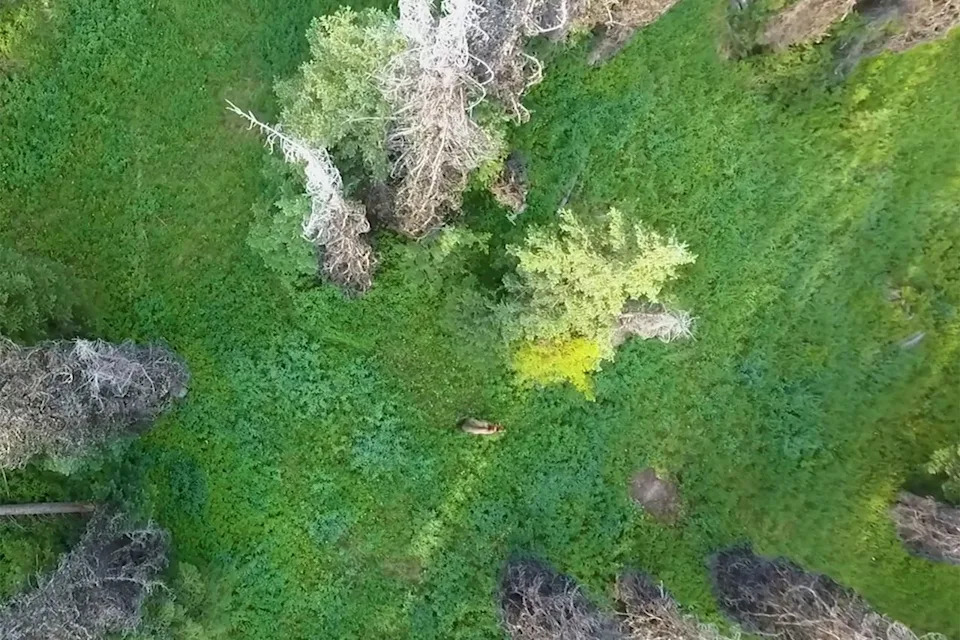
Aerial view of female bear roaming the Greater Yellowstone Ecosystem
Credit: Montana Fish, Wildlife & Parks
Biologists confirmed the sighting during a routine radio-telemetry monitoring flight, capturing photos of the bear and her offspring near the den site. Officials say the birth represents early evidence that efforts to improve genetic diversity between two of the country’s largest grizzly populations in Montana and Wyoming are working.
“This is concrete evidence that Montana and Wyoming are committed to sustaining a recovered population of grizzly bears,” FWP Director Christy Clark said in a statement, adding that the development is “a major success” in efforts to support long-term genetic diversity.
The bear was one of two grizzlies relocated to the GYE in 2024 through a partnership between FWP, the Wyoming Game and Fish Department (WGFD), and Yellowstone National Park. At the time, the mother bear was about four years old, an age when female grizzlies are nearing reproductive maturity. Her travelmate was classified as a subadult at the time of their transfer.
FWP researcher Cecily Costello said the timing of the birth aligns with expectations, as grizzlies typically have their first cubs between ages five and six. Still, she noted the development was somewhat unexpected given the bear’s extensive movements in 2024.
“We wondered if that energy expenditure might reduce her chances of reproducing,” Costello noted, “but, from the photo, she appears to be in great condition.”
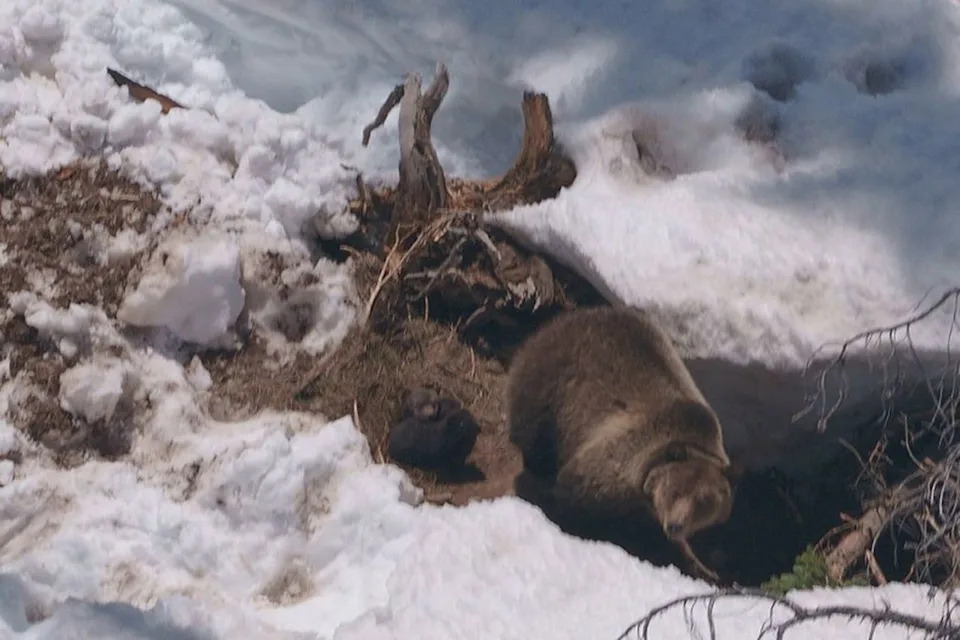
Mother bear and her two cubs seen from an aerial view
Credit: Montana Fish, Wildlife & Parks
The relocation effort stems from a broader agreement among Montana, Wyoming, and Idaho to address concerns about genetic isolation among grizzly populations. The release noted that introducing new genetic material is seen as a way to strengthen the species’ long-term resilience.
Never miss a story — sign up for PEOPLE’s free daily newsletter to stay up-to-date on the best of what PEOPLE has to offer, from celebrity news to compelling human interest stories.
Experts caution that the cubs’ survival is not guaranteed. According to officials, annual cub survival rates hover just above 50% and can be lower for first-time mothers.
“So, we do have to wait and see about the survival of this litter,” Costello said. “Even if this litter does not survive, we expect she will be successful in the future.”
Read the original article on People