
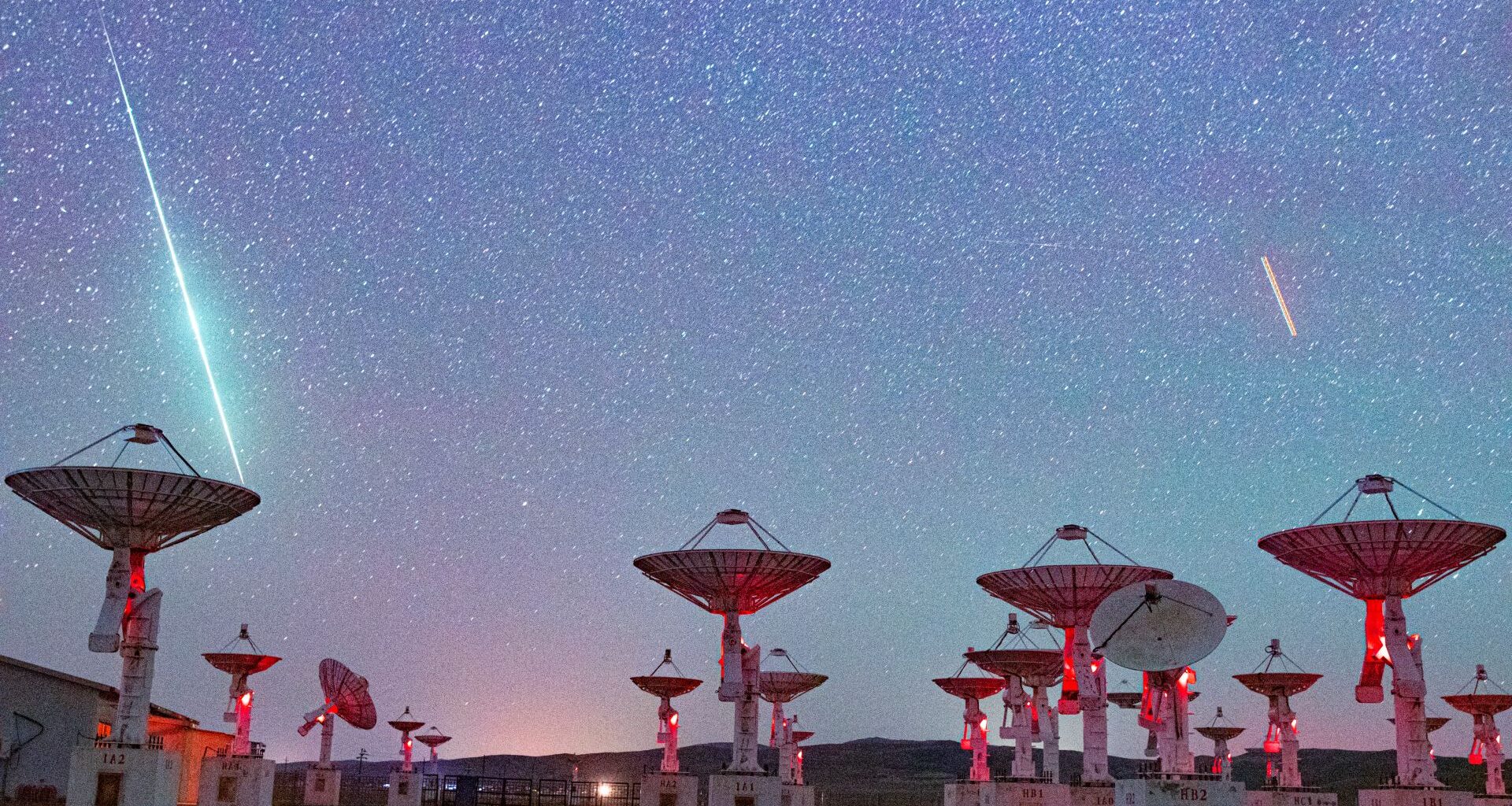
Get ready stargazers, we’re just one week away from the start of the Lyrid meteor shower! Here’s what you need to know before Earth passes into the trail of debris shed by Comet C/1861 G1 Thatcher, triggering the start of a spectacular natural light show that could see magnificent fireballs streak through the predawn sky.
Canon EOS R7 camera
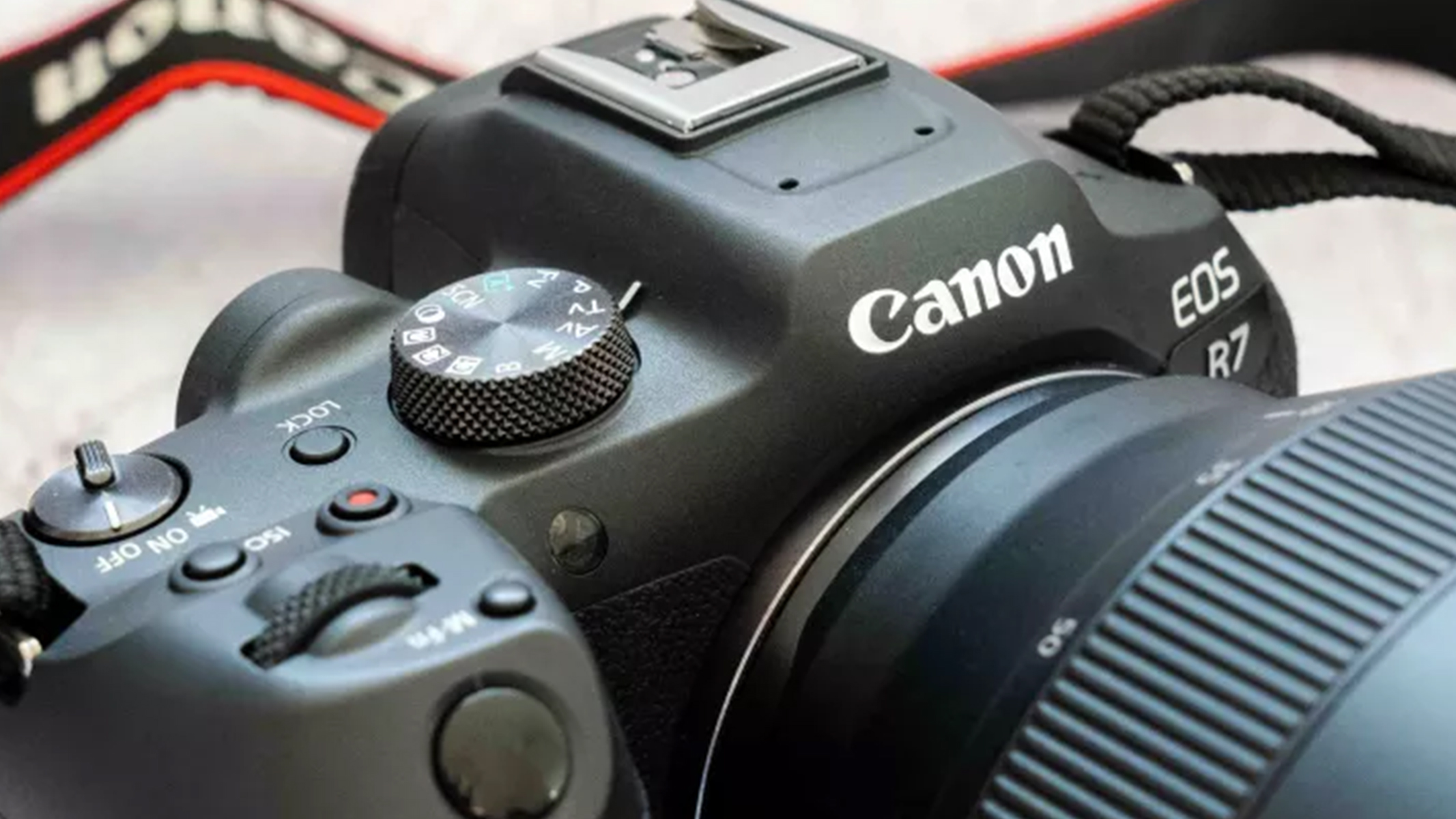
(Image credit: Future/Kimberley Lane)
The Canon EOS R7 is the best camera for beginners hoping to capture shooting stars. It features a 34.4MP sensor, ISO range up to 32,000 and a video capability of 4K UHD 60p and all the best tools to help a novice master photography. Read our full Canon EOS R7 review.
Shooting stars occur when tiny fragments of comets or asteroids enter Earth’s atmosphere. During their descent toward Earth, they create brief, fiery trails as they’re overwhelmed by the intense friction of atmospheric entry.
You may like
Meteors belonging to the Lyrid shower will appear to originate from a patch of sky close to the bright star Vega in the constellation Lyra, which can be found rising in the northeast during the evening and climbing higher toward dawn.
The Lyrids are known for producing bright, fast-moving meteors that tend to lack persistent trails, but have the potential to spawn spectacular fireballs as larger chunks of Comet Thatcher smash into Earth’s atmosphere.
When to see Lyrid meteors
Your prime window for spotting Lyrid meteors is in the early hours of April 22, when the radiant will be positioned high above the eastern horizon and the 27%-lit waxing crescent moon will have set out of sight, providing a beautiful dark sky perfect for spotting shooting stars. While the shower is expected to crescendo on April 22, it could put on a fairly strong showing on the surrounding nights, so be sure to look up!
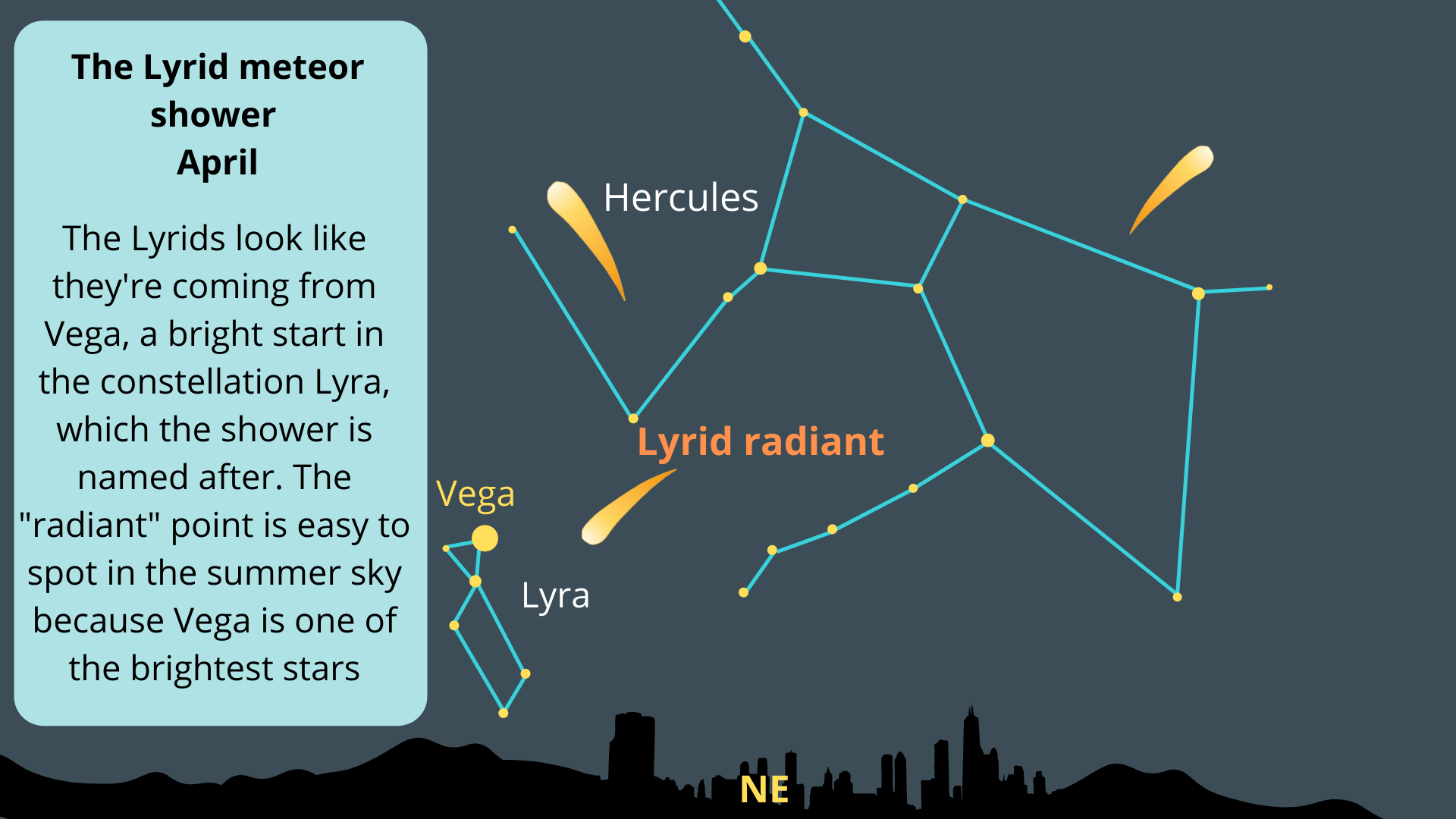
The radiant of the Lyrid meteor shower is located near the Hercules-Lyra border. (Image credit: Future)How to spot Lyrid meteors
If you can, try to head away from city lights and allow 20-30 minutes for your eyes to fully adjust to the dark. Use a red light if you do need a source of illumination, as this will preserve your night vision while allowing you to see what you’re doing.
Meteor showers can put on a spectacular show when seen with the naked eye, but also make for a phenomenal photographic target. Why not check out our guide to capturing meteor showers with a digital camera, along with our roundups of the best lenses and camera bodies for astrophotography.
Editor’s Note: If you capture a photo of a Lyrid meteor and want to share it with Space.com’s readers, then please send your image(s), comments, and your name and location to spacephotos@space.com.