
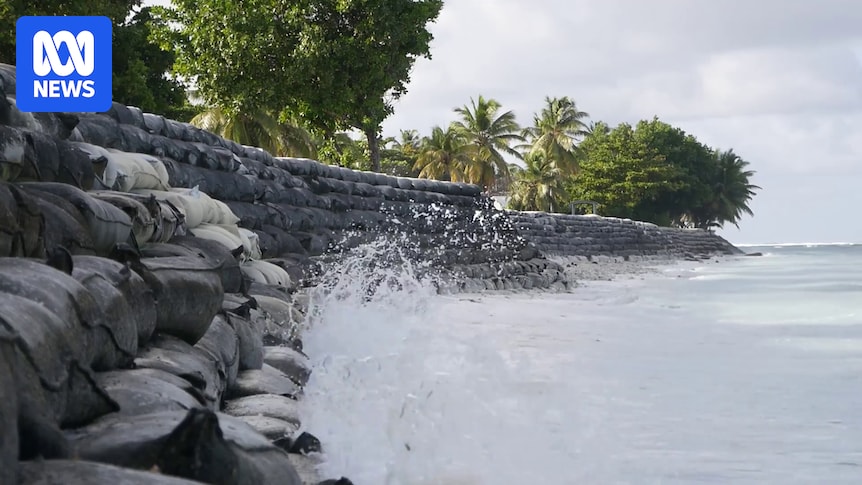
The federal government has walked back its plans to relocate Cocos (Keeling) Island residents after widespread community backlash, promising greater local input.
The crescent-shaped coral atoll, located in the Indian Ocean some 2,500 kilometres off the mainland, is Australia’s most remote territory.
About 600 people live on Home and West islands, two of the 27 slashes of white sand and tropical greenery that make up Cocos.
But climate change is threatening the viability of their homes, with an annual sea level rise of 4 millimetres since 1992.
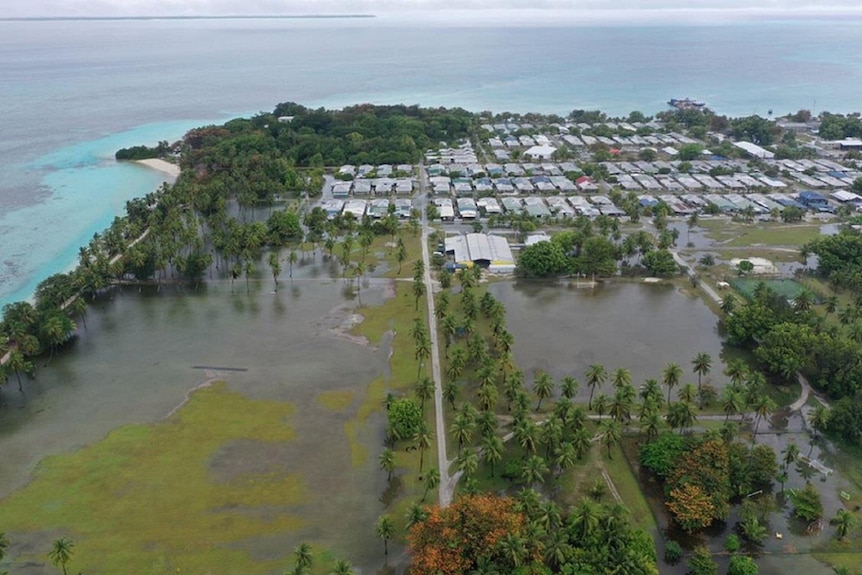
Flooding is already a problem during rain events on the low-lying Cocos (Keeling) Islands. (Supplied: Shire of Cocos (Keeling) Islands)
Last year a draft Commonwealth plan, revealed by the ABC, recommended the islands’ gradual depopulation over the next 10 to 50 years.
“Ultimately, long-term managed retreat away from both Home and West Islands will be the most viable option to protect lives in a socially, economically and environmentally respectful way,” the report found.
The idea was heavily criticised by islanders, with many calling it a threat to the unique cultural connections of the Cocos Malay, whose ancestors were brought to Home Island as indentured servants almost 200 years ago.
Listening to residents
Federal Minister for Territories Kristy McBain told the ABC this week the final report had taken into account residents’ feelings.
“It’s critically important that when we are talking about a community that is facing some bespoke climate change issues, we’re actually listening to them,” she said.
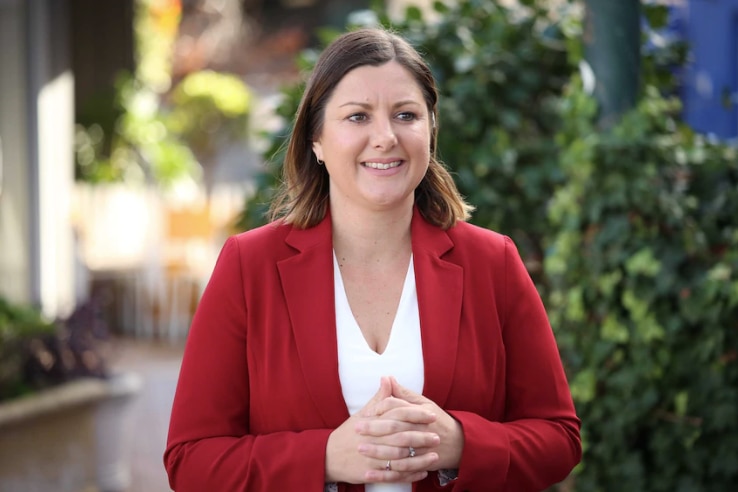
Kristy McBain says any decision-making will be led by the community.
(ABC News: Chris Sheedy)
Ms McBain said she supported the decision of residents to remain on the islands.
“That is working with the local communities, understanding where we might settle people, whether that’s on Home Island or West Island, whether they are looking at something else,” Ms McBain said.
“Then [there are] the discussions we may need to have down the track if we get to a point where there is going to be less habitable land that we can put people on.”
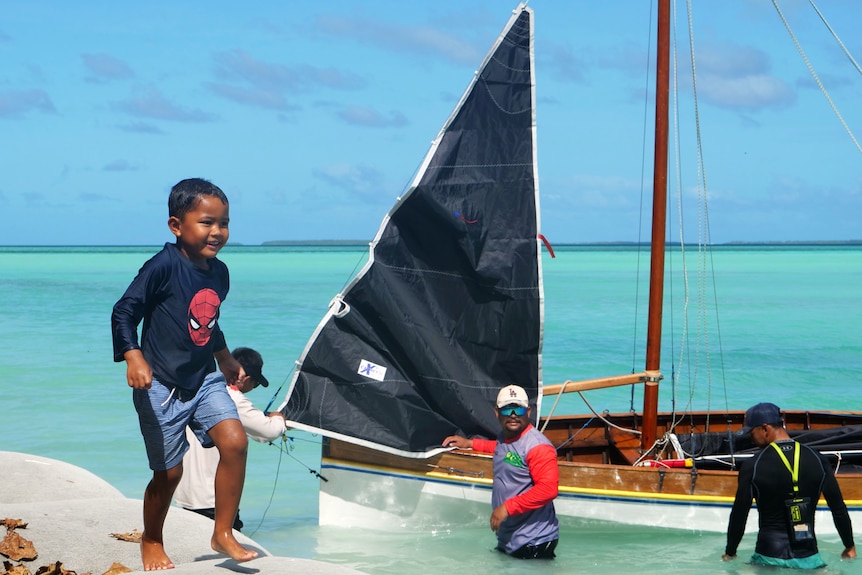
Dukong, or traditional Cocos Malay fishing boats, dot the shores of Home Island. (ABC Pilbara: Alice Angeloni)
The Shire of Cocos (Keeling) Islands welcomed the revised tone and said it had started a detailed review of the new document.
“There’s a lot of gaps in the information,” shire CEO Matthew Scott said.
“Who knows what’s going to happen in the future in regards to technology?
“We want all options made available for consideration before looking at relocation, which is obviously not something that the community would want to do.”
He pledged to work with the federal government to protect islanders and their way of life.
Minister defends climate approach
Ms McBain said the need to plan for the islands’ future was “absolutely” due to climate change.
Should sea levels rise as predicted by 2068, a major flooding event could wipe out homes, the local mosque, and most infrastructure, with possible economic losses estimated to be in the “hundreds of millions of dollars”.
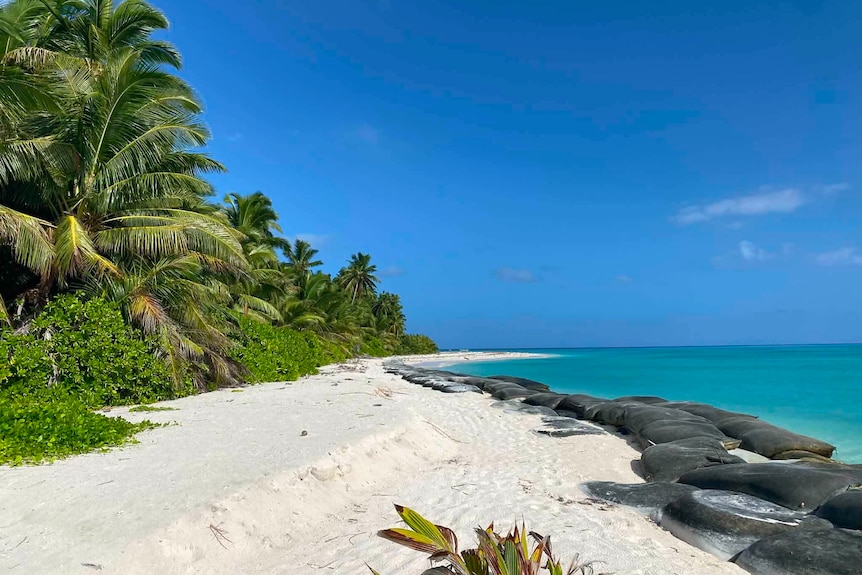
Community consultation in the wake of the draft plan garnered responses from nearly a quarter of the islands’ inhabitants. (Supplied: Taleah McCagh)
But Ms McBain rejected the suggestion that taking stronger action to curb carbon emissions would alter the territory’s trajectory.
“Stopping fossil fuel projects now is not going to change some of the impacts on Cocos (Keeling) Islands. It is a coral atoll only 1.5 metres above sea level at certain points,” she said.
Lifelong resident John Clunies-Ross said the government’s approach to the islands “sounded friendlier”, but its broader climate policy remained “frustrating”.
“The costs are now being worn by all Australians,” he said.
“We’re not doing ourselves any favours by continuing down that road.”
The federal government will open an expressions of interest process for a community reference group later this month.