
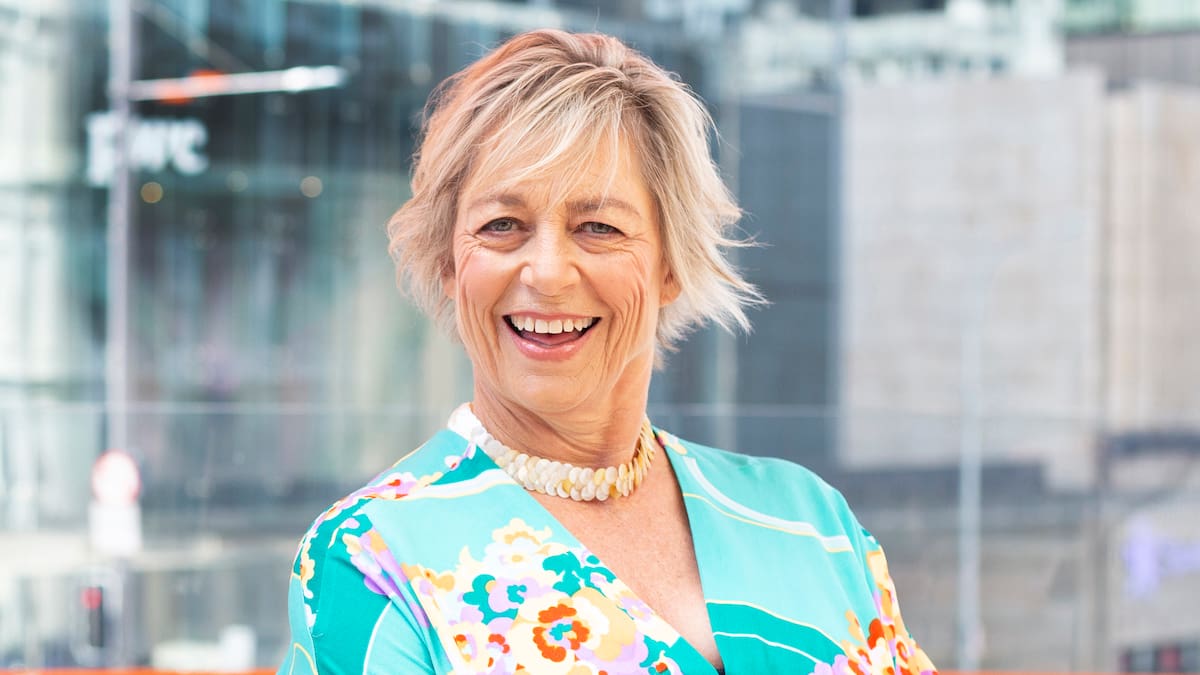
Now, two decades later, Sue has brought her secrets to light in a new book and play. Her only wish is that she had done it sooner.
“There are regrets, because my birth parents have died, and I missed the opportunity to meet my birth father,” the CEO of Connected Leadership says. “Part of the journey is that there’s a lot of forgiveness that happens – both of others and of myself.”
Sue is one of the more than 85,000 babies who were born in New Zealand to an unwed mother in the decades following World War II and adopted out with, as Sue remarks, “less paperwork than it takes to buy a car”.
Sue’s parents, Cicely and Peter. Photo / NZ Woman’s Weekly
Lizzy was studying to be a nurse in 1962 when she discovered she was pregnant and was unsure who the father was, as she was involved with two men.
She ran away to the Motherhood of Man Movement in Auckland’s Grey Lynn. Through her research, Sue discovered that during Lizzy’s pregnancy, the group placed her with a doctor and his wife, where she worked for food and board.
The one story Lizzy told of that time was her traumatic birth. After Sue arrived in the world, she instinctively reached for her baby, but nurses held her back, explaining that she wasn’t allowed to see or hold her.
Ever determined, Lizzy wouldn’t leave without ensuring her baby was “normal”, so the only glimpse she had was looking through a window as they held Sue up to show that she had 10 toes and fingers.
“It was enough to assure herself that I would end up with a good family, and that meant she could leave.”
At 12 days old, Sue’s parents, Cicely and Peter, took her home to Te Atatū, in West Auckland, where she had an idyllic childhood with sister Wendy, who was also adopted.
Sue with her mum and sister Wendy. Photo / NZ Woman’s Weekly
In 1985, the Adult Adoption Information Act was passed, which allowed birth mothers and adopted children to request information about each other, with the option to deny access. Sue chose to allow contact but hoped she wouldn’t reach out.
In 1987, the letter she dreaded arrived. Sue agreed to meet Lizzy, but admits she felt she was somehow betraying Cicely.
Sue recalls, “It was almost like having an illicit affair with another mother.”
When the day arrived, Sue felt overwhelmed.
“There was a clash of my feelings, ‘I don’t need to see you, I don’t feel any unmet need.’ And then Lizzy, finally getting to meet this baby that had been taken away from her at birth.”
It wasn’t until Sue became a mother herself, to son Max, now 35, four years later, that she could fully understand what Lizzy had gone through.
She shares, “When I had my son Max, I felt deep empathy for Lizzy, because I gave birth to a baby and I got to hold him, feed him and name him. I was overwhelmed with appreciation for what she had been through.”
Max and Sue. Photo / NZ Woman’s Weekly
Sue always wanted to share her story, but it wasn’t until Covid hit, and she had time at home with her thoughts, that she felt brave enough to delve into the unknowns of her past.
She admits, “It’s something that’s been sitting with me for 20 years. I have to tell this story before I die.”
She started with a book, Finding Cynthia Winters, to help her answer the unsolved questions. One of the biggest discoveries was that Lizzy had named her Cynthia Winters.
Sue wrote Finding Cynthia Winters to help her answer the unsolved questions. Photo / Amalia Osborne
Sue is delighted to uncover the many quirks she shares with the woman who gave her life.
“Lizzy was an academic, I was an academic. We’re both incredibly independent women. Her children are very adventurous and do all kinds of crazy stuff, as do I, as does my son.”
“Quite a few things click into place, because my personality is quite different to my adopted mum’s and my sister’s.”
Sue debuts Finding Cynthia at Artworks Theatre on Waiheke Island April 10-11. Visit suewatson.nz for more info or to purchase her book (Lasavia Publishing, $35)