
A little over a month ago, I gave my dad the Pebblebee Clip 5 to use as a lifeline for emergency situations, allowing him to trigger a location-share with me. It’s a lot like those classic lifeline gadgets from commercials where someone says, “Help! I’ve fallen and I can’t get up!”
However, I recently gave him a significant upgrade: the Pebblebee Halo. It’s like an AirTag on steroids. Not only does it function like every other tracker I’ve tested, but it also features a rugged IP66 construction, a bright LED flashlight, and a 130dB siren. What truly sets it apart from the rest of the best key finders, though, is its ability to share its location instantly during an emergency.
Rugged design with a battery that lasts a year
(Image credit: Tom’s Guide / John Velasco)
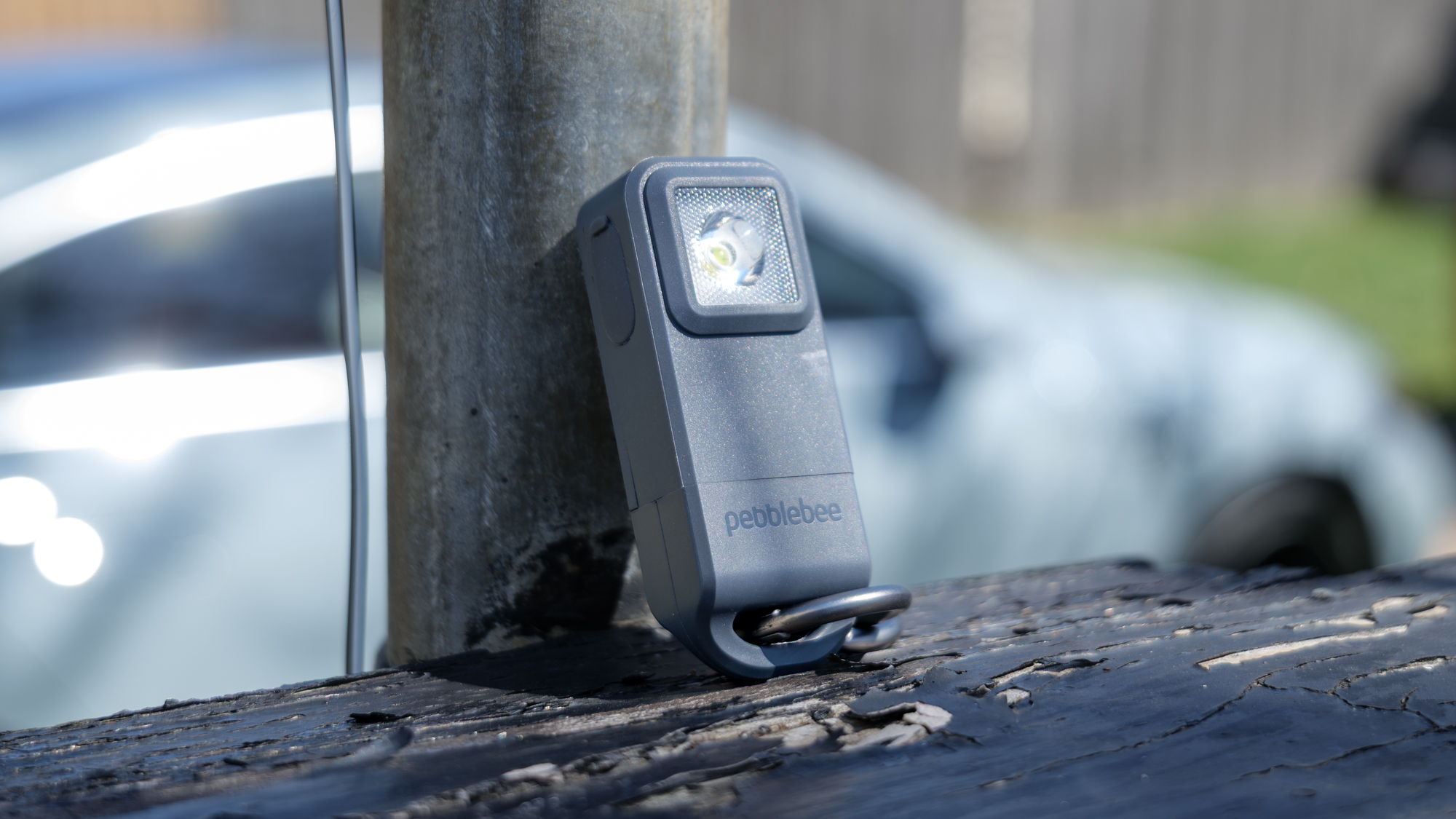
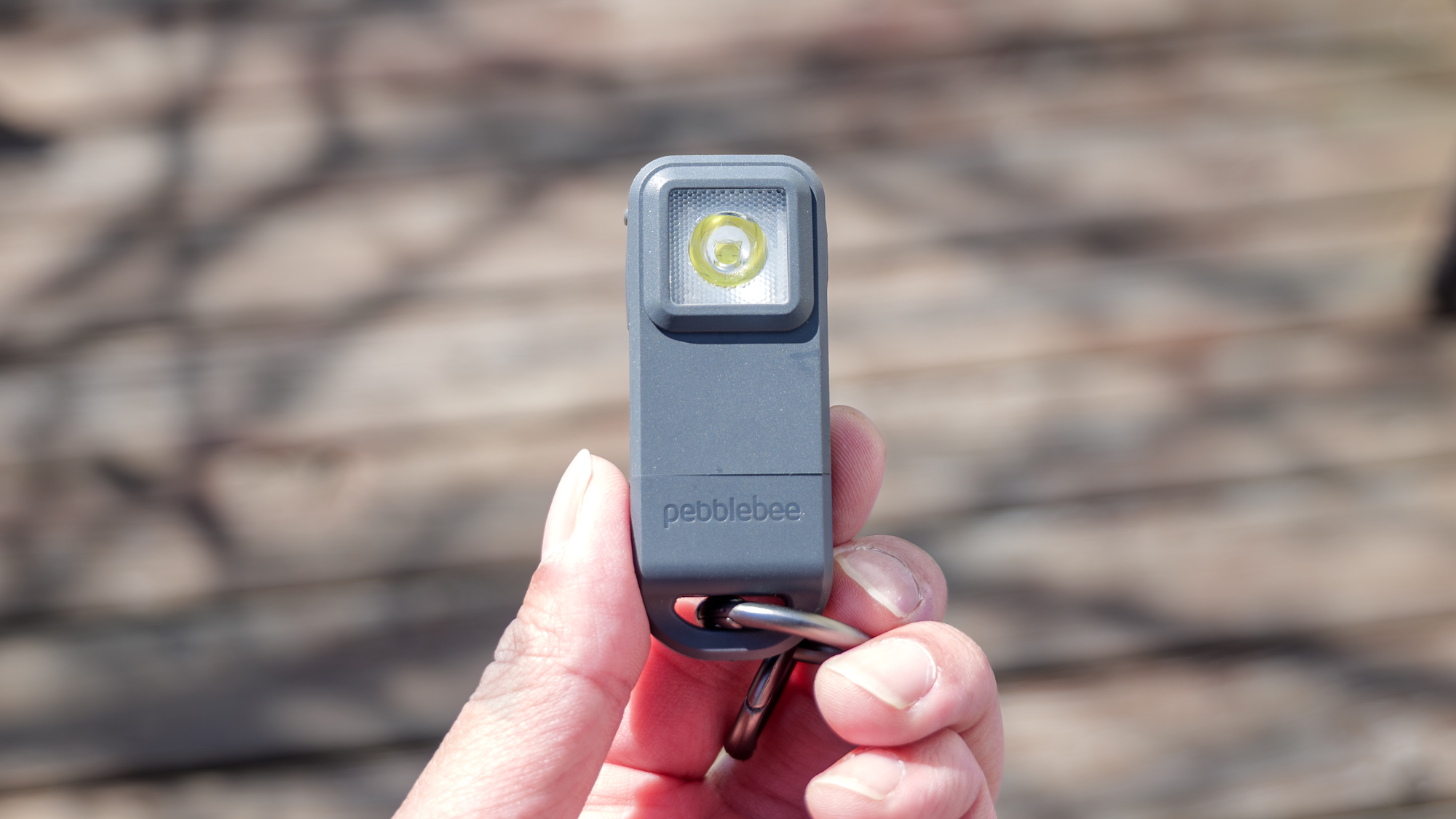
Even though the Pebblebee Halo is larger and bulkier than a traditional AirTag, its rugged IP66 construction makes me more confident about it holding up long-term. The rubbery, matte finish of the housing offers better drop protection, and it has held up nicely over the three weeks I’ve been testing it — even while buried in my backpack pocket among other knickknacks.
(Image credit: Future)
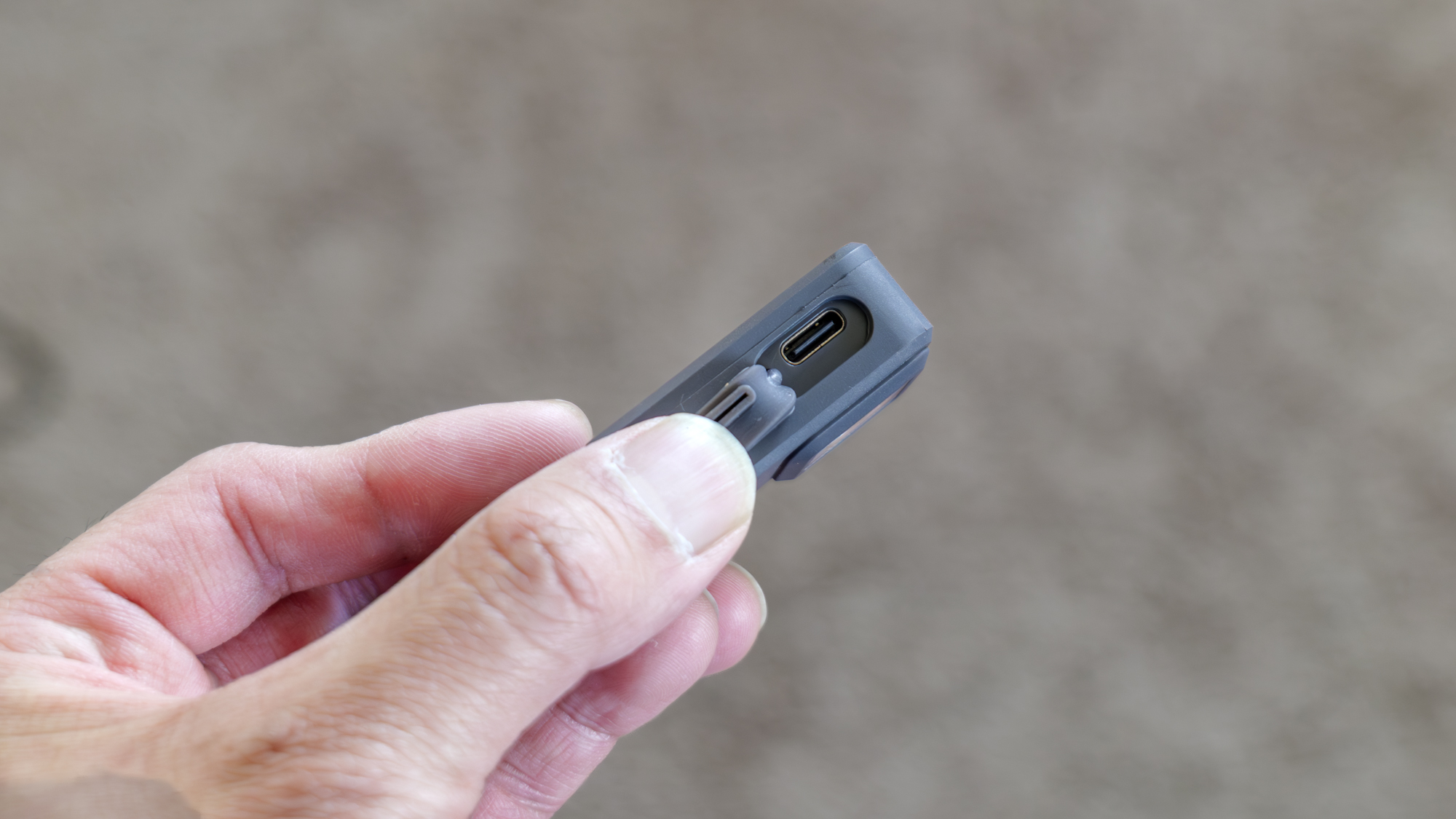
One of my biggest annoyances with the current AirTag is that it still relies on a user-replaceable battery. The Pebblebee Halo, however, features a rechargeable battery that’s easily topped off via its USB-C port. Since I set it up last month, the battery has remained at 100%.
(Image credit: Tom’s Guide / John Velasco)
While it’s good practice to recharge it occasionally, Pebblebee rates the battery for up to 12 months on a full charge — so I won’t have to worry about it anytime soon.
Personal safety for everyday situations
(Image credit: Future)
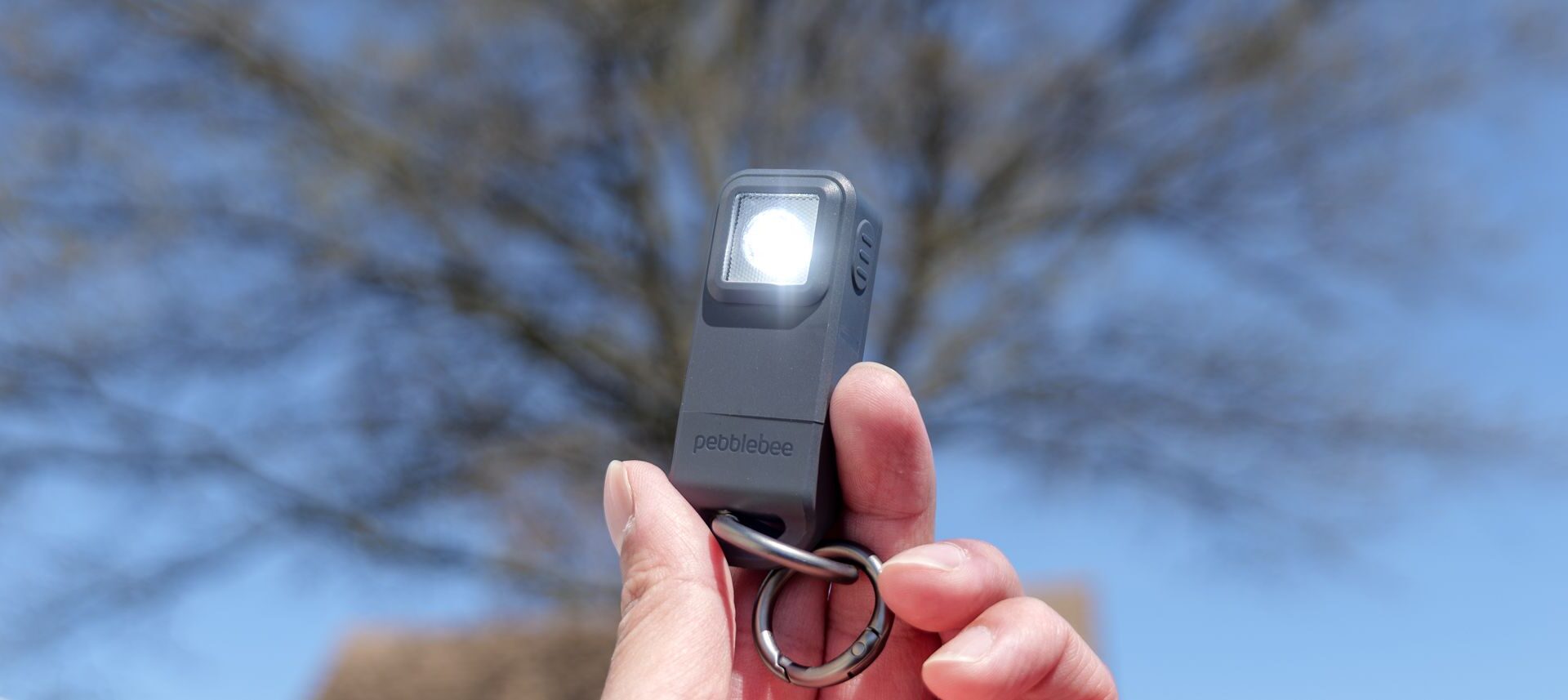
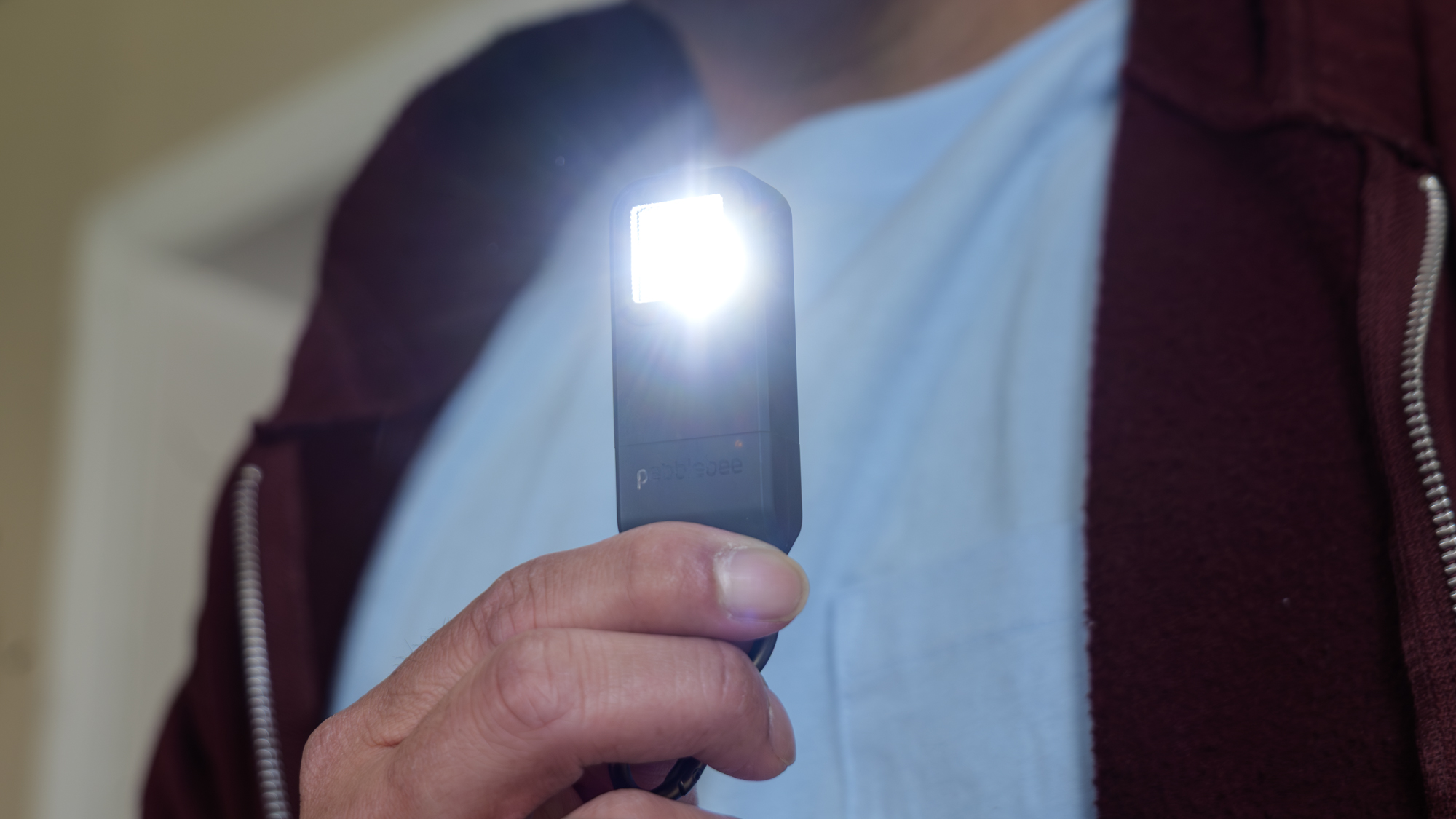
At its core, the Pebblebee Halo is a personal safety device for everyday situations. Even though I keep it on my keychain most of the time, I’ve started detaching it and holding it in my hand whenever I run at night. That’s because it features a bright 150-lumen light, which can be manually operated with a single press of the side button. It’s blinding — truly blinding — though I wish there were more modes besides a steady beam.

(Image credit: Tom’s Guide / John Velasco)
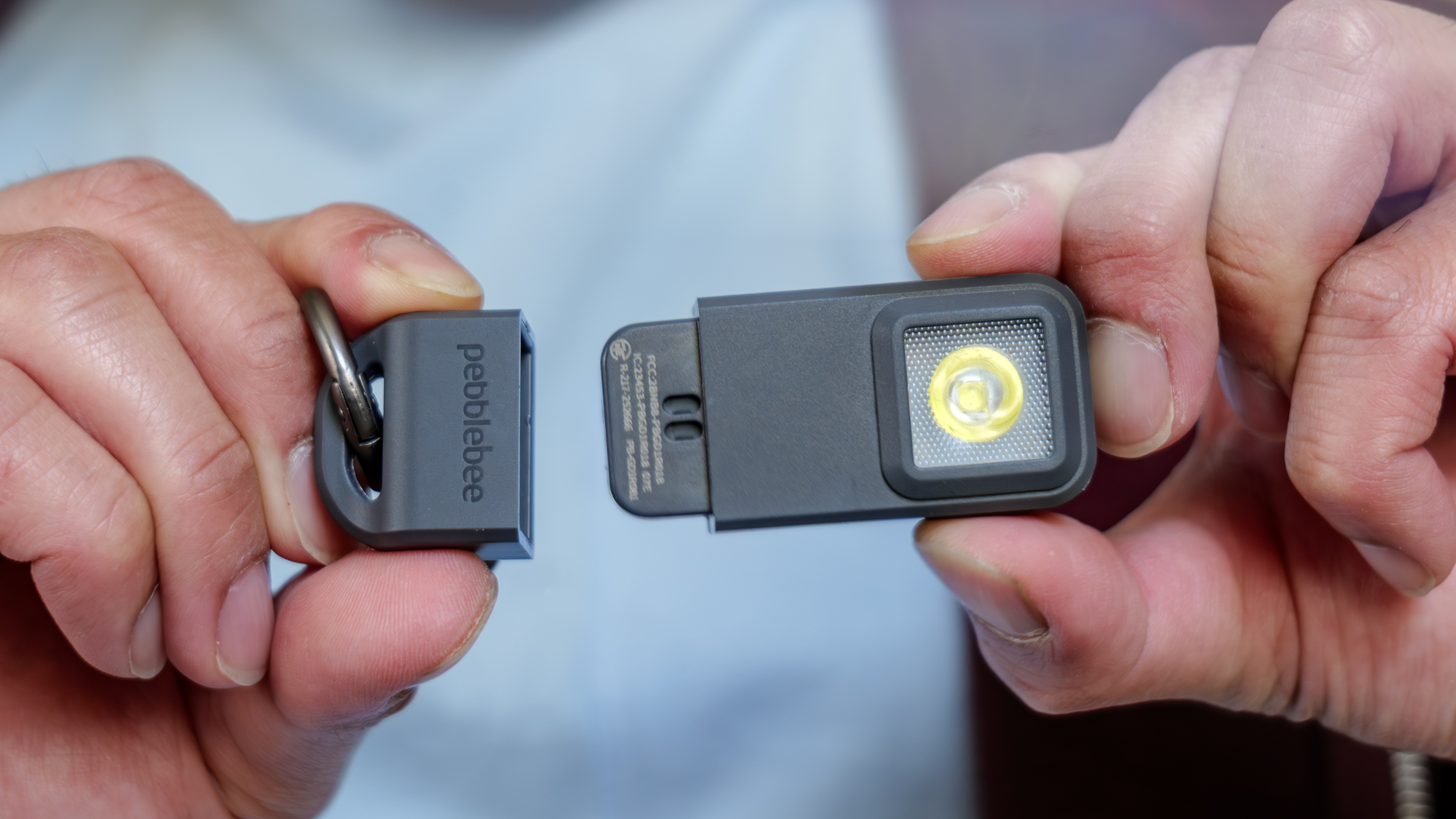
The light only strobes when the device is pulled apart to trigger its emergency response, which also emits a shrill siren audible from hundreds of feet away. It’s the kind of feature that’s invaluable when walking down a dark city alley or feeling unsafe. One quick pull activates the alarm and instantly alerts your Safety Circle.
(Image credit: Tom’s Guide / John Velasco)
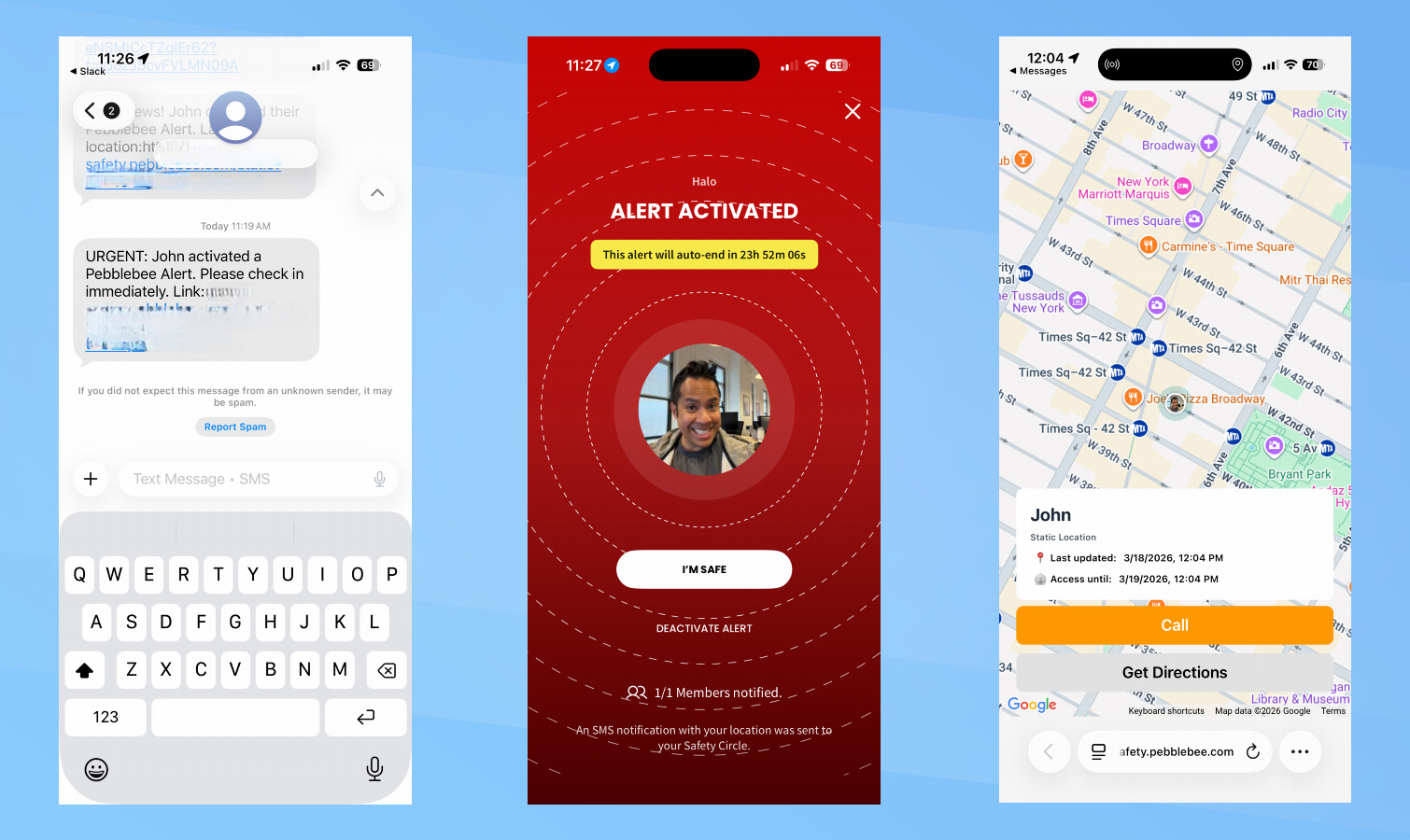
Beyond in-app notifications, the Halo sends text messages to your emergency contacts that include a live location. This is a game-changer, and while other GPS trackers only provide a static last seen pin, Pebblebee goes a step further with continuous updates until the alarm is deactivated.
Even in a worst-case scenario — say, being kidnapped and stuffed into a trunk — I can still trigger a silent alert by rapidly pressing the button. I can’t stress enough how many practical, real-world applications this has compared to a standard tracker.
A lifeline for the elderly
(Image credit: Tom’s Guide / John Velasco)
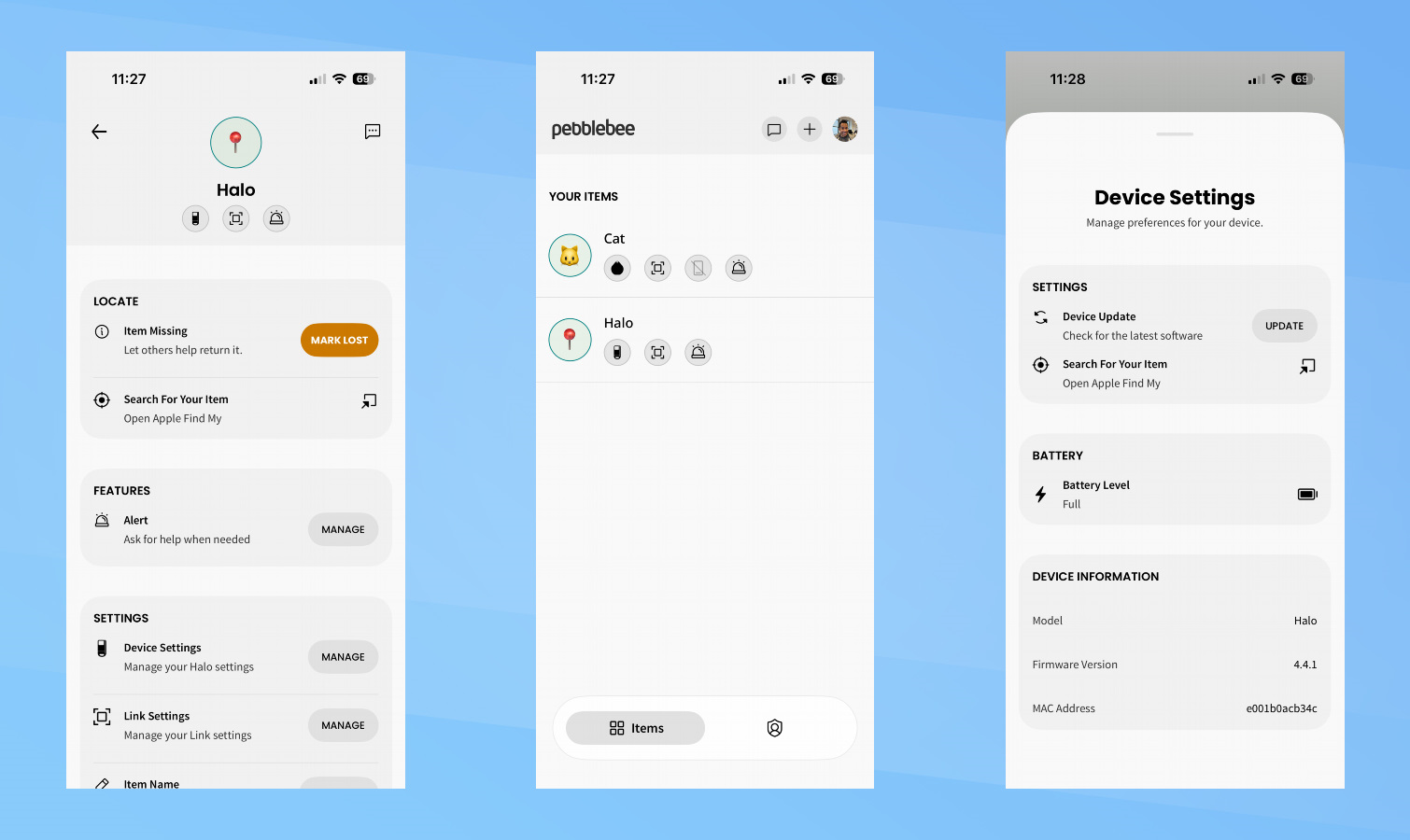
The Pebblebee Halo is the most versatile GPS tracker I’ve come across to date. It supports both Apple’s Find My and Google’s Find Hub networks, allowing me to keep track of all my devices in one place.
As a key finder, I love that I can see its location in the Find My app and trigger a sound to help me pin it down. However, it lacks the Ultra Wideband Precision Finding feature found in the AirTag 2 — so it provides a more generalized overview of its location. Despite this, Pebblebee rates it for up to 500 feet of range, which is more than enough to hitch a ride off other phones in the vicinity to broadcast its position.
(Image credit: Tom’s Guide / John Velasco)
This is why I ended up giving it to my father, who lives on his own and far away from me. The Pebblebee Halo also comes with a year of the Alert Live service, which provides live location sharing for up to five contacts in a Safety Circle. After that, the service costs $2.99 per month or $24.99 a year — still significantly cheaper than traditional medical alert services.
If you choose to forgo the subscription after the first year, you still get static location pings and one Safety Circle contact with the free tier. For my father, it’s now his literal SOS button for emergencies. That’s peace of mind that I don’t mind paying for at all.

Follow Tom’s Guide on Google News and add us as a preferred source to get our up-to-date news, analysis, and reviews in your feeds. Subscribe to Tom’s Guide on YouTube and follow us on TikTok.
More from Tom’s Guide