
Here’s hoping.
Obviously, if and when we can declare the conflict behind us, we will still be counting the cost of the oil shock for months … perhaps the rest of the year.
But counting the cost will be a lot easier with some global stability and a visible endpoint for oil supply chain disruption.
So, in a funny sort of way, I’m looking forward to it.
Meanwhile, it is never too early to look at what we have learned from this crisis.
“Never let a good crisis go to waste,” Winston Churchill allegedly once said.
Like most of Churchill’s best quotes, it may be apocryphal; it doesn’t appear in any written notes.
But he was a witty guy, who famously started drinking whisky at 10am. So, I like to think all his best lines were entirely off the cuff.
John F Kennedy tried to make the same point in a speech on the campaign trail in 1959 and inadvertently popularised the Western misconception that the Chinese word for crisis also means opportunity.
It is a composite word (Wei-ji) comprised of “danger” and a “crucial moment of change” … but it is really only used to mean crisis.
Grappling with the same concept though, Homer Simpson definitely did coin the word “crisitunity” (Series 6, Episode 11).
So let’s go with that.
I think it’s vital that New Zealand embraces the crisitunity that the events of the past six weeks present.
We need to take a serious look at our energy security and how we keep the country running smoothly in the event of future global shocks.
You can bet that the rest of the world will be taking a close look at the issue.
China has been taking it seriously for the past decade, with its foot down on renewable energy generation at the same time as it continues to increase its coal consumption and lift its oil and gas reserves.
Energy security is shaping up to be the biggest sovereign issue of the 21st century. It seems like it might be time to take it more seriously in this country.
That’s not to say it hasn’t always been an issue.
But we’re using more energy in the 21st century, a lot more.
Thanks to the rise of AI and other computer-based marvels, global data centre electricity consumption is projected to roughly double by 2030, and is growing at about 15% per year.
That’s more than four times the growth rate for total electricity demand, and it’s roughly equivalent to Japan’s entire current electricity consumption.
My AI chatbot told me that. It also told me: “The numbers are big but probably not quite as alarming as the headlines suggest.”
But then it would say that.
When I pushed it a bit harder, it showed me a McKinsey Report forecasting that total electricity consumption in 2050 will be double what it was in 2023.
We are going to either generate a lot more of the stuff or pay a lot more for it.
If we look at where the real cost-of-living problems lie in the 21st century, they are very basic.
As in, they are the literal basics.
Food, energy and shelter continue to be at the root of our cost-of-living crisis.
These things are so basic that they seem to be causing an underlying structural inflation that is proving hard to shake.
The good news is that New Zealand has the resources and technology to deal with all three of these issues.
After more than a decade of serious concern about housing affordability in this country, we have actually started to make some progress.
So we are capable of finding the political will to deal with the issues.
If you talk to the major political parties, they’ll all admit that we need to be more self-sufficient in energy, and we need to bring costs down.
Unfortunately, we’re still stuck arguing about how we achieve that.
Even if (touch wood) the worst-case scenarios of this current crisis don’t come to pass, let’s keep them top of mind.
Some sense of urgency is required to make things happen.
After the scare we’ve had this year and the supply shock caused by the Ukraine War in 2022, it should be obvious that we need to act.
Let’s get past fighting the whole woke vs anti-woke culture war.
I’m all for embracing renewable energy to mitigate climate change.
But what’s required is pragmatism. There is no point implementing rules that polarise the public, generate a backlash and then get reversed with every government change.
If we put energy security ahead of climate-based carbon targets as our primary motivation for acting, we could create a much broader consensus for change. Ironically, that would give us a better shot at a steady, long-term path towards meeting those targets.
In the short term, we’ll also need to look at shoring up our fossil fuel supplies. More storage, diversified supply arrangements.
It may also be lucrative to keep the door open to oil and gas exploration. But that doesn’t offer us any kind of immediate solution.
It’s also a lottery which relies largely on the international companies to finance the exploration and extraction.
There is no question that renewable energy is New Zealand’s competitive advantage.
We’ve proved we can do large-scale renewable projects.
For a time, our epic hydropower schemes briefly gave us some of the cheapest electricity in the world.
We’d probably want to avoid flooding another small town with a hydro scheme the way we did with the Clyde Dam.
But we could. It’s just a question of how serious the need gets.
New Zealand has water. Sometimes in the wrong places.
But technological capability has long existed to move it around scale and generate cheap power.
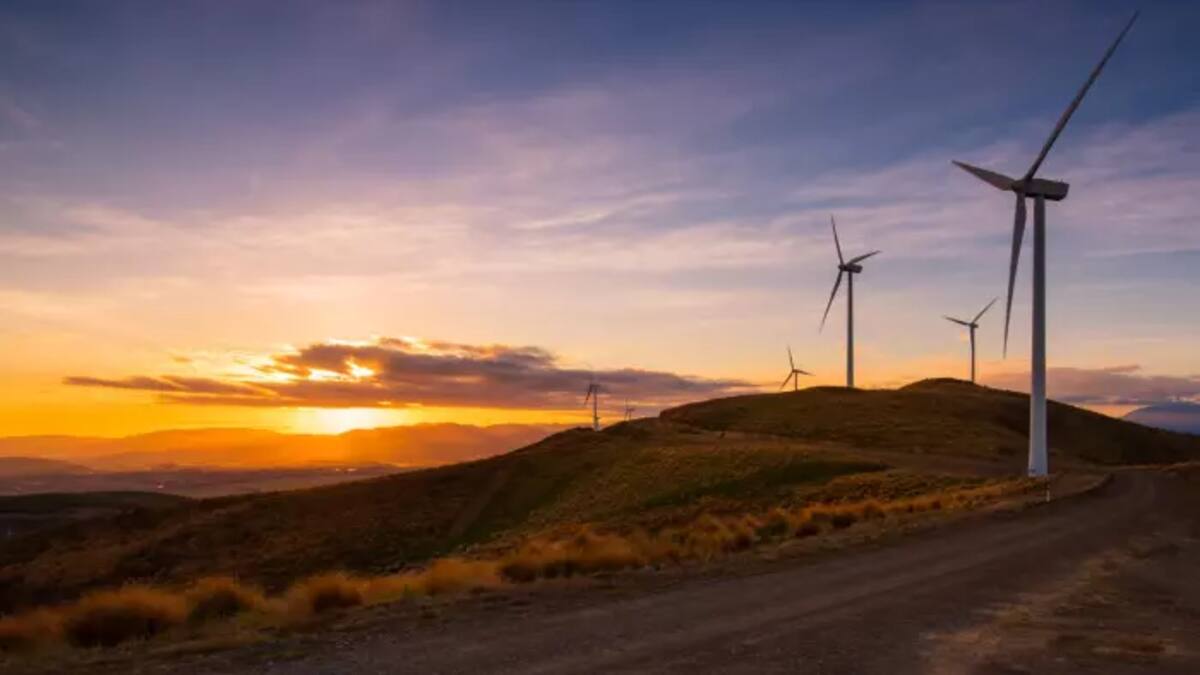
We also have no shortage of wind and a decent supply of sunshine. The cost of those technologies continues to fall rapidly, and the battery technology needed to really make them useful is rapidly improving.
Electric vehicles are rapidly improving, both in range and power, and getting cheaper.
It’s all there for us, we just need to retain our sense of urgency … and get organised.
Catch up on the debates that dominated the week by signing up to our Opinion newsletter – a weekly round-up of our best commentary.
Liam Dann is business editor-at-large for the New Zealand Herald. He is a senior writer and columnist, and also presents and produces videos and podcasts. He joined the Herald in 2003.