
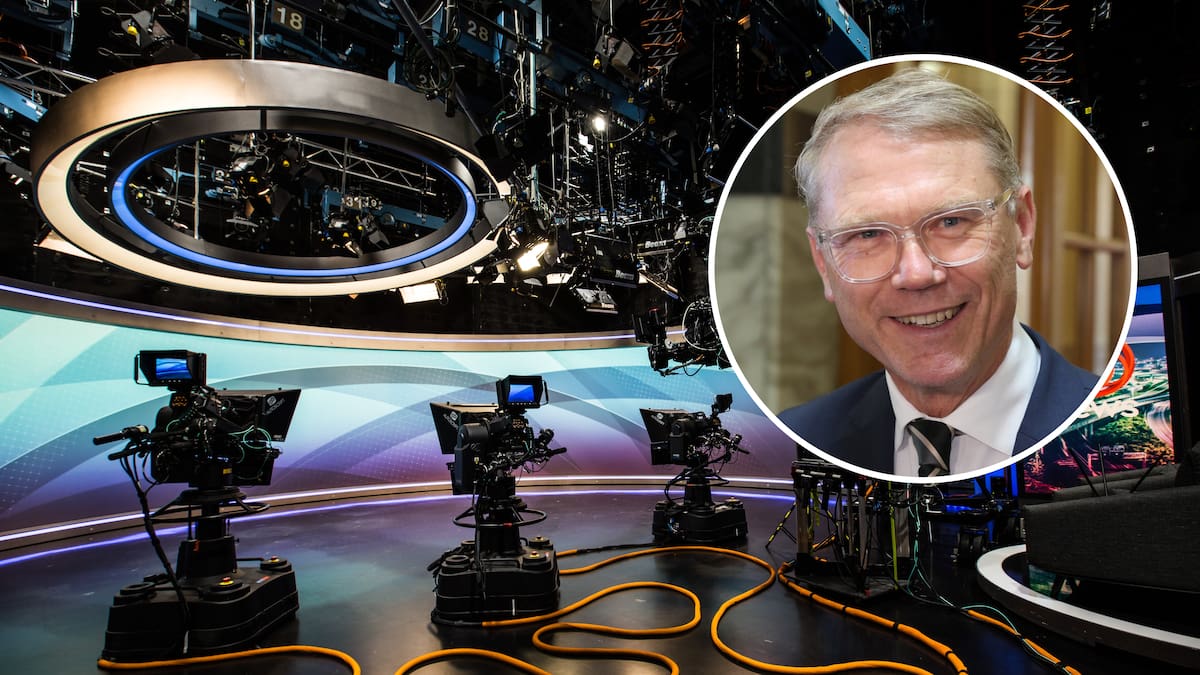
On the Ryan Bridge Today show on nzherald.co.nz this morning, Media and Communications Minister Paul Goldsmith gave the biggest indication yet that he also favoured abolishing the agency.
“I’m tempted to scrap it, [and] simply replace it with the Media Council, but that’s something we’ve got to work through,” Goldsmith told Ryan Bridge.
He said the Government had three options, and it had not landed yet on a final recommendation.
“You either scrap it or try and change the law so it’s clear about what it covers because it was done 20-30 years ago when the internet didn’t exist, and so it doesn’t sort of make sense at the moment.
“So we’ve got to either change it or scrap it.”
Former Broadcasting Minister Willie Jackson, who sat alongside Goldsmith in a panel discussion on Bridge’s show, said: “Ask Winston … Winston runs broadcasting.
“This bloke [Goldsmith] hasn’t done anything in broadcasting since he took the portfolio over. Why don’t we just give Winston a call in America and he’ll, he’ll tell us what’s happening.”
Meanwhile, as Media Insider reported today, one of this country’s sharpest legal minds and internet law specialists has proposed a new Media and Communications Authority to clear up the shambolic state of media regulation in New Zealand.
Newspapers, news websites and their related multi-platform content, including video, currently fall under the umbrella of the Media Council, a voluntary self-regulatory body.
Television and radio come under the BSA.
Throw in the Office of Film and Literature Classification and legislation such as the Harmful Digital Communications Act, which is administered by Netsafe and the district court, and you have a canine’s brunch – one notch away from a dog’s breakfast.
The BSA has claimed jurisdiction over The Platform, an online-only site, saying it will officially adjudicate a complaint after Plunket described Māori tikanga as “mumbo jumbo”.
Goldsmith earlier told Media Insider that he would give firm direction on the media regulatory framework before the election, after further consultation with Act and New Zealand First.
He would either scrap the BSA (which is what the coalition partners now want), maintain the status quo, or more clearly define the BSA’s oversight.
Former judge David Harvey. Photo / Jason Oxenham
Dr David Harvey, a former long-serving district court judge who taught law and IT at the Auckland Law School for 18 years, says current regulation is fragmented among the four existing bodies with “overlapping, misaligned and increasingly inadequate jurisdictions”.
Harvey, who prepared submissions on the BSA jurisdiction issue for another online site, Reality Check Radio, has produced a new paper, A Framework for Media Regulation in the Digital Age, and published it today.
He says his proposal addresses two related challenges.
“The first is the inadequacy of New Zealand’s current online harm regulatory architecture, centred on the Harmful Digital Communications Act 2015, which was designed for interpersonal harmful communications rather than systemic platform regulation,” he writes.
“The second is the broader fragmentation of New Zealand’s media regulatory landscape, which leaves significant gaps in coverage and creates inconsistencies that the digital convergence of media and communications has made increasingly apparent.”
He says a unified Media and Communications Authority would have three operational divisions: News Media Standards, Content Standards and Online Harm.
The News Media Standards would cover journalistic accountability and editorial standards, and would incorporate existing Media Council and BSA news/current affairs functions.
Content Standards would cover professional non-news content, such as internet-only broadcasters, on-demand audiovisual, and streaming services with a New Zealand presence.
The Online Harm division would cover a hybrid code-compliance and reactive-harm regulation of online platforms. It would incorporate and extend the HDCA framework.
A fully independent Communications Tribunal would be established to consider unresolved complaints, with appeal to the High Court.
“The framework’s central commitments are: Freedom of expression as the default condition; harm, properly defined, as the threshold for regulatory intervention; strict separation between the state and the content of codes and standards; the use of industry self-regulation as the primary mechanism, backed by a credible regulatory backstop; and an independent adjudicative function vested in the Communications Tribunal,” Harvey writes.
The proposal should be understood in that light of what it was not attempting.
“It is not a proposal for censorship of online content or for state control over the press. Its foundational commitment throughout is to freedom of expression as the default condition of the New Zealand communications environment.”
Harvey has provided his paper to Goldsmith, Seymour and Peters as well as Jenny Marcroft, who is under-secretary to the Minister for Media and Communications.
DAVID HARVEY’S FULL PAPER:
Editor-at-Large Shayne Currie is one of New Zealand’s most experienced senior journalists and media leaders. He has held executive and senior editorial roles at NZME including Managing Editor, NZ Herald Editor and Herald on Sunday Editor and has a small shareholding in NZME.