
The combined company is pursuing what it describes as a dual-track regulatory strategy. In the Cook Islands, it holds investments in two of three licensed exploration projects – Moana Minerals Ltd. and CIC Limited – covering licence areas that encompass 417 million tonnes of indicated resources and over two billion tonnes of inferred resources.
The Cook Islands has established a domestic regulatory framework through its Seabed Minerals Act 2019 and Seabed Minerals Harvesting Regulations 2024, which the company points to as providing a clear, nationally governed pathway for development within the country’s exclusive economic zone.
In parallel, AOMC has secured compliance for two exploration applications under the U.S. Deep Seabed Hard Mineral Resources Act, administered by the National Oceanic and Atmospheric Administration – providing a domestic regulatory route to explore nodule resources in international waters.
Tom Albanese, Chairman of AOMC and formerly Chief Executive of Rio Tinto Group, said: “AOMC will be positioned to be a reliable, long-term supplier for American re-industrialisation. We are taking a differentiated, responsible approach to the research and development of deep-sea resources. The work over the past decade has set a high standard for advancing the industry responsibly, and we are proud to play a role in maintaining that standard.”
References to environmentally responsible harvesting, improved scientific understanding, and high industry standards appear repeatedly throughout AOMC’s announcement. But the scientific community’s assessment of deep-sea mining’s environmental consequences tells a very different story.
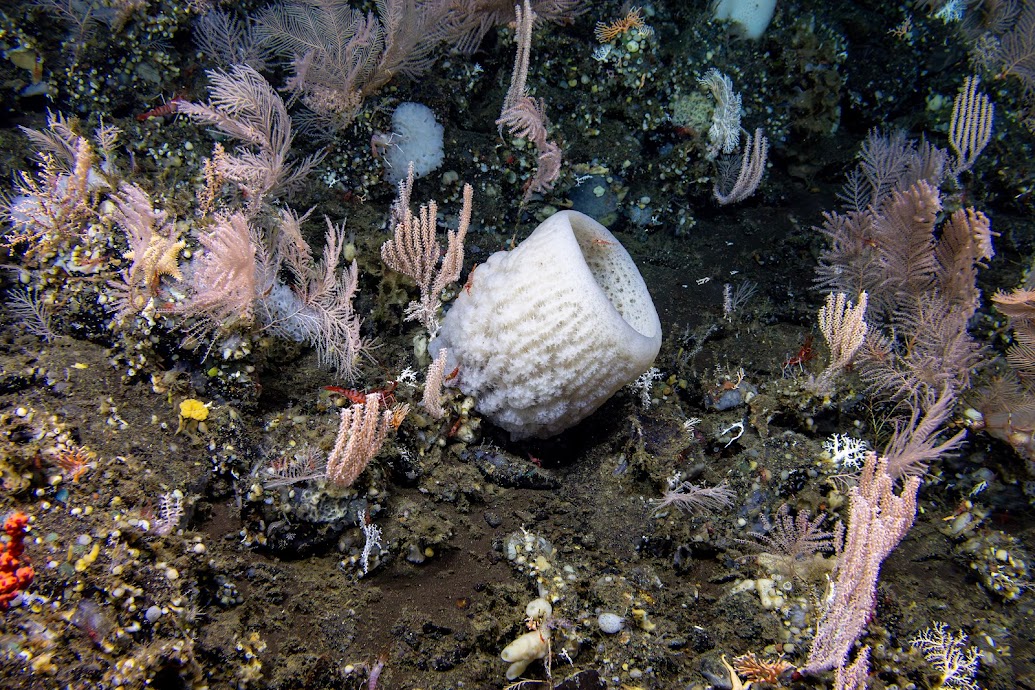
The Clarion-Clipperton Zone, which falls within AOMC’s target areas, is home to extraordinary and largely undescribed biodiversity. Studies have consistently found that the nodules themselves are not inert mineral deposits but are, in fact, ecosystems. Hundreds of species live on and around them, many found nowhere else on Earth. Sediment plumes generated by nodule collection vehicles can travel hundreds of kilometres, smothering filter feeders and disrupting the water column across vast areas.
Research on historical test mining sites has shown that recovery, if it occurs at all, takes decades – possibly centuries.
The deep ocean is the least understood and most biodiverse environment on Earth, and the case for large-scale industrial extraction of its resources – before that environment is properly understood – has not been made. While the energy transition is urgent and necessary, a recent report from the Institute for Sustainable Futures in collaboration with Greenpeace International has stressed that deep-sea or critical ecosystems on land “do not need to be sacrificed.”
Instead, the report has urged, Governments should focus on reducing demand for raw materials – through the adequate use of public transport, improved recycling programmes, and advanced battery technologies – “rather than opening the deep-sea to industrial exploitation.”
The investors backing this merger are betting that regulatory and political conditions are moving in their favour. In the United States, the current administration has shown a clear appetite for accelerating domestic and allied critical minerals supply chains, and the executive framing around resource security is providing commercial operators with significant political tailwind.
Sofia Tsenikli, Global Campaign Director at the Deep Sea Conservation Coalition, said: “Promises about deep-sea mining are built on a highly speculative, high-risk industry which has never proven commercially viable.
“Financial institutions, representing trillions in assets, are already restricting or excluding investment due to concerns over environmental damage, legal liability and reputational risk, which are only heightened if mining proceeds in violation of the international system.
“Scientists warn that damage from deep-sea mining could extend far beyond the seabed, threatening fragile ecosystems, fisheries, coastal livelihoods and food security, particularly for communities in the Pacific that depend on a healthy ocean. For these reasons, a growing coalition of countries, scientists, investors and companies is calling for a pause or a moratorium before irreversible harm is done.”