
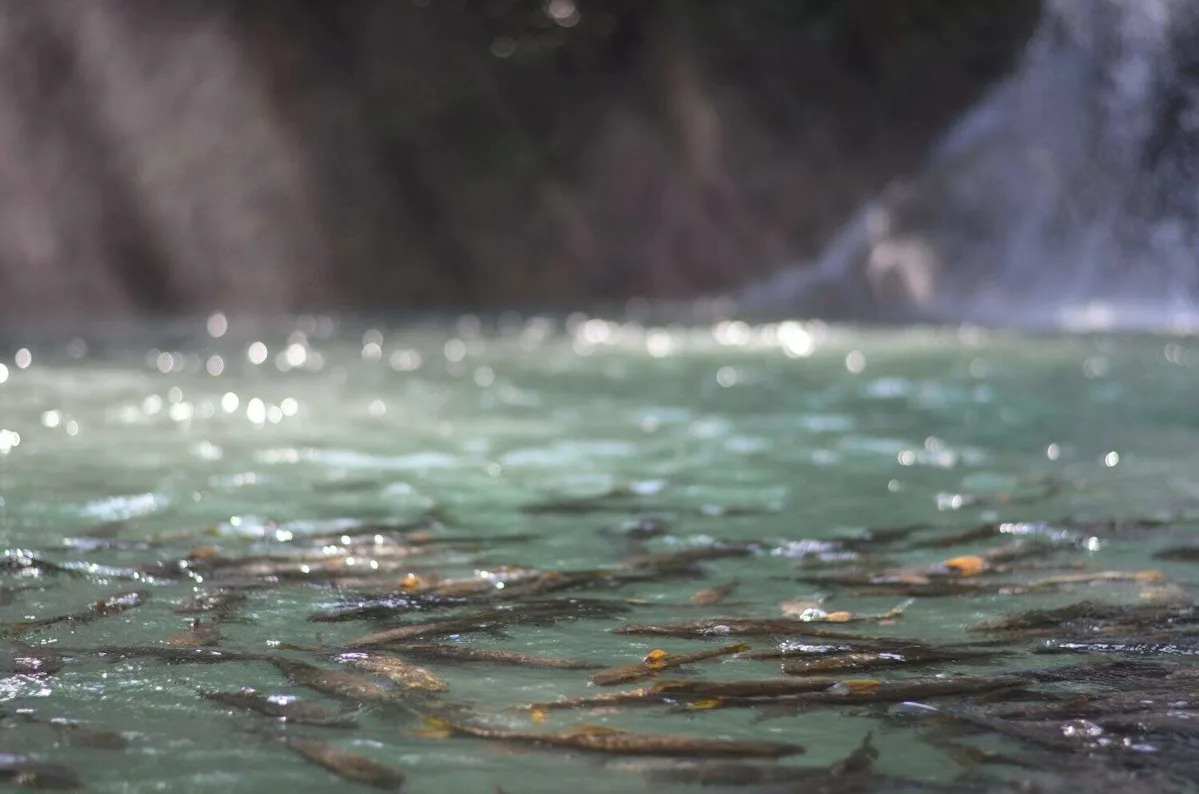
The post These Tiny Fish Climb Waterfalls and Scientists Still Don’t Know Why appeared first on A-Z Animals.
Quick Take
Parakneria thysi navigates vertical rocks to climb waterfalls in the Congo Basin.
Parakneria thysi, or shellear fish, climb 50 feet to reach their destination at the top of the falls.
It is not clear why Parakneria thysi climbs.
Fish are known for their swimming skills. It seems absurd to think of fish functioning outside their aquatic environment, given how they effortlessly glide through water using their fins. This may be why tales of the legendary climbing fish of the Congo were dismissed for so long. These fish, however, do exist, and the lengths they go to move from one body of water to another are truly awe-inspiring.
The Climbing Fish of the Congo Are Real
For decades, there have been stories of small fish climbing the rocky outcroppings located underneath a waterfall in the Congo. However, until recently, no one had been able to observe and document this event. That changed when Pacifique Kiwele Mutambala from the University of Lubumbashi in the Democratic Republic of the Congo became the first to witness the event and obtain photographic evidence.
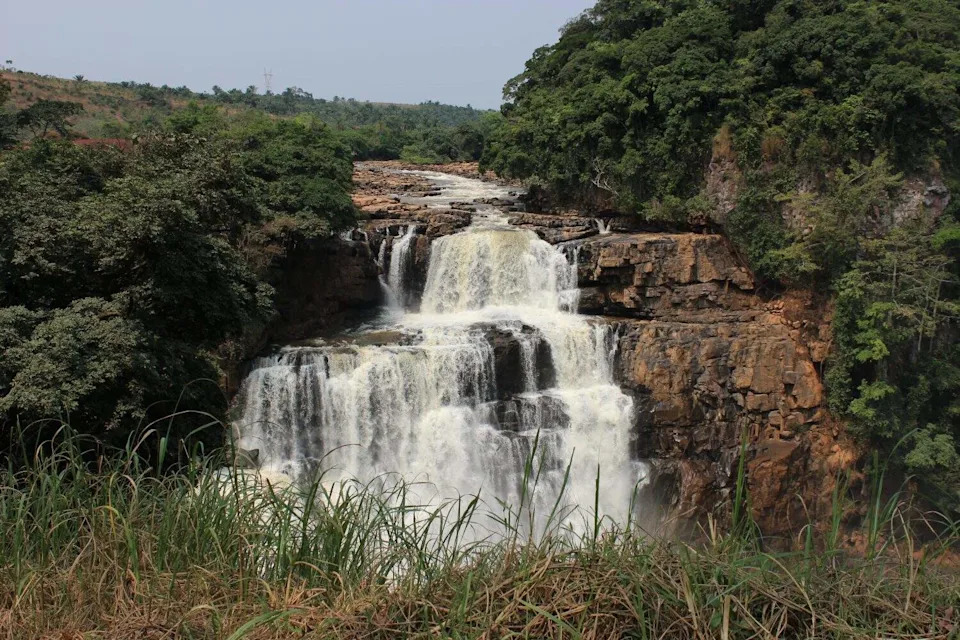
The
Parakneria thysi
climb up Luvilombo Falls, similar to this waterfall, in the Congo.
©Ernesto Martin/Shutterstock.com
According to a new study published in Scientific Reports, Parakneria thysi has been shown to climb vertically successfully. Also known as shellear fish, the tiny aquatic species was observed scaling Luvilombo Falls on the Luvilombo River. Located in the upper Congo Basin, these falls are 50 feet high. Despite the massive challenge, shellear fish were repeatedly seen making it to the top, just as legend described.
Fish in the study were observed climbing the falls in both 2018 and 2020. While the fish tended to cling to spots that were not regularly doused with water, the locations they climbed on received plenty of spray from the falls, keeping them moist as they attempted to make their way to the top.
Why Do Shellear Fish Climb the Falls?
Why the shellear fish climb the falls remains uncertain. They do not do so for mating or migrating purposes. While there are some solid hypotheses, scientists are still learning why these tiny fish undertake such an arduous climb.
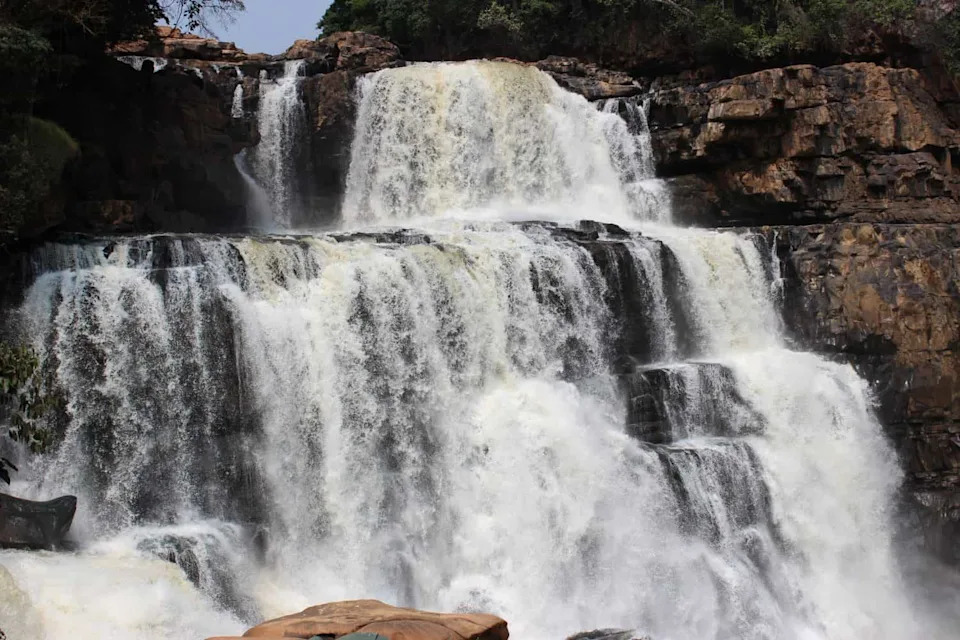
Shellear fish climb Luvilombo Falls, similar to this waterfall, to reach the top for better access to nutrients, safety from predators, and the potential to return to their natural habitat.
©Ernesto Martin/Shutterstock.com
According to the study, shellear fish will only attempt to climb the waterfall after significant rain and flooding. Typically, this occurs between April and May. It is believed that the shellear fish living upstream may have been accidentally washed downstream with the influx of water. Therefore, to get back to their habitat, they have to climb.
Additionally, it is believed that the fish may be trying to reach a habitat upstream that is safer than the downstream area. Not only are there fewer predators, but there is more food available. The shellear fish that reach the top may be among the fittest of their species, benefiting from greater access to food and safety.
How Do Shellear Fish Climb?
Shellear fish are uniquely equipped to climb, unlike most other fish. Like mountain climbers, these fish use hooks on their fins to help them ascend the falls.
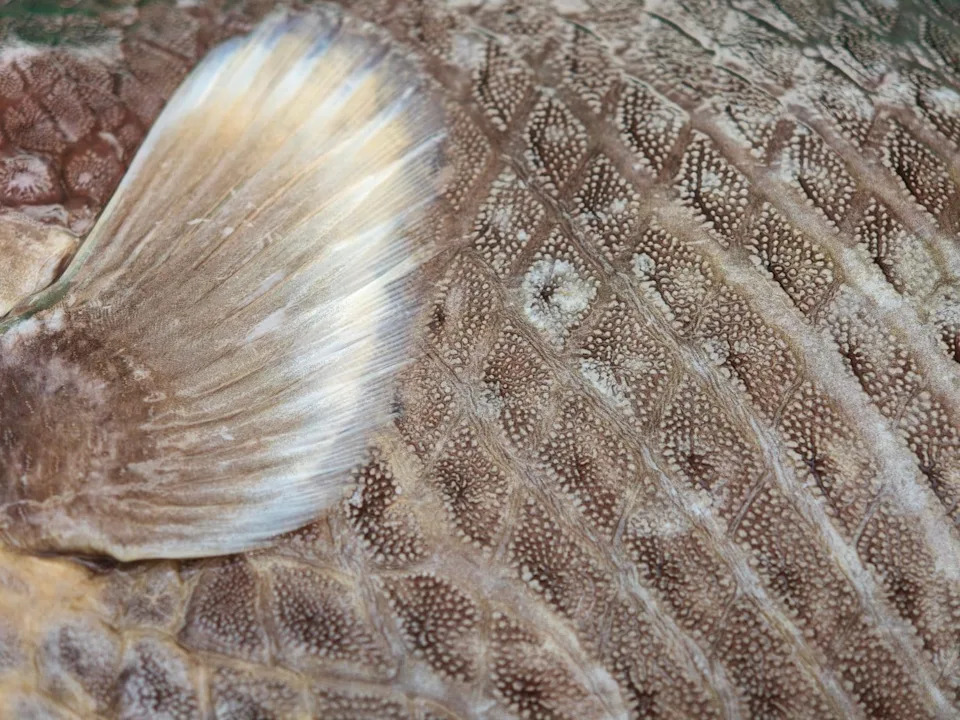
Strong pectoral fins, similar to this one, help the shellear fish climb the falls.
©Ardie shawn/Shutterstock.com
The study notes that shellear fish have hook-like appendages on their fins. These hooks are called unculi. The unculi are attached to specialized pads on the pectoral and pelvic fins of the fish. These hooks, along with large ventral surface muscles used for lateral movement, help the fish scale the rocks beneath Luvilombo Falls.
However, as the fish grow larger, their hooks and pads do not increase in size. Therefore, it appears that only the smaller shellear fish are capable of making the trip to the top of the falls.
How Long Does It Take for Shellear Fish to Reach the Top of the Falls?
While some fish swim upstream to reach breeding grounds, shellear fish spend much of their journey to the top of the falls out of the water. It is not an easy trek, requiring great amounts of energy and daylight for the fish to reach their final destination.
According to the study, it takes nearly 10 hours for shellear fish to reach the top of Luvilombo Falls. This time includes long periods of rest; most of the journey is spent resting rather than actively climbing.
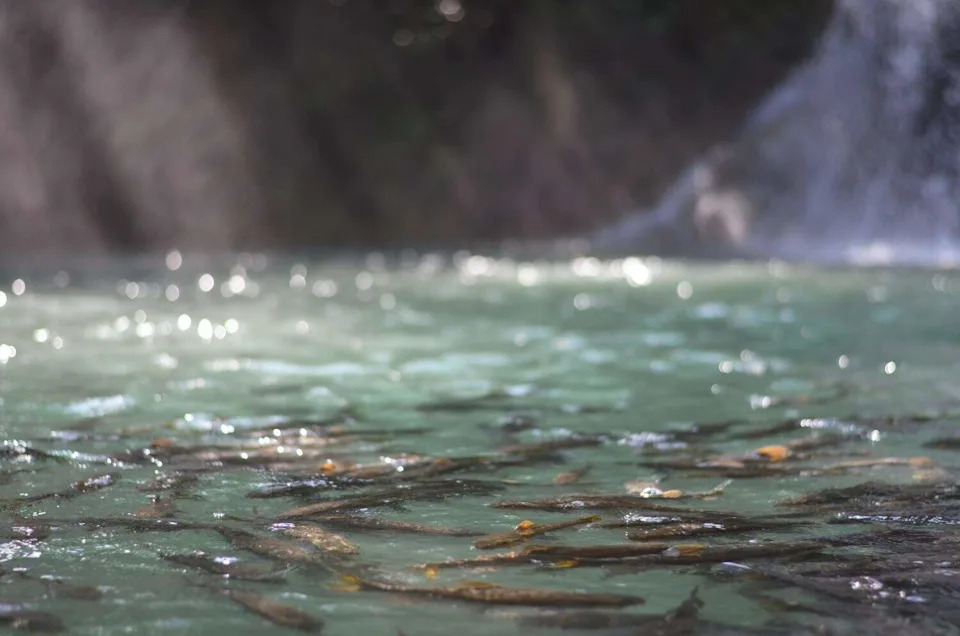
For shellear fish to get from the bottom of the waterfall to the top, it takes nearly 10 hours.
©Chanita Chinnawong/Shutterstock.com
“To overcome a vertical surface one meter in height, for example, fish need an average of 30–60 s of movement, at an average speed of about 1.5–3.0 cm/sec (0.9–1.8 m/min),” the authors of the study write. “However, they will also need eight to nine short pauses [~120–480 (2.0–8.0) or~135–540 (2.3–9.0) seconds (minutes), respectively]. Therefore, to reach the top of the Luvilombo Falls, a fish climbing at a maximum speed of about 3.0 cm/sec would need 900 s (15 min) of movement and 1800s (30 min) of short pauses, for a total of 2700 s (45 min).”
Researchers also note that there are nine ledges where most of the fish rest. The resting time on each ledge is approximately one hour. Therefore, for the fish to complete the trek from the bottom to the top of the falls, nine hours and 45 minutes are needed. This means an entire day or evening is required for fish to successfully complete their journey.
Not All Fish Make It to the End of Their Journey
Given how long and difficult the climb is for the shellear fish, it should come as no surprise that not all of them make it to the top. Interestingly, not all of the fish attempt the climb.
During the rainy season, the water pressure coming down the waterfall can change. According to the study, some of the fish will be washed off the rocky area under the falls. It is unclear whether fish that are washed off the wall by a jet of water attempt the climb again. Likely, that decision depends on how much energy was exerted at the time of being washed off.
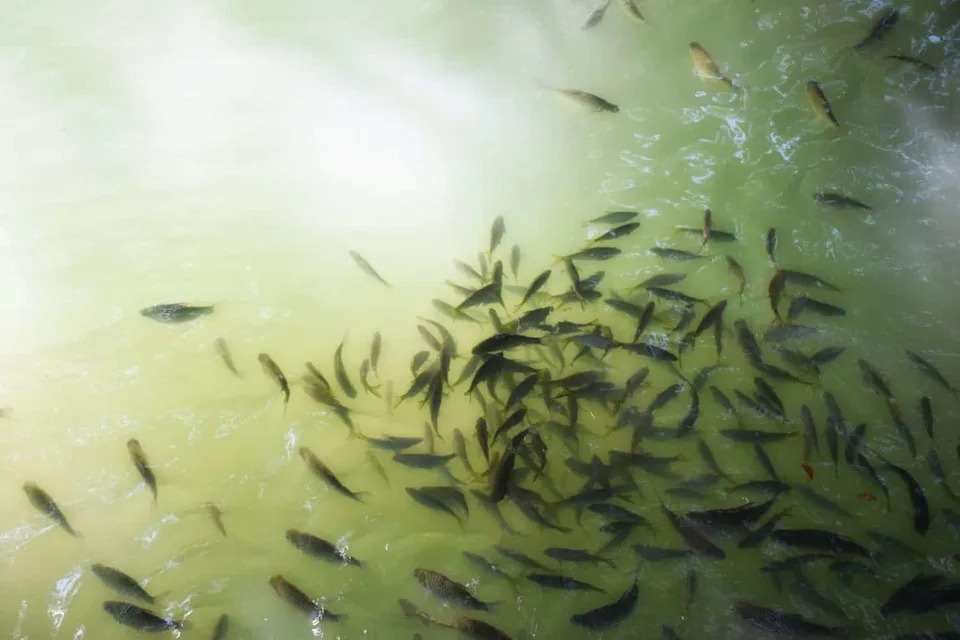
Not all shellear fish make it to the top of the waterfall, remaining at the bottom, like these fish.
©deenee_dy/Shutterstock.com
Other fish were observed being washed off when moving upside down under rock outcroppings. Possibly, because of the downward angle, the spikes in their fins could not hold on against the water pressure.
Additionally, the larger shellear fish do not even attempt to climb to the top of the falls. The study’s authors believe this may be due to the pectoral and pelvic fins being unable to support the fish’s weight up the falls. It was not noted whether these fish were older than those climbing the falls or if they originated from the downstream portion.
The post These Tiny Fish Climb Waterfalls and Scientists Still Don’t Know Why appeared first on A-Z Animals.