
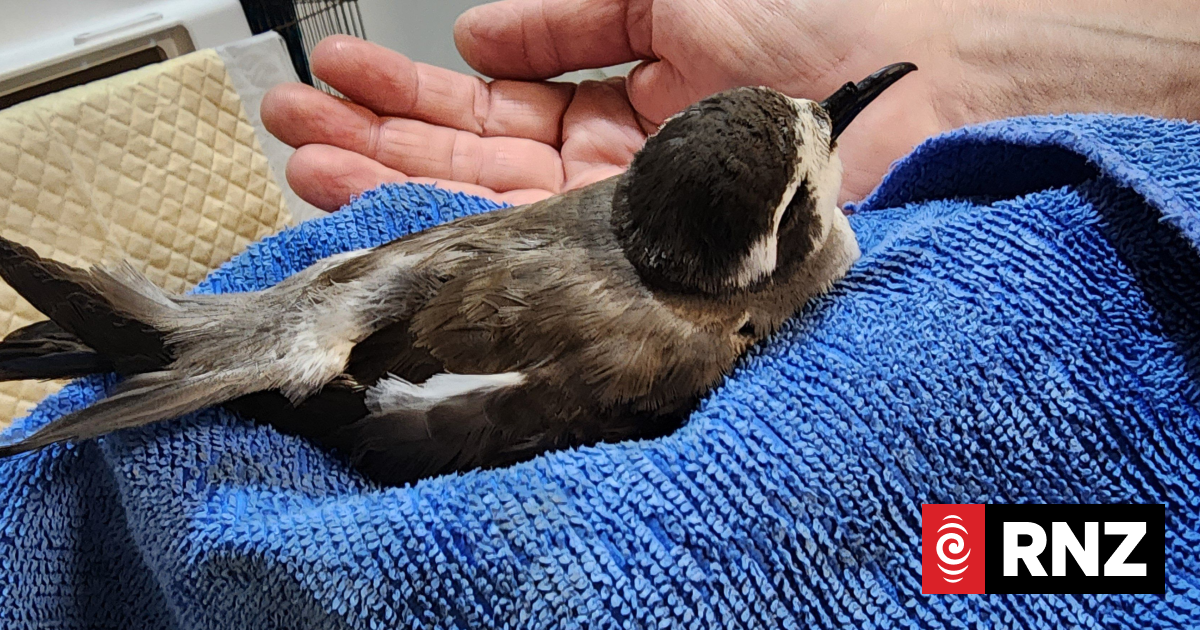
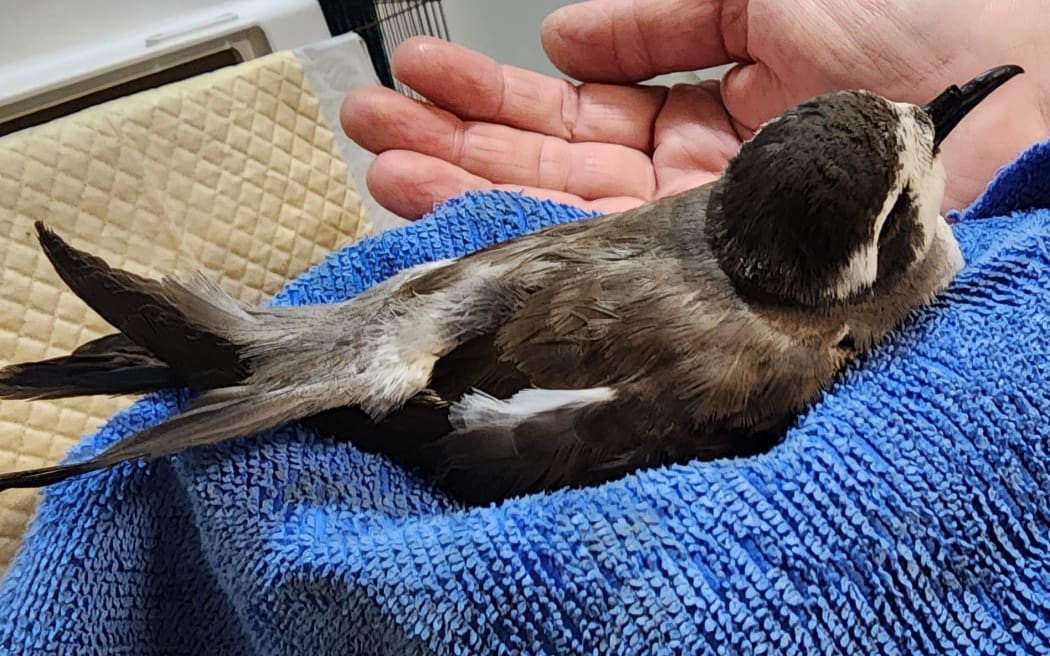
A white faced storm petrel rescued by Ngahuia wild bird rescue.
Photo: Supplied
A lower North Island wild bird rescue expert is advising people to look out for birds in trouble after Cyclone Vaianu.
Danielle Hill, the founder and operator of Wairarapa-based Ngahuia Wild Bird Rescue, said birds could be affected by the storm, but it was hard to estimate its impact until birds started being found.
“We won’t know until people find birds in their back yards or in other unusual places. In previous severe weather a number of small sea birds turned up in Masterton and Greytown,” she said.
“After Cyclone Gabrielle about 15 sea birds were found across Wairarapa, mostly in Masterton town. Those included black petrels, sooty shearwaters, and fairy prions.

“They were all birds you would never normally see inland. I’m not sure if it will be similar this time.”
She thought it unlikely to see a repeat of mid-February’s wild weather, when as many as seven albatrosses were found stranded across the lower North Island.
If anyone did find an albatross, the bird would almost always need help getting back to sea.
“An albatross can’t generally take off from land. They normally take off from water,” she said.
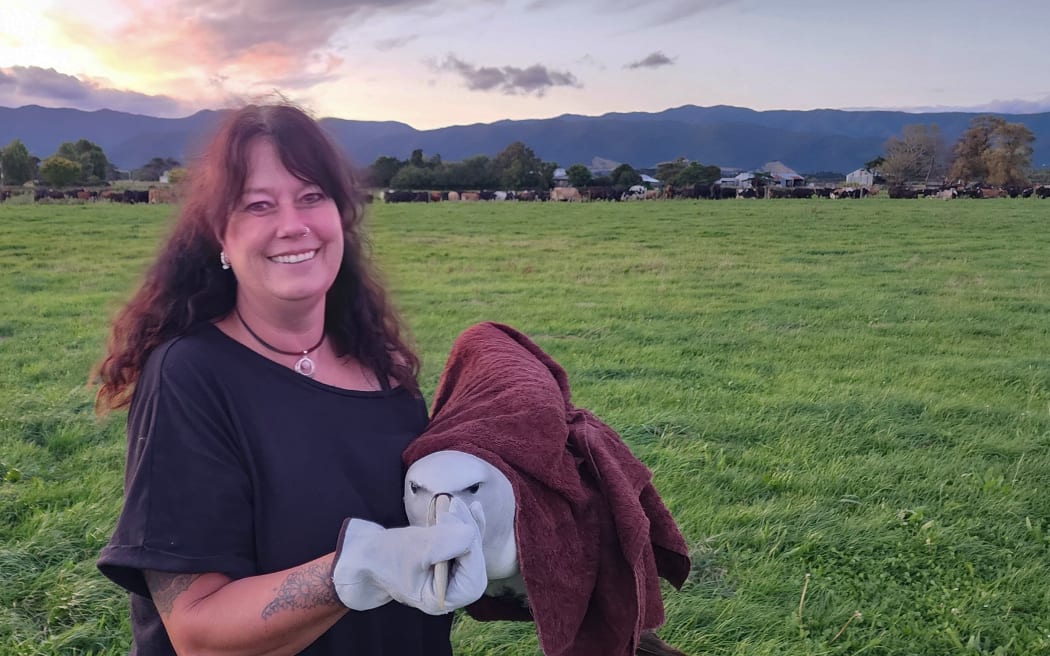
Danielle Hill, of Ngahuia Wild Bird Rescue, with a rescued albatross. Hill advises people finding wild birds in trouble after the recent storm, to contact either DOC or their local wild bird rescue centre.
Photo: Supplied
Hill said people finding birds needed to be careful not to touch them, and advised getting the bird into a safe spot and then calling a local bird rescue centre. She said unusual avian behaviour could be a sign the bird needed help.
“Birds need to be brought in really quickly. People who find a bird needing help should contact us, DOC, or their local bird rehabilitation centre,” she said.
“A seabird shouldn’t be in your garden.
“People should watch out for birds not common to the area. It is not normal for a bird to let you approach it.”
She advised people not to touch the bird with their hands, and said using a towel to carefully pick the bird up was generally advised.
“All sea birds found after a storm need to be checked for waterproofing, injuries and underlying illness.
“If a bird is touched by people’s hands it can remove waterproofing from their feathers.
“If people are unsure what to do, a good way to check is to send a photo into their local centre for advice.”
Hill strongly advised against feeding the birds or giving them anything to drink. They should be kept instead in a well-ventilated box until they can be taken to an expert. People also need to be aware of their own safety when handling rescued birds.
Ngahuia has received funding from South Wairarapa District Council.
“If it wasn’t for the council we wouldn’t be operating,” Hill said.
“The funding helped us get set up.”
LDR is local body journalism co-funded by RNZ and NZ On Air.