

Listen to this article
Estimated 5 minutes
The audio version of this article is generated by AI-based technology. Mispronunciations can occur. We are working with our partners to continually review and improve the results.
People in a western Manitoba community are paying out of pocket for health-care services as their local nurse practitioner hopes the province steps up with a new funding model.
Michelle Weighell has been a front-line health-care provider in the Prairie Mountain Health region for 15 years. She has worked as a nurse practitioner in the Rural Municipality of Oakview, north of Brandon, for the past six years, and opened a private practice in November.
Weighell works three days per week at her clinic in Rapid City, which is roughly 30 kilometres north of Brandon, in addition to travelling around Oakview.
“The ability to take nursing beyond bedside and expand that role into full primary care just fascinated me. I loved it,” she said.
Nurse practitioners are able to diagnose, prescribe medications and order tests in emergency rooms and primary care clinics. What they can’t do is operate independently and bill the Manitoba government for those services.
That’s something some nurse practitioners want to change.
“If that alternative funding could be completed, set up, it would improve so many people’s health and give them the access that they need,” Weighell said.
Ottawa issued a directive to all provinces and territories last year to include nurse practitioners and midwives under public health plans as part of the new interpretation of the Canada Health Act. Weighell said she was excited to learn those changes were to take effect at the beginning of this month and opened her clinic last fall in anticipation of the revision.
WATCH | Western Manitoba residents paying nurse practitioner: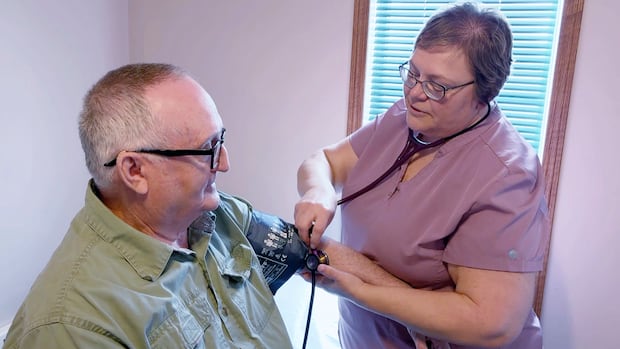
Some rural Manitobans paying out of pocket for nurse practitioners
The Nurse Practitioner Association of Manitoba wants the government to modernize the way it pays nurse practitioners. It says some practitioners who have opened their own clinics can’t bill the province, leaving some patients to pay for medical services.
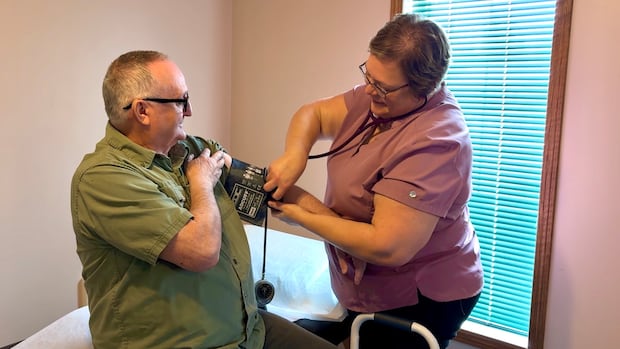
The change hasn’t happened in Manitoba. So, Weighell charges her patients $60 for an appointment.
“I hate it,” she said. “Honestly, I don’t know how else to put it. It’s not what I wanted to do. That wasn’t the intent.”
Weighell has more than 100 patients and sees them in a space provided by Rapid City Community Church.
“I’m only open three days a week right now,” she said. “But every single day, I have people emailing or calling and saying they can’t get a provider, and would I take them on knowing I have to charge them.”
The Rapid City & Area Lions Club recently donated equipment for Weighell to use to treat pre-cancerous lesions. She has bought all the other medical instruments herself, including a stethoscope, blood pressure cuff and monitor, and an otoscope to look inside ears.
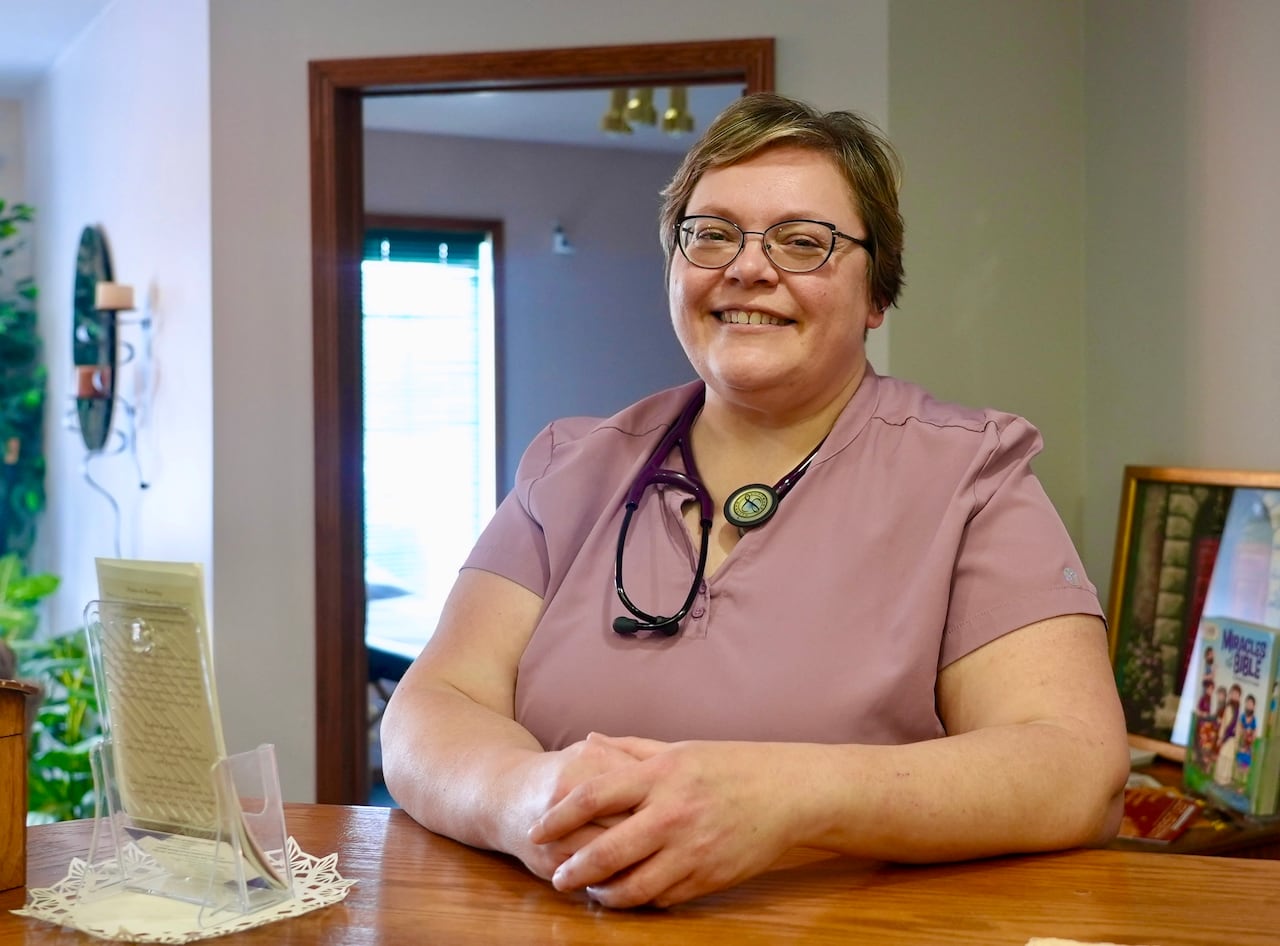 Weighell has more than 100 patients in the Rural Municipality of Oakview. She says charging her patients for appointments is the only way to deliver essential care. (Michele McDougall/CBC News)
One of Weighell’s patients, Ian Christie, said he’s willing to pay for quality care he won’t get in Brandon.
“Nowhere else do I know that I can come in and have a half-hour check. You’re lucky if you get three minutes in Brandon,” he said.
“For us that don’t have family doctors, which is getting to be more and more as we struggle to find doctors to work in rural Manitoba, people like Michelle — they’re worth their weight in gold.”
Ashley Carruthers, CEO of the Nurse Practitioner Association of Manitoba, said because nurse practitioners can work independently, they deserve a separate and new payment model, and insisted it should not be a “one size fits all.”
Not every nurse practitioner out of the more than 400 in Manitoba will go into private practice, Carruthers said, but those who do should be compensated.
“They see what the need is. They see the gaps. Nurse practitioners have their finger on the pulse. They know what their communities need,” she said.
“It is unfortunate that the government does not value nurse practitioners to see or know that they have that ability to know where those gaps are and the services that they can provide for their patients.”
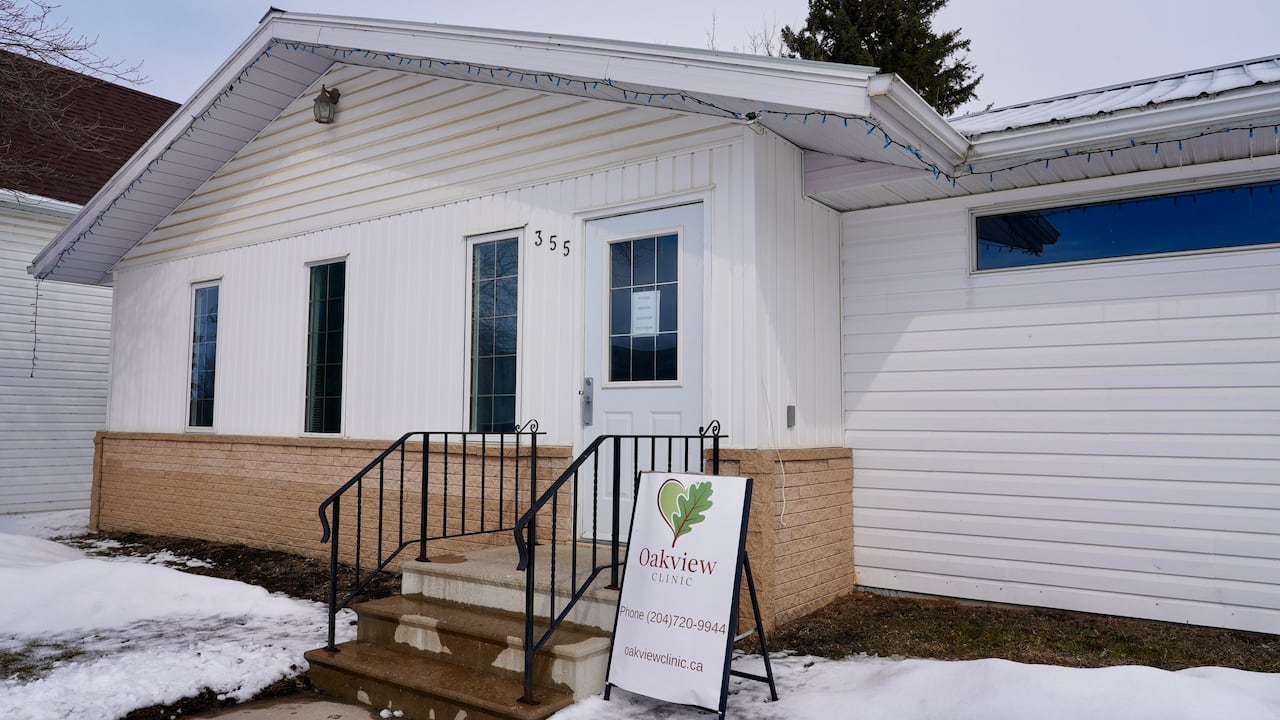 Weighell’s clinic is in Rapid City, about 30 kilometres north of Brandon. (Michele McDougall/CBC News)
It’s not known how many nurse practitioners have started their own clinics, like Weighell. Carruthers said that’s data the association intends to gather.
Manitoba Health Minister Uzoma Asagwara told CBC the province is in compliance with the federal government in compensating nurse practitioners.
Asagwara said the NDP government will work with nurse practitioners so they can do more “in this province as we move forward.”
“We know that nurse practitioners want to do more, not less, and so we’re gonna keep this conversation going,” Asagwara said.
“We want to make sure that they can not only practice with their full scope, but of course, we want to expand that scope because we know it means that it expands the health-care opportunities for Manitobans to access.”
The province faces no immediate penalty for not following Ottawa’s new interpretation of the Canada Health Act, which prohibits user fees and extra billing of patients.
The federal government has given all provinces and territories until December 2028 to report all charges to patients for physician-equivalent services.
Enforcement would include deductions of federal health transfer payments in the amount the patients were charged for medically necessary care.