
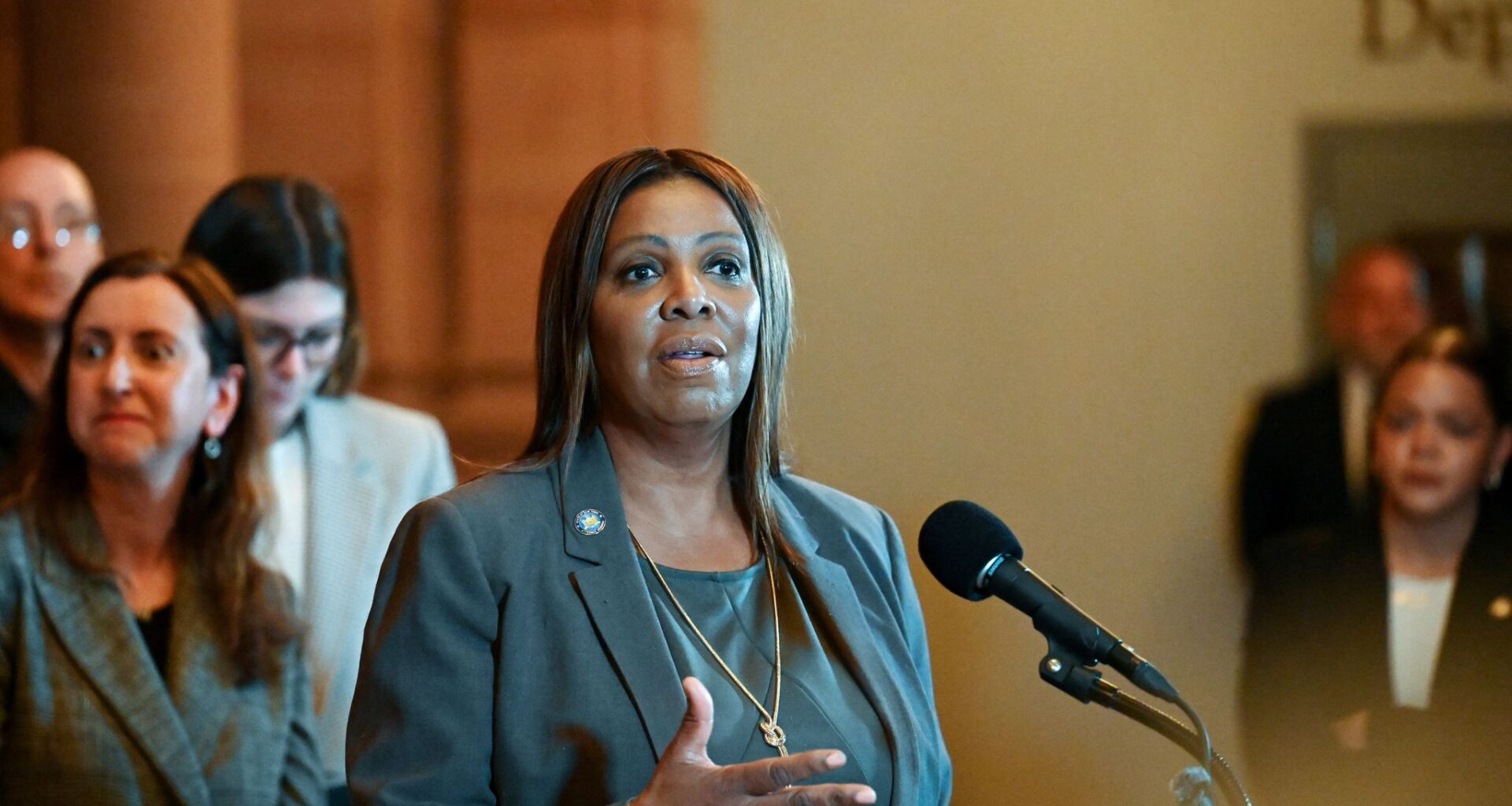
New York Attorney General Letitia James announced a settlement with NewYork-Presbyterian Hospital requiring sweeping reforms to its emergency psychiatric care. (Will Waldron/Times Union)
Will Waldron/Times Union
ALBANY — State Attorney General Letitia James on Monday announced a landmark settlement with NewYork-Presbyterian Hospital that requires the hospital system to overhaul how it treats patients in mental health emergencies after an investigation found years of alleged dangerous failures in care.

The agreement caps a yearslong probe that found NewYork-Presbyterian repeatedly failed to screen and stabilize patients arriving in psychiatric crisis, allowed high-risk patients to walk out of emergency departments before receiving treatment, and kept more than 100 licensed psychiatric beds offline well after the COVID-19 pandemic ended.
Article continues below this ad
“Too many New Yorkers experiencing mental health crises have been met with inadequate care when they need help most,” James said in a statement. “Mental health care is necessary medical care, and hospitals have a legal and moral obligation to treat these crises with urgency and compassion.”
The attorney general’s office launched the probe after hearing from providers, advocates and families about what James’ office described as dangerous gaps at NYP’s emergency departments and inpatient psychiatric units. Investigators reviewed thousands of emergency visits involving behavioral health conditions, along with patient records, hospital policies and data on psychiatric bed use.
What they found was a pattern of breakdowns. According to the attorney general’s findings, the hospital did not consistently screen patients for suicide risk or substance use; staff failed to stop impaired patients from leaving without being properly discharged — a problem known as “elopement”‘ and patients placed under observation, including those requiring one-on-one monitoring, were not always adequately watched.
Make the Times Union a Preferred Source on Google to see more of our journalism when you search.
Add Preferred Source
In one case examined by investigators, a patient with a history of suicide attempts and homicidal ideation arrived reporting hallucinations and told staff he could not control his urge to hurt people. He was approved for inpatient admission but waited more than two days in the emergency department for a bed. Despite orders calling for him to receive close supervision, the man left before he could be transferred.
Article continues below this ad
In another case, a teenager initially cleared for discharge was later found to need inpatient care after staff contacted his mother and learned he was at high risk for suicide or violence. Because no safety precautions had been put in place, he left the hospital within minutes.
A third incident involved a young man brought in by EMS and police after attacking a bystander. Staff allegedly never reviewed the ambulance report documenting the incident and did not fully assess the risk he posed. He fled the emergency department, and the hospital did not notify law enforcement until the next day.
Beyond the emergency department failures, investigators found that NewYork-Presbyterian had not restored all of its licensed psychiatric beds after the pandemic. As of May 2023, more than 100 beds remained closed across the system, even though state regulators had directed hospitals to bring that capacity back online.
Under the settlement, NYP must strengthen screening for suicide, violence and substance use in its emergency departments and establish mandatory observation protocols. The hospital must upgrade its electronic health records so providers have real-time access to patient information, and improve coordination with families and community care teams before making discharge decisions.
Article continues below this ad
NewYork-Presbyterian must also track and review every elopement incident and ensure patients leave with scheduled follow-up appointments and connections to ongoing services. The hospital will face continued monitoring by the attorney general’s office.
James secured $500,000 from the hospital system and will impose a penalty of $10,000 for each future violation of the settlement terms.
In a statement, NewYork-Presbyterian said it has worked to address shortfalls since 2022.
“Providing safe, high-quality care for patients with complex behavioral and medical health needs is a priority,” the hospital said in an email. “Since 2022 we have continued to strengthen policies and workflows, expand mental health capacity with inpatient beds and outpatient services, and improve safety — improvements that the attorney general’s findings acknowledge.”
Article continues below this ad
The hospital said it is “proud to have one of the largest behavioral health footprints of any multi-campus hospital in New York” and remains committed to continuous improvement.
Glenn Liebman, CEO of the Mental Health Association in New York State, called the settlement “an important reminder of the ongoing need for strong oversight and enforcement.”
The settlement is the latest in a series of actions by James targeting gaps in New York’s mental health system, including a similar agreement with WMCHealth over psychiatric care failures in the Hudson Valley last year.
Article continues below this ad