
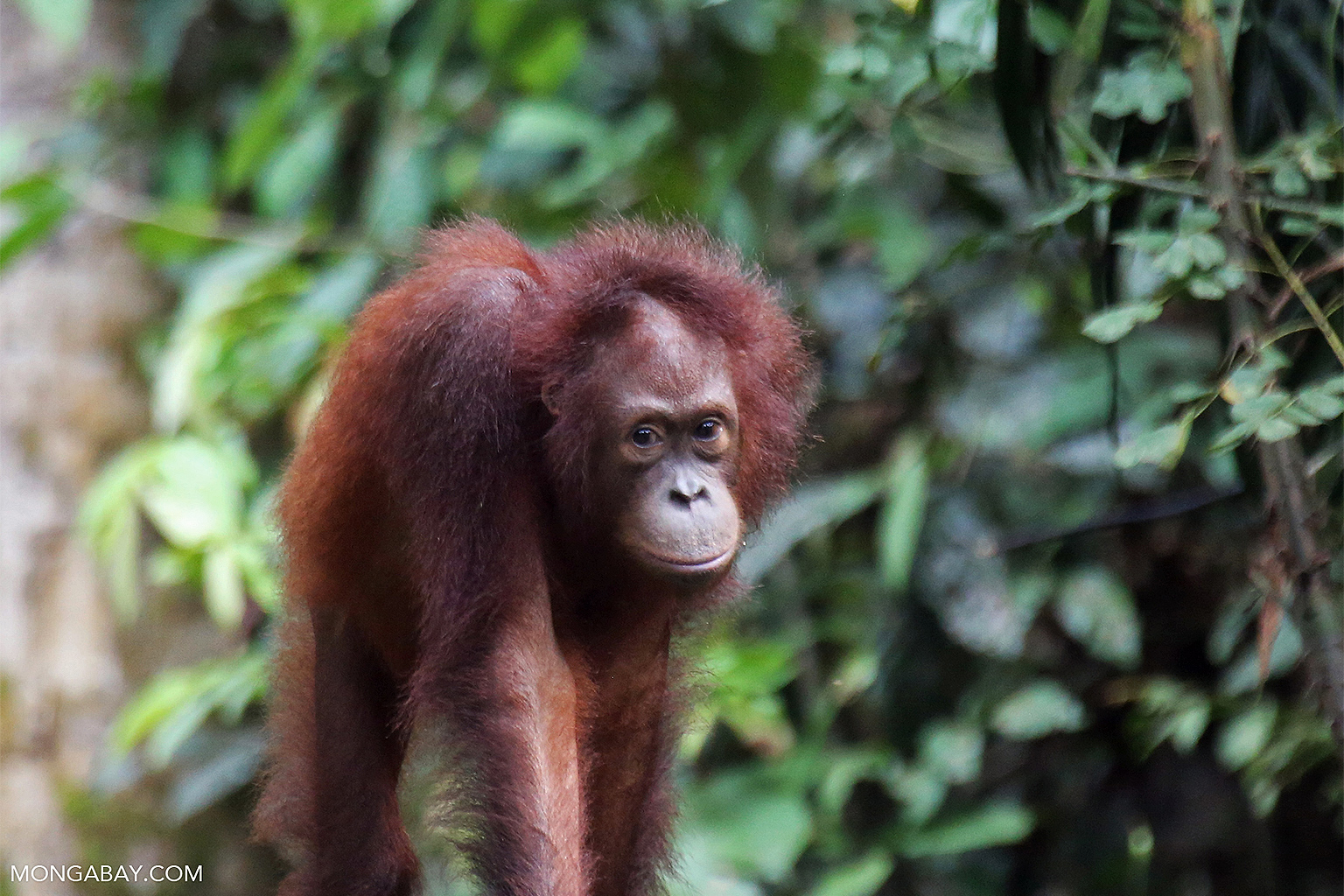
KehatiKu, a conservation program in Indonesian Borneo, pays citizen observers to document wildlife sightings and upload them via an app.Payments vary by species, with the highest rate, around $6, paid for verified orangutan sightings. Dedicated observers can make more than they would be paid at a full-time job.By paying citizen observers directly, the program aims to gather data on wildlife and incentivize conservation while spending much less than conventional conservation projects.The program has collected around 175,000 records in its first year of operations, but one expert notes that it has historically proven challenging to keep people engaged in long-term conservation initiatives.
See All Key Ideas
In Kapuas Hulu district in Indonesia’s West Kalimantan province, a pilot program is attempting to change how people living in Borneo perceive and engage with wildlife and wildlife conservation.
KehatiKu, a play on the Indonesian words for “my heart” or “biodiversity,” was the brainchild of Borneo Futures, a scientific consultancy company, says biologist Erik Meijaard, the consultancy’s managing director. Under the program, citizen observers are offered small payments for recording and reporting wildlife sightings, collecting around 175,000 records in around a year of operations.
In a video interview, Meijaard says the project came about because he was frustrated with inefficiency in conservation.
In 2022, Meijaard worked on a study analyzing 20 years of efforts to save orangutans. The study found that from 2000-19, nearly $1 billion was spent on orangutan conservation worldwide, even as around 100,000 orangutans were lost.
By offering small payments directly to residents, Meijaard says KehatiKu has shown concrete successes at a fraction of the cost of normal conservation.
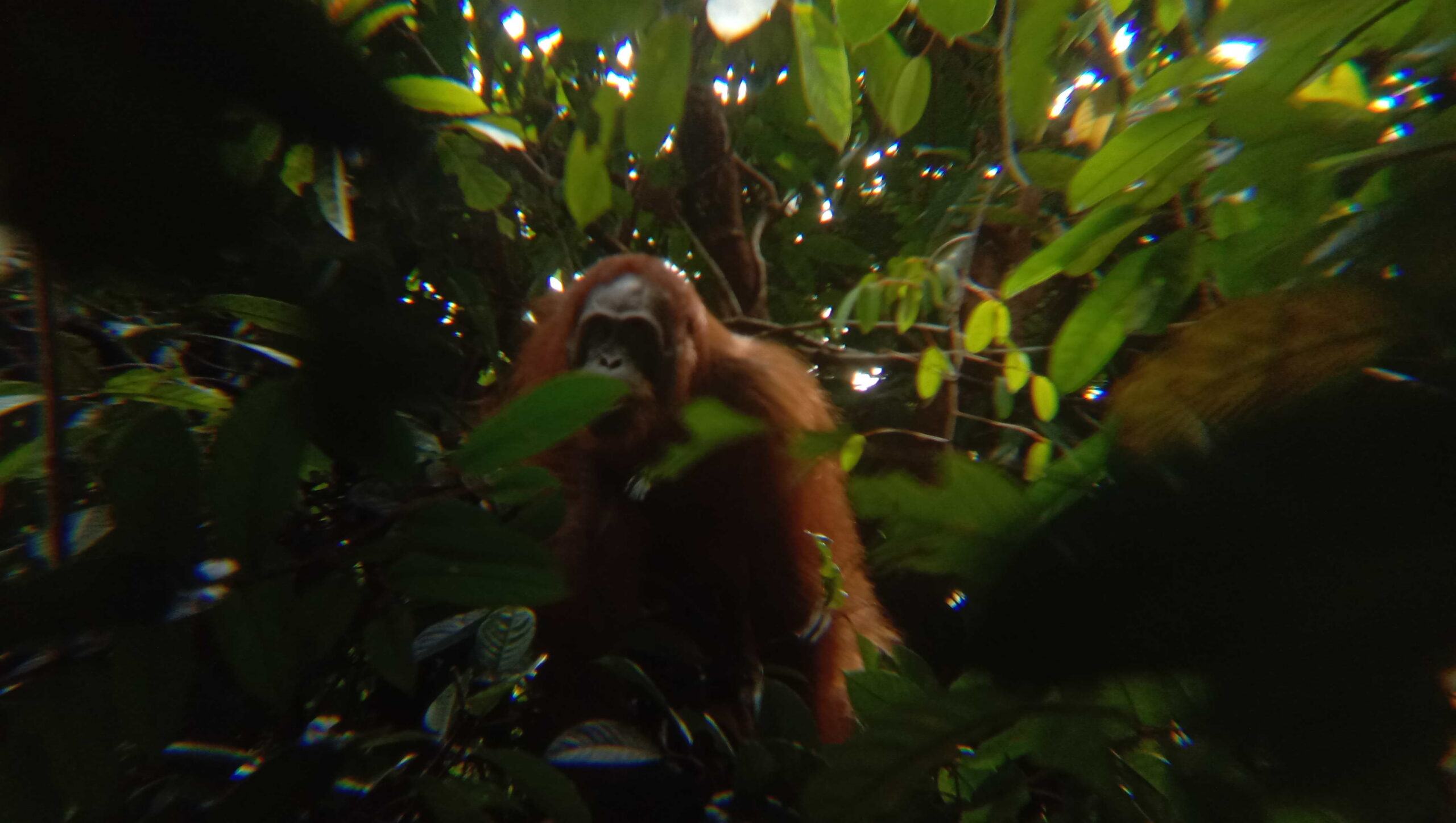 Photograph of a Bornean orangutan (Pongo pygmaeus) submitted by a KehatiKu citizen observer. Participants can earn Rp. 100,000 (about $5.84) for finding and photographing orangutans. Image courtesy of Borneo Futures.
He estimates the program is spending less than $1 per hectare (2.5 acres) per year across the 200,000 hectares (494,210 acres) they are studying. For that money, they are both building community engagement and getting real-time data on multiple species ranging from common birds to rare and endangered species such as the flat-headed cat (Prionailurus planiceps), Rhinoceros hornbill (Buceros rhinoceros), Bornean orangutan (Pongo pygmaeus) and Bornean gibbon (Hylobates muelleri).Meijaard says they receive roughly 300-400 observations daily, an unprecedented amount of information: “The data are used to produce wildlife occupancy metrics that inform impacts from conservation interventions.”
All the data are open to the communities that produce it, Meijaard adds. If the communities agree, Borneo Futures plans to make the data publicly accessible to international organizations like the Global Biodiversity Information Facility.
The project also supplies data to the Indonesian government for conservation planning, including for a recent national-level workshop on gibbons. “We provided the raw data on gibbon observations as well as occupancy statistics,” Meijaard says.
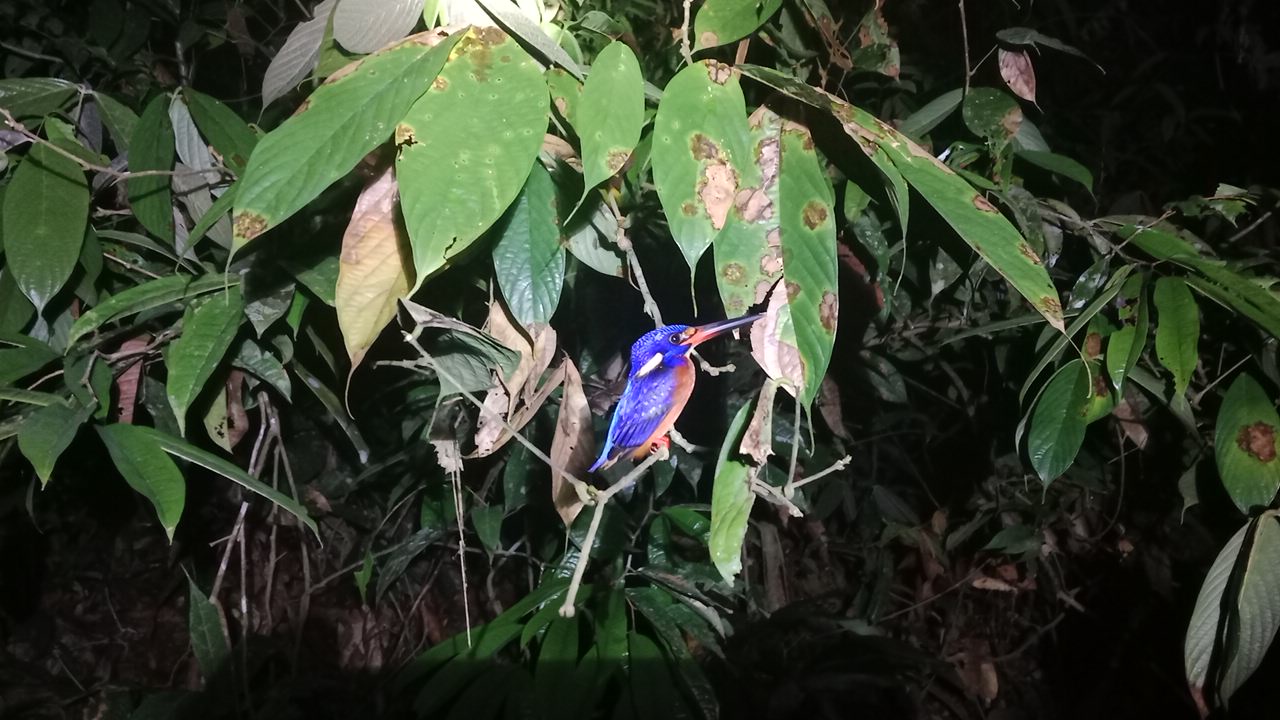 Photograph of a blue-eared kingfisher (Alcedo meninting) submitted by a citizen observer as part of the KehatiKu project. Image courtesy of Borneo Futures.
A painless process
Overall, Meijaard says the process is relatively easy and painless for participants.
“You download the app, that’s for free, and you go into the forest whenever you want to,” Meijaard says. “You record either photo, video or audio, what you see or hear, and then there’s a list of species for which they get paid.”
Payments range from 5,000 rupiah ($0.29) for common birds like the Greater coucal (Centropus sinensis), to 100,000 ($5.84) for an orangutan sighting. While some observers may try to double dip, the project will only pay for one sighting per animal per day.
Observers submit their pictures, video or audio through the app.
“Every observation needs to be verified,” Maijaard says, noting that this step is one of the most challenging parts of the process. “I’ve got a team of verifiers in Brunei, but if this scales up, you need some kind of AI verification process.”
After verification, at the end of the month, the money goes out.
“Literally, I have a guy with a backpack — every month there’s 100 million rupiah ($5,840) — driving around, and handing out these payments,” Meijaard says.
The program has been running for about a year and already includes nine villages and more than 800 observers.
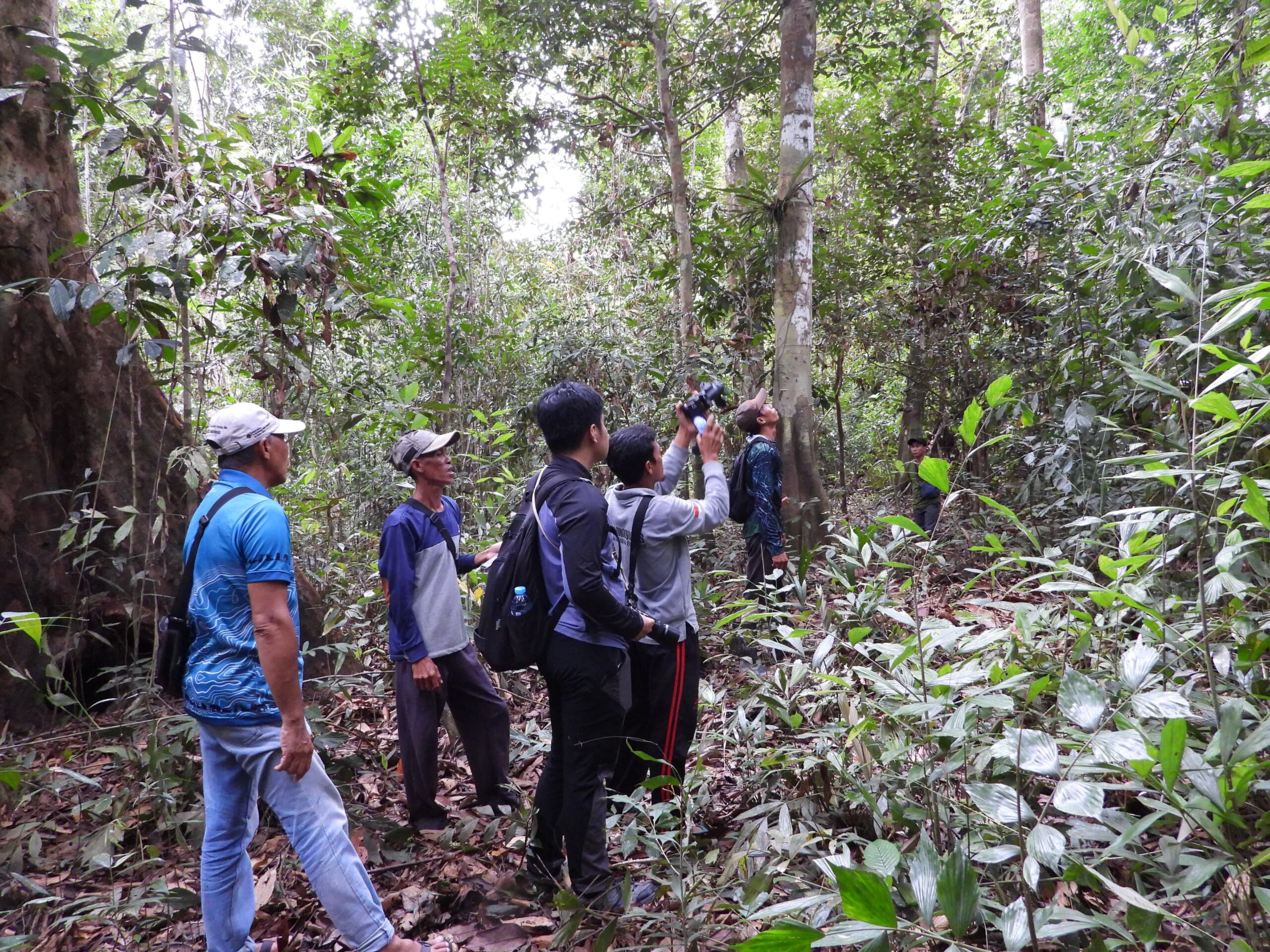 Citizen observers at work. In some villages, groups of observers have teamed up to find birds and mammals. Image courtesy of Borneo Futures.
With KehatiKu, observers can make anywhere from 100,000 to 5 million rupiah (up to $292) per month. At a regular job, the average person in Kalimantan makes roughly 2-3 million rupiah ($117-$175) a month, making this a viable career opportunity for many.
“It depends on their effort as well,” says Syazwan Omar, head of Borneo Futures’ biodiversity unit.
Some villages have created groups of observers that team up to find birds and mammals. It has already become a full-time job for some people. Tomi, from Nanga Embaloh village, is one of them. For Tomi, what started as curiosity has become a passion.
“I often go into the forest, so I get to see many species living around our village,” Tomi tells Mongabay by phone. “It has even become a main source of livelihood. Many people in the village actively participate in the KehatiKu program.”
Some of the villages have started self-policing hunting and trapping in their communities. They place banners to let visitors know these are prohibited actions in their community.
Like Tomi, Susilawati is also from Nanga Embaloh village. She says that at first, people were doubtful about the program. But after villagers started receiving payment, not only did more people join the program to become observers, they also came together to ban hunting.
“We had a discussion, not exactly a formal meeting, about whether hunting should be prohibited,” Susilawati says. “Because if animals are hunted frequently, they become more wild. But thankfully, since the program has been running, there are no longer people hunting.”
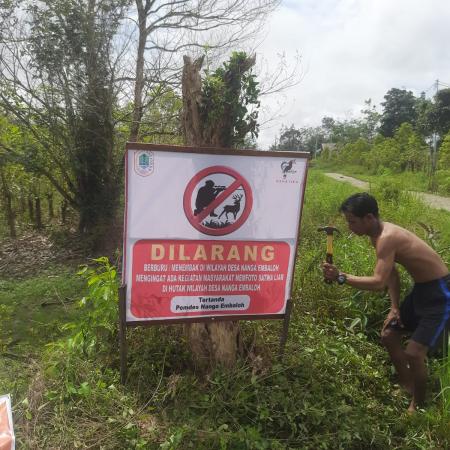 A sign banning hunting. Since the KehatiKu program started, some villages have begun self-policing hunting. Image courtesy of Borneo Futures.
With some of the villages placing bans on illegal hunting and trapping, Meijaard says he hopes they will see some of the numbers improve for at-risk and endangered species.
He also hopes the program will change perceptions of wildlife species that are commonly viewed as pests, like orangutans.
“It’s some Western idea that they need to be protected,” Meijaard says. “Half the people we work with, they eat orangutans. Orangutans eat your fruit. They steal from your gardens. There’s nothing really that people get out of orangutans.”
Now, instead of getting angry over an orangutan stealing food, observers can sit back, take a photo and make some money.
But keeping people engaged in wildlife conservation with long-term incentives can be difficult says Paul Ferraro, professor of human behavior and public policy at Johns Hopkins University.
Ferraro says for a program like this to work, the money needs to keep flowing.
“Historically, it’s been very easy to get people and communities motivated for lots of things short term,” Ferraro says. “But keeping them motivated is often what proved to be difficult.”
According to Ferraro, programs like this typically provide modest change in terms of conservation. To keep the ball rolling, conservationists need to keep doing more to incentivize locals.
“You’re going to have to be additive,” Ferraro says. “Adding things together to get some more transformative change.”
He’s curious to see what the numbers look like in the long term.
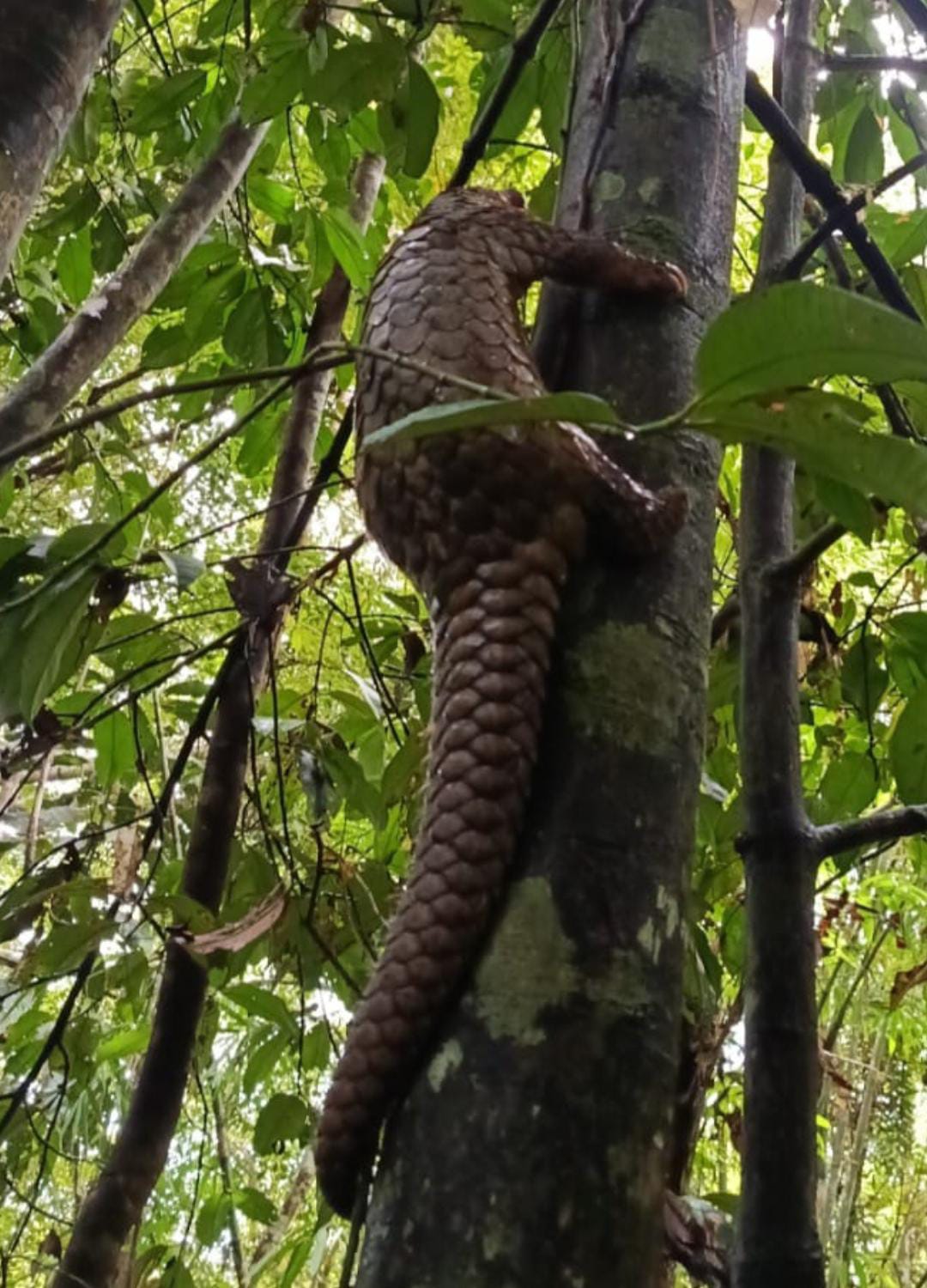 Image of a Sunda pangolin (Manis javanica) photographed by a citizen observer and submitted to KehatiKu. Image courtesy of Borneo Futures.
For Meijaard, it all comes back to the people living with the wildlife every day.
“Ultimately it’s a community program,” Meijaard says. “They run it, they own it, they do it, or they don’t do it. It’s entirely up to them. We’re just facilitating the financial flow.”
But, if the data demonstrate that incentives for observation can create a noticeable change, then Meijaard says there is potential for the project to become scalable. He says they could implement the program across Indonesia in a few years. Whether the government wants it or not is a completely separate question, he says.
Banner image: Bornean Orangutan by Rhett A. Butler/Mongabay.
How many orangutans does $1 billion save? Depends how you spend it, study finds
Citation:
Santika, T., Sherman, J., Voigt, M., Ancrenaz, M., Wich, S. A., Wilson, K. A., … & Indrawan, T. P. (2022). Effectiveness of 20 years of conservation investments in protecting orangutans. Current Biology, 0(0). doi:10.1016/j.cub.2022.02.051
FEEDBACK: Use this form to send a message to the editor responsible for this story. If you want to post a public comment, you can do that at the bottom of the page.
