
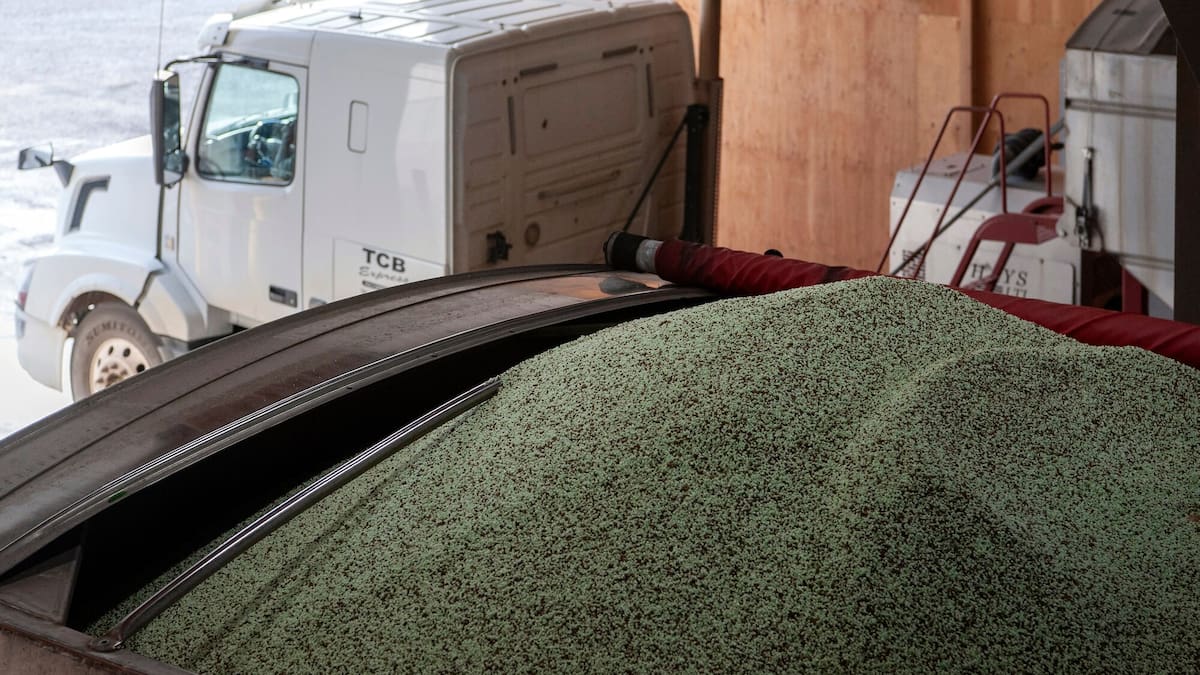
More than 80% of countries import at least 75% of the fertiliser they use. That means a disruption anywhere in the supply chain – whether from a war, a trade ban, a blocked shipping lane – affects everyone.
More than 80% of countries import at least 75% of their fertiliser. Photo / Getty Images
For shipping imports, the most serious chokepoint right now is the Strait of Hormuz, the narrow waterway between Iran and the Arabian Peninsula. It carries about a quarter of all seaborne oil, with large quantities of natural gas and fertiliser.
The ongoing US-Israel conflict with Iran has put this passage under serious threat. When cut off, by Iran or a US counter-blockade, supplies risk being halted for weeks or months.
Unfortunately for those countries needing fertiliser, the Gulf region dominates the market. Between 2023 and 2025, Gulf countries, led by Iran, Qatar and Saudi Arabia, supplied 36% of all global exports of urea, the most widely used nitrogen fertiliser in New Zealand and worldwide.
And because urea is made from natural gas, when gas prices rise – as they have since the war escalated – it becomes more expensive, too. Consumers ultimately pay the price at the supermarket checkout.
On top of this, China, another of the largest producers in the market, has restricted its fertiliser exports. This also sends global prices up and availability down.
Unsurprisingly, the world’s top economic bodies are growing increasingly alarmed at the situation.
Experts want a national food strategy and alternatives like biofertilisers and local urea production. Photo / Getty Images
Earlier this month, the heads of the International Energy Agency, the International Monetary Fund (IMF) and the World Bank met to co-ordinate their response. Their joint statement is direct: the war “has led to higher oil, gas and fertiliser prices, triggering concerns about food security”.
The IMF’s freshly-issued “Global Prospects and Policies” report warns that food security “could be threatened, with disruptions to fertiliser markets before the planting season leading to substantial food price inflation”.
In essence, farmers need fertiliser most just before they plant their crops. If it does not arrive on time, or arrives at a much higher price, harvests will be smaller, resulting in higher supermarket prices.
Eat New Zealand chief executive Angela Clifford has been asking for years what the country’s food security plan actually is. She recently warned that New Zealand tends to “lurch from crises to crises without doing the work in between times to make us more resilient for the next time”.
Australia’s peak grain body, GrainGrowers, has meanwhile called on its Government to set up a fertiliser taskforce, create strategic reserves and diversify suppliers.
Certainly, there are things that could be done differently to provide more stability.
Biofertilisers, which use living micro-organisms in the soil to help plants access nutrients naturally, offer one alternative to the status quo. They are less dependent on global supply chains and gentler on the environment. AgroBioTechNZ argues they represent a genuine path forward.
There is also a long-term opportunity in producing urea locally from green hydrogen.
The Government-industry Kapuni Project – a first-of-its-kind effort to combine wind energy, renewable electricity and green hydrogen production – is one case in point. Due to begin operating in 2027, it will augment natural gas feedstock at the urea plant to produce “greener” nitrogen fertilisers and lower emissions.
The fertiliser challenge now facing New Zealand’s all-important agricultural sector isn’t new. Fertiliser prices spiked after the Covid-19 pandemic and again after Russia’s full-scale invasion of Ukraine in 2022.
New Zealand’s geography and exposure to extreme weather events add yet another layer of risk to an already fragile food supply chain. Experts have called for a national food strategy. But nothing has happened.
The war in the Middle East and major exporters’ trade restrictions are the latest warnings in a long line. The question, once more, is whether New Zealand acts this time or simply waits for the next costly crisis.
This article is republished from The Conversation under a Creative Commons licence. Read the original article.