
He also sees the OCR reaching 4% by mid-2027 and as high as 4.5% in the first half of 2028.
This is a more hawkish outlook than ANZ.
ANZ considered an OCR rise to 3% by October as sufficient to head off medium-term inflation, and forecasts it to stay on hold through 2027.
ANZ chief economist Sharon Zollner also indicated she didn’t think a hike at the next Monetary Policy Statement on May 27 was likely.
Infometrics’ Kiernan is picking that higher fuel prices will drive inflation up to 4.8% per annum in the current quarter.
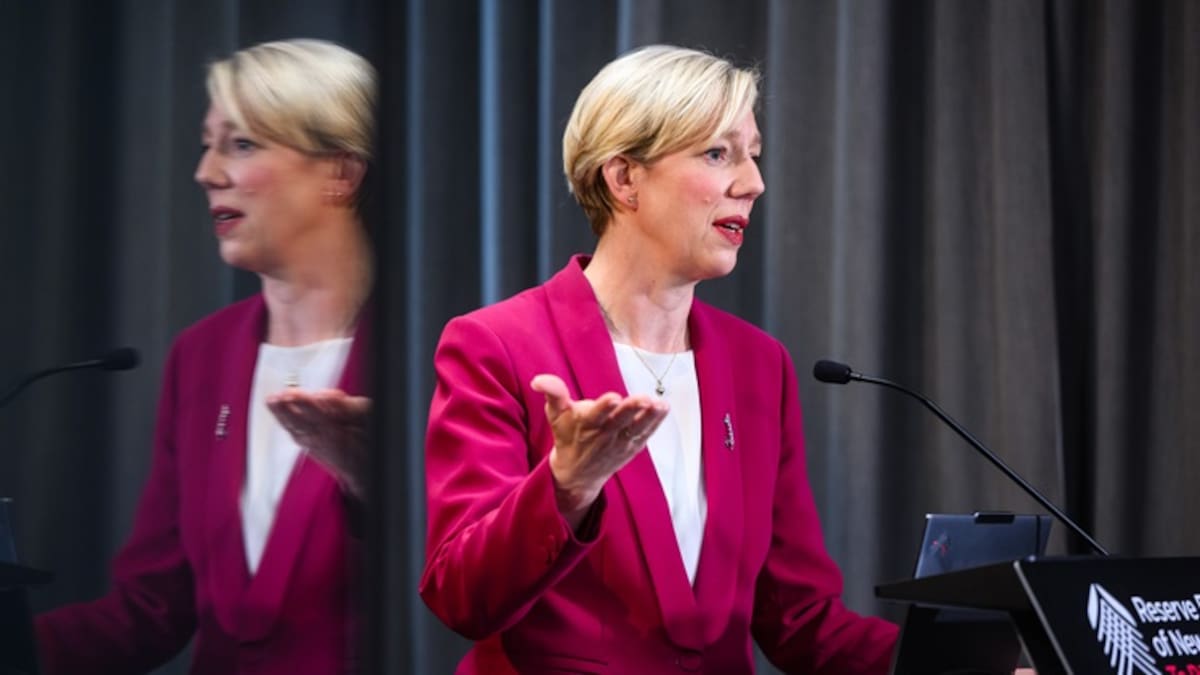
Infometrics chief forecaster Gareth Kiernan says OCR increases starting in May cannot be ruled out. Photo / RNZ, Rebekah Parsons-King
That was an immediate outcome of the 2026 Iran War that the bank could do little about, he said.
“But even with an assumption that fuel prices moderate in the second half of 2026, inflation is still forecast to be at 3.9% per annum in March next year and 3% per annum by December 2027,” he said.
Second-round effects from the fuel price spike would be rippling across the economy for several quarters, he said.
Infometrics and ANZ economists are now at odds with KiwiBank, where the chief economist Jarrod Kerr has called on the RBNZ to maintain a “wait and see” approach through most of this year.
Kiwibank economists warned that raising interest rates too soon could be “reckless” and “risks a repeat of past mistakes, potentially inducing a recession”.
With a high level of uncertainty about the duration of the oil shock and whether it will do more damage through inflation or by causing an economic contraction, economists are increasingly divided.
Traders on New Zealand debt markets are siding with Infometrics.
On Thursday, they were pricing a 35% chance the OCR would be hiked in May and a 100% chance by July.
Infometrics expects GDP growth to be slower this year than previously hoped.
Kiernan has revised down his annual GDP growth forecast from 2.5% to 1.3%.
This weaker outlook assumed no serious or prolonged disruption to the availability of fuel in New Zealand.
“But the Government’s Fuel Response Plan could still be elevated to Phase 2 or 3 at some stage,” he said.
“It goes without saying that there is currently a huge amount of uncertainty, making forecasting more challenging than at any time since the first Covid-19 lockdown.
“But economic growth over the next 18 months will undoubtedly be weaker than previously expected, with the psychological and real effects of the fuel price shock of the last seven weeks unlikely to unwind immediately.
“We’d hope that inflation is less persistent than we are forecasting, but the experience of the last few years shows the problems that complacency can bring, with higher inflation eroding real incomes and requiring a bigger economic downturn later on.”
In its Monetary Policy Statement last week, the RBNZ indicated it would look through the initial inflationary impact of the war.
But it said it was prepared to act with “decisive and timely increases” if evidence of more persistent inflation emerged in the economy.
Liam Dann is business editor-at-large for the New Zealand Herald. He is a senior writer and columnist, and also presents and produces videos and podcasts. He joined the Herald in 2003.
Stay ahead with the latest market moves, corporate updates, and economic insights by subscribing to our Business newsletter – your essential weekly round-up of all the business news you need.