
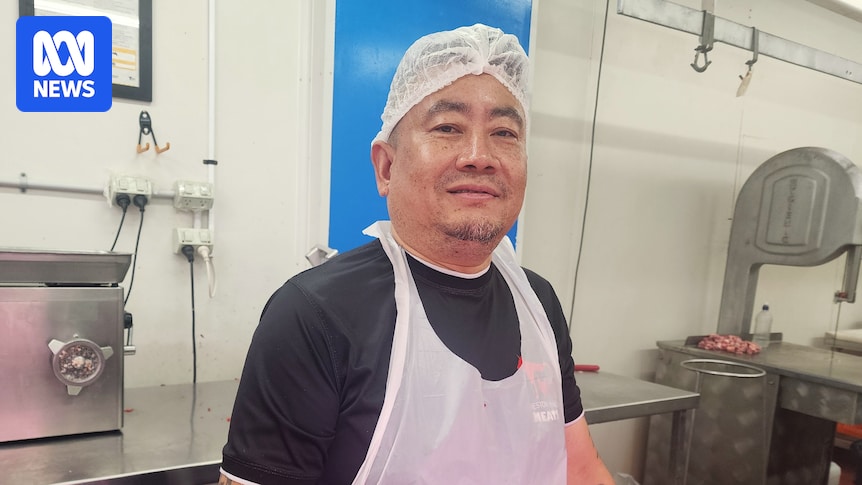
Melbourne butcher Raj Gurung is preparing for the worst.
He is concerned by predictions that the global economy could be on the brink of a recession.
Iran war live updates: For the latest news on the Middle East crisis, read our blog
He also fears that if the war in the Middle East drags on, it could lead to further fuel and food shortages, and, in the worst case, pandemic-style lockdowns.
“What if there’s no oil tomorrow or no fuel tomorrow?” Mr Gurung asks.
“What if the government says, ‘We’re just going to lock down?'”
Raj Gurung is worried lockdowns may be coming if the war drags on. (ABC News: Nassim Khadem)
Mr Gurung says lamb is already in short supply, and the cost has gone up.
At the same time, suppliers are hitting retailers with fuel surcharges, in some cases, costing more than $10 a delivery.
“Retail has definitely gone down … at least 5 per cent to 10 per cent,” he says.
“It’s hard for us. We have to deal with the customer face-to-face. And lots of them are complaining that they have to travel to come here — about the fuel [cost].”
Mr Gurung’s concerns reflect a broader anxiety spreading across the economy.
Economic shock from Middle East hits home
There is pain at the petrol pump, prices are spiralling, and fears are building that Australia and the global economy could face a recession.
“The economic consequences; be prepared for them to be a lot worse than the experts are telling you,” says economist Nicholas Gruen.
“The risk of a recession at any given time, you might guess it’s one in 20, one in 10. It’s now maybe over 40 per cent, maybe over 60 per cent.
“The risk of recession is heightened because this [the oil price shock from the war] is a large thing for the Australian economy to digest.
“It’s being digested at exactly the time that the Reserve Bank has decided that it wants to increase interest rates because it got spooked about its pathway back into the target [range] from the COVID inflation shock.”
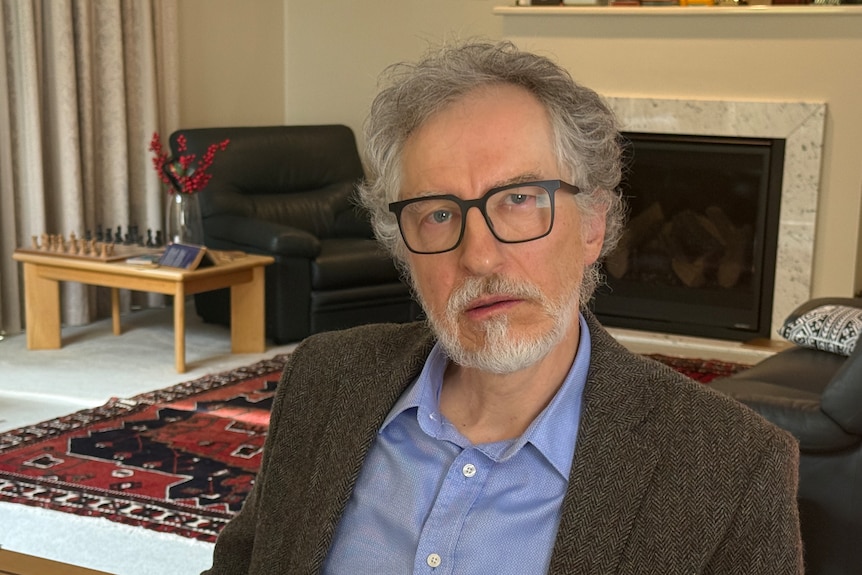
Nicholas Gruen says the Iran war is another inflation shock post-COVID that central banks will find hard to deal with. (Supplied: Richard Sydenham)
‘We don’t eat too much meat now’: Consumers cut back spending
Sales have already fallen at Helen Zhao’s Melbourne hair salon, where fewer customers are willing to commute for a haircut.
“Some customers don’t live close — they live far away,” she says.
“They need a drive to come here. They want to save money. That’s why they don’t want to come.”

Helen Zhao says the prices she pays for stock have increased but she cannot pass on the costs to customers who are reluctant to drive to her store. (ABC News: Nassim Khadem)
At a nearby café in Preston, consumer Aisha says her household is already cutting back spending.
But it is not just petrol that they are saving on.
“Sometimes we skip lunch — we don’t eat meat too much now,” she says.
“Life is getting harder; we can’t afford everything now.
“The bills, the rent, [costs] for the car, for everything, it’s getting worse.”

Aisha says because of cost-of-living pressures, she has had to cut back on food essentials like meat. (ABC News: Nassim Khadem)
Another consumer, Marty Stankovski, says he is also pulling back.
“Most people have got mortgages and all that, so you’ve got to sacrifice — rob Peter to pay Paul,” he says.
“Money’s not easy these days. Jobs are hard to come by — especially well-paid jobs.
“We sacrifice going out for dinners and all that, it’s more in-house,” he says.
“It’s getting worse rather than better.”
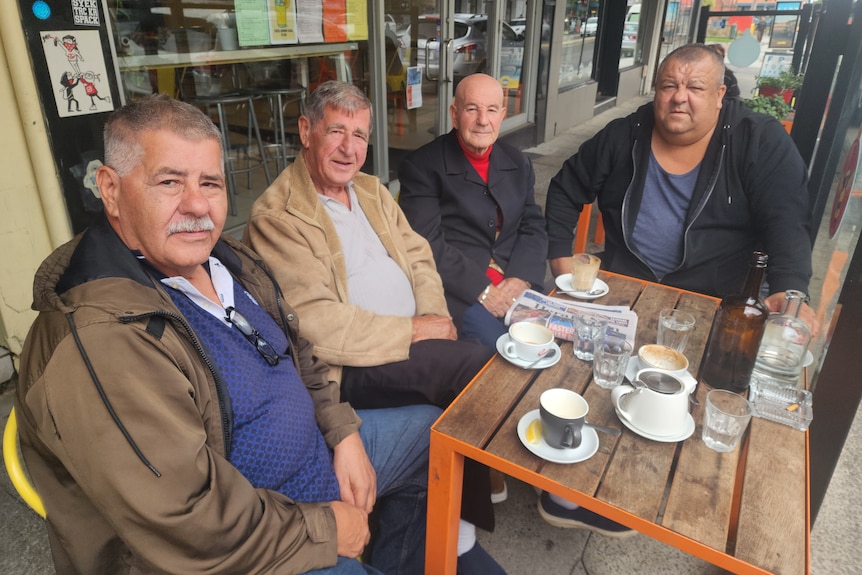
Marty Stankovski (far right) says he is limited in what he can spend as costs go up and interest rates rise. (ABC News: Nassim Khadem)
War is ‘another price shock, another COVID’
The International Monetary Fund says the war in the Middle East has darkened the economic outlook.
It says in a “severe scenario”, in which energy supply disruptions extend into next year and oil prices average $US110 a barrel this year, and $US125 next, economic growth could slow to about 2 per cent in 2026 and 2.2 per cent in 2027, while inflation would exceed 6 per cent.
Dr Gruen says at some stage he fears the Australian economy will reach what he calls the “Churchill point”.
“In the mid-20s, the chancellor of the exchequer, Winston Churchill, wanted to return the UK to the gold standard,” Dr Gruen says.
“He wanted to get prices back to pre-World War I prices. And that was an incredibly economically damaging thing to do.”
He says that central bankers tried to do the same during COVID.
“Now we’ve got another price shock, another COVID,” he says.
“And so, the Reserve Bank is thinking to itself, ‘For how long can we really say we have a medium-term target of 2 to 3 per cent with inflation year after year coming in at 3, 4, 5 per cent?’
“That’s what I’m concerned about — that the Reserve Bank will try to quickly get back from the 5 or more per cent that the Iran war will produce with inflation, and that can produce a really big recession.”
The Reserve Bank’s ‘nightmare’ scenario is stagflation
Due to higher inflation, some economists are forecasting the Reserve Bank will lift interest rates another three times this year.
But the task for central banks becomes trickier when there is high inflation with stagnating growth.
This is called stagflation, and it is the Reserve Bank’s “nightmare” scenario.
“Stagflation is when you have a recession with high inflation,” says Betsey Stevenson, a professor of public policy and economics at the University of Michigan, and ex-economic adviser to former US president Barack Obama.
“And I don’t think that Australia has that, and I know the United States doesn’t have that.
“Do we have greater stagflation risk than we’ve had at any time in my adult life? Yes, we do.”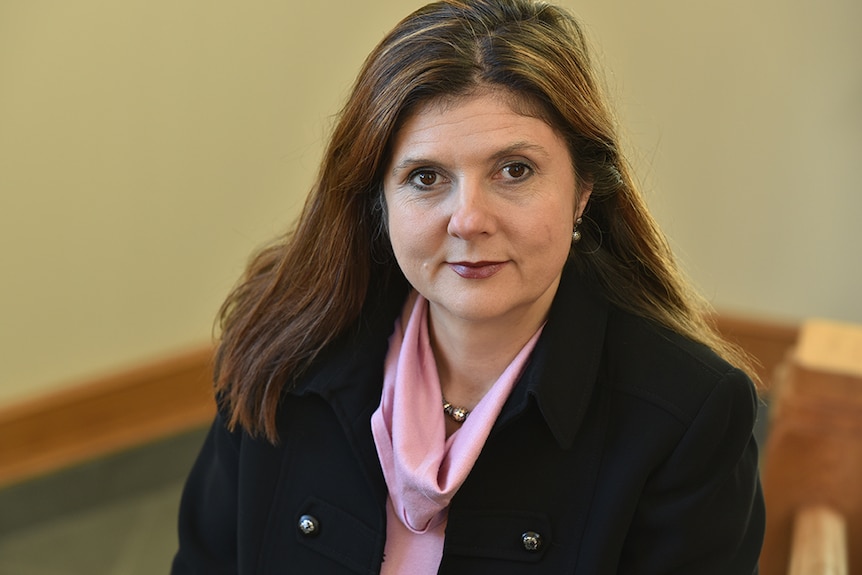
Betsey Stevenson says there is a higher risk of stagflation but that central bankers can manage such a situation. (Supplied)
Professor Stevenson says the oil price impact from the war in the Middle East is very different from the oil price shocks of the 70s because central banks have become better at managing shocks.
“They’re watching them very, very carefully, and they understand the risks better than they did in the 70s,” she says.
But Australian National University’s Emeritus professor of economics Bob Gregory thinks Australia’s already seeing the early stages of stagflation.
He worked at the RBA for years after the oil price shocks of the 70s.
“That was a disaster area,” he tells ABC News.
“In Australia, for example, we moved from 1 per cent unemployment rates to 6 per cent, even 10 per cent,” he says.
Are mass job losses on the way?
The unemployment rate has stayed at 4.3 per cent in March, in seasonally adjusted terms.
However, Professor Gregory worries if the war continues, there will be mass job losses.
“It depends on the length [of the war],” he says.
“I would regard 6 per cent [unemployment] as a really bad outcome, a really bad outcome. And it’s possible if the war situation really deteriorates badly.
“If inflation goes to six, and unemployment goes, say, to five and a half, they won’t cut rates, or they’ll try not to cut rates.
“I think inflation is going to go up much more than the unemployment rate.”
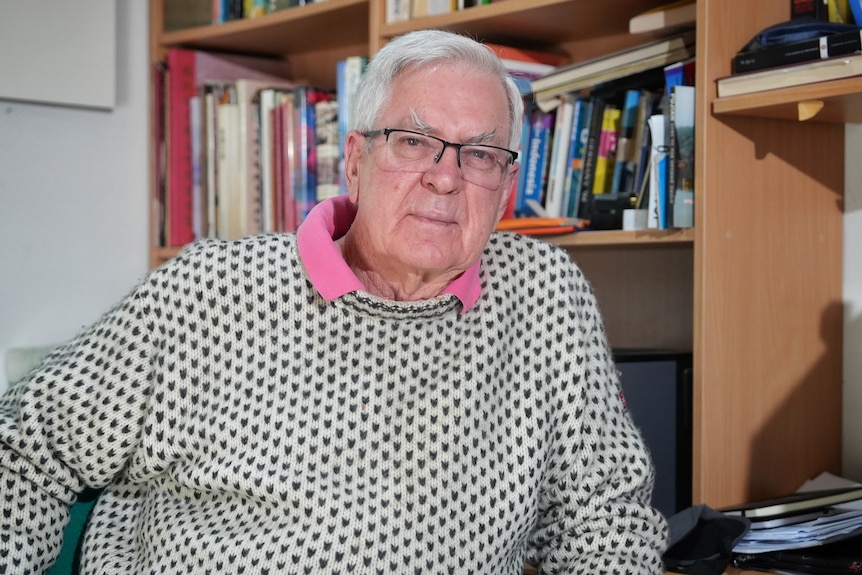
Bob Gregory thinks Australia is in the early stages of stagflation. (ABC News: Luke Stephenson)
Dr Gruen is making even more dire predictions.
“It’s a scary economic time because big changes are happening in the economy and our capacity to know exactly how to move the levers is limited,” the economist said.
If the war continues, he predicts a higher unemployment rate than most other economists.
“We will certainly be in a situation, say in three, four months’ time, where we have higher inflation than we want, and higher unemployment than we want,” he said.
“But we’re not in the situation that we were in the late 70s, where we knew … that only a really big recession would deal with that.”
He also reminds people that unemployment got to over 11 per cent in the late 80s, early 90s recession.
Dr Gruen says if central banks and policymakers make “a big mess” of the economic fallout from the Iran war, unemployment could hit 7 or 8 per cent, while inflation could hit 6 or 7 per cent.
The case for fiscal restraint
Betashares chief economist David Bassanese says the IMF’s scenario of a pending global recession is not far-fetched.
“Essentially, we’re in the hands of both the United States on one hand and Iran on the other, and it’s just unpredictable to know, you know, whether these two sides can come to an agreement,” he says.
“I think the reality is that if the war does continue, oil prices, say, get to $150, $200 a barrel … [and] I think a recession in Australia, unfortunately, would be quite likely, as would be the case around the world.”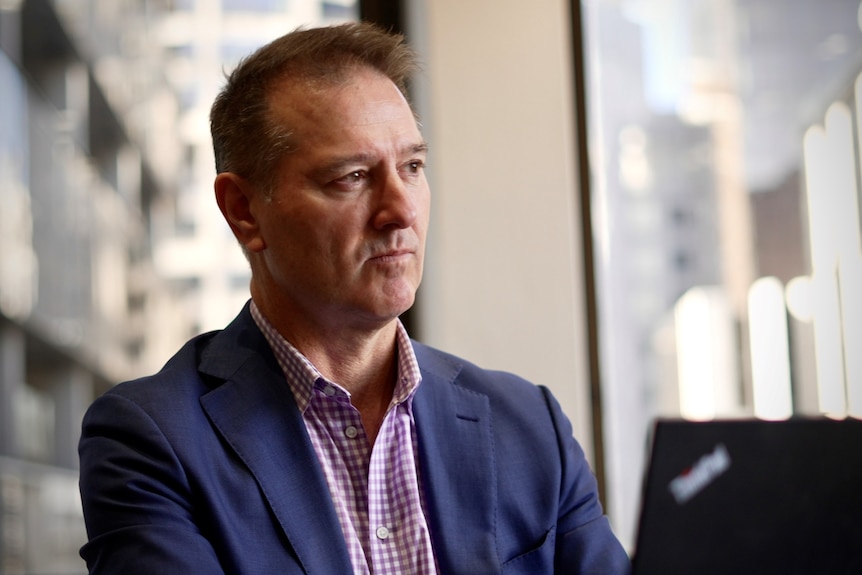
David Bassanese is worried the oil price could shoot up and cause a recession if the war drags on. (ABC News: John Gunn)
To try to ease the pain at the pump, the federal government has cut the fuel excise, but the IMF and economists are warning that more giveaways in the federal budget could make the inflation problem worse.
“The worst sort of measures are just outright cash handouts to households, something that boosts demand directly because that extra demand will put up extra upward pressure on inflation,” Mr Bassanese says.
Speaking before flying to the US this week to attend G20, IMF and World Bank meetings, Treasurer Jim Chalmers said the May budget would be responsible.
“We need to make sure that we’re not putting additional upward pressure on inflation, and we also need to make sure that we have room to respond should some of these more serious and more severe scenarios published by the IMF play out,” Mr Chalmers says.
But with energy prices rising and global uncertainty deepening, the path ahead remains unclear.
Much now depends on how long the conflict lasts — and how households and policymakers respond.
The federal budget will be handed down in May.
Loading…