
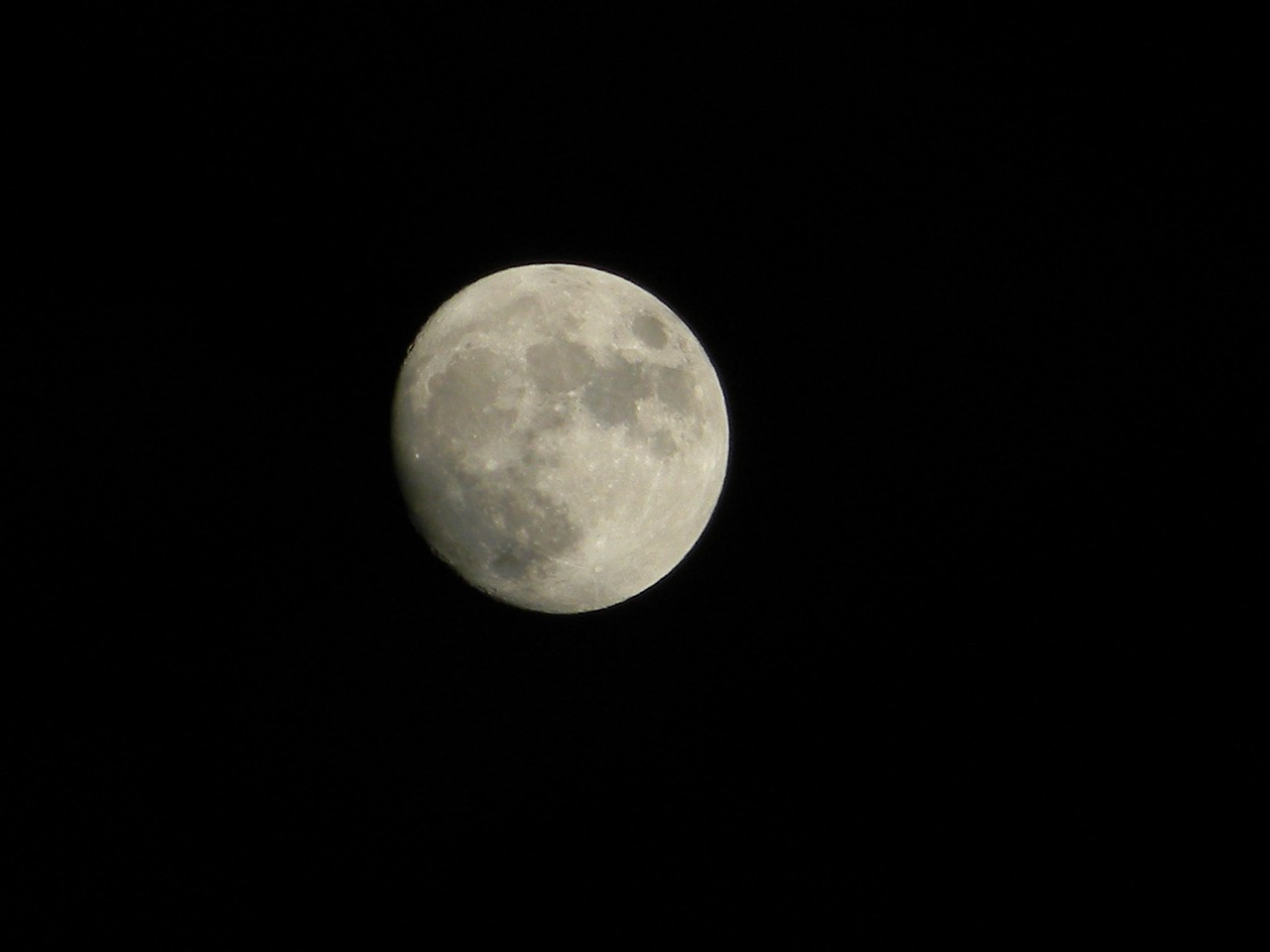
In late spring 2024, something slammed into the Moon hard enough to carve a crater 225 metres across, which is more than twice the width of a football pitch! That alone would be notable. What made it remarkable was that NASA’s Lunar Reconnaissance Orbiter Camera had photographed the same patch of ground before the impact, giving researchers a before-and-after record of extraordinary clarity.
The team presented their findings at the 57th Lunar and Planetary Science Conference in The Woodlands, Texas, in March 2026. The previous record for the largest crater confirmed to have formed during the entire LRO mission stood at just 70 metres. This one is more than three times that size, and according to statistical models, an impact capable of producing it should strike any given area of the lunar surface only once every 139 years.
What the Crater Reveals
At 43 metres deep with walls too steep to stand on, the crater is funnel-shaped and ringed by enormous blocks of ejected rock, the largest measuring around 13 metres across. The debris pattern also tells scientists which direction the impactor came from. Material sprayed northward in a distinctive tongue-shaped pattern, pointing to an approach from the south-southwest.
Inside the crater, patches of unusually dark material point to something even more striking. The collision released so much energy so quickly that surrounding rock melted and resolidified in milliseconds, leaving behind a glassy residue that persists long after the strike itself.
Why the Timing Matters
The Moon has no atmosphere, no weather, and no erosion, which means every crater it accumulates is a permanent record. But witnessing formation in near-real time is vanishingly rare, and that rarity is precisely what gives this dataset its value.
Metre-scale imagery of a crater this size, captured both before and after formation, has never been available to researchers before. It gives scientists a controlled test case to validate and sharpen the models used to understand impact dynamics; not just on the Moon, but across the solar system. Four billion years of bombardment shaped that surface. For once, scientists were watching when it happened.
 Published by Kerry Harrison
Kerry’s been writing professionally for over 14 years, after graduating with a First Class Honours Degree in Multimedia Journalism from Canterbury Christ Church University. She joined Orbital Today in 2022. She covers everything from UK launch updates to how the wider space ecosystem is evolving. She enjoys digging into the detail and explaining complex topics in a way that feels straightforward. Before writing about space, Kerry spent years working with cybersecurity companies. She’s written a lot about threat intelligence, data protection, and how cyber and space are increasingly overlapping, whether that’s satellite security or national defence. With a strong background in tech writing, she’s used to making tricky, technical subjects more approachable. That mix of innovation, complexity, and real-world impact is what keeps her interested in the space sector.