
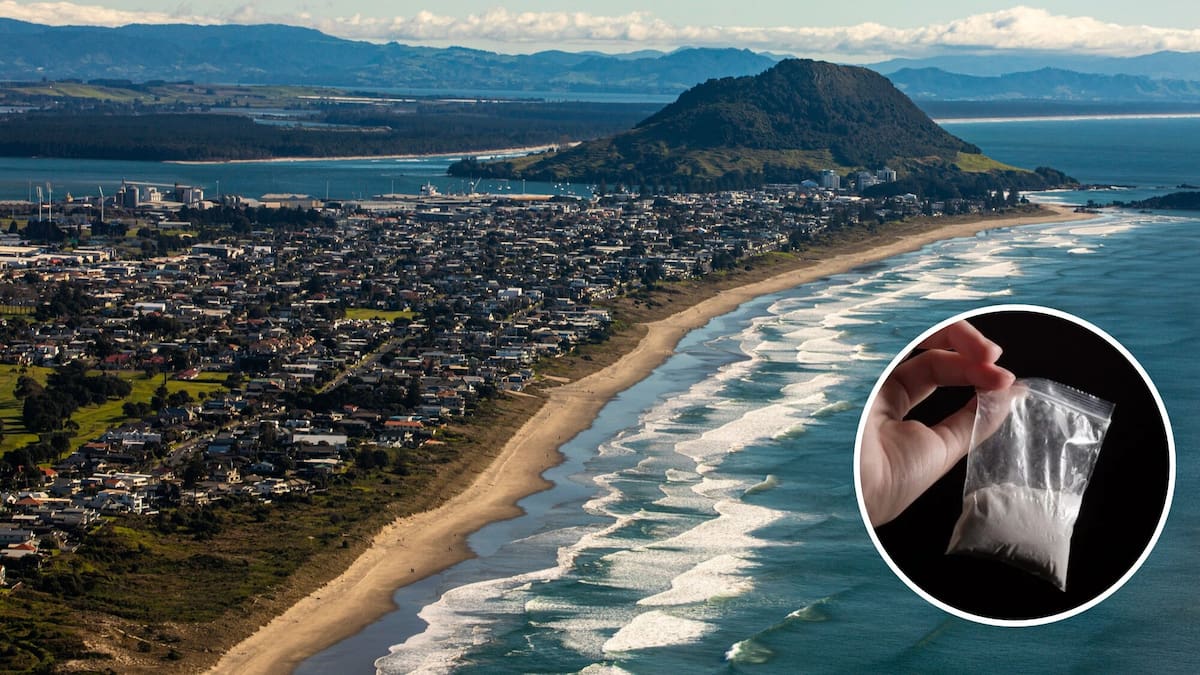
Bay of Plenty also ranked second-highest for daily usage of MDMA, with 408mg consumed per 1000 people. MDMA is commonly known as ecstasy.
All districts surpassed their respective average cocaine consumption rates.
An estimated average of 9.4kg of cocaine was consumed each week, which was 98% more than the average quantity consumed over the previous four quarters.
Wastewater testing occurs for one week each month across various sites in New Zealand.
Police said the estimated weekly social harm cost of cocaine use was $3.5 million.
Wastewater testing data for the last quarter of 2025 shows the Bay of Plenty overtook Auckland for daily usage of cocaine. Image / NZ Police
Detective Inspector Lindsay Pilbrow, Bay of Plenty district criminal investigations manager, said availability and price influenced drug consumption.
He said it was unknown whether the increase was caused by more people using drugs or the same number of people consuming more.
Pilbrow said police were focused on importers and suppliers.
NZ Drug Foundation executive director Sarah Helm called for a “more fundamental shift” in drug laws.
She said the Government’s recently released Action Plan to Prevent and Reduce Substance Harm 2026-2029 was a positive move.
It focused on providing early intervention and more peer-based support services.
She said New Zealand’s approach for the past 50 years had been to ban and police substances, and criminalise people for drug use.
“But this is clearly not working. Both drug use and drug harm have increased.”
She said the increase in cocaine use was part of a global trend.
The United Nations Office on Drugs and Crime recently identified cocaine as the world’s fastest-growing illegal drug market, Helm said.
“Global cocaine production reached an all-time high of 3707 tonnes in 2023, a 34% increase from 2022.”
The 2025 NZ Drug Trends Survey (NZDTS), run by Massey University, reported the proportion of people describing cocaine as “easy” to get had increased from 17% in 2018/19 to 43% in 2025.
Cocaine has become increasingly easier to obtain, according to the NZ Drug Trends Survey. Image / Massey University
The average price per cocaine gram was $360.
The survey showed 79% of participants worked full or part-time, and 42% earned more than $80,000. The median age of participants was 32.
Survey participants were anonymous and recruited through a social media campaign covering all 16 regions.
Dr Robin van der Sanden, of Massey University’s SHORE & Whariki research centre, conducted the survey.
Customs figures show cocaine and meth seizures at the Port of Tauranga topped almost $962m in less than four years.
Customs officers recently seized 48kg of cocaine, with an estimated street value of $16.8m, from a refrigerated container at the port.
The drugs were hidden in the insulated roof lining of a refrigerated container carrying legitimate goods from Balboa, Panama.
“Cocaine use is highest in the upper North Island,” van der Sanden said.
“It’s a lot to do with the geography of where the cocaine is coming in.”
However, she said the growing international cocaine production underpinned the drug’s availability in New Zealand.
“As long as that trend continues, we would expect cocaine use to keep increasing.”
Health New Zealand Te Whatu Ora said it had not seen high levels of cocaine-related presentations in specialist services.
Vicki Aitken, regional mental health and addictions lead for Te Manawa Taki Midland region, said: “While not everyone who uses cocaine will experience harm, increases at a population level can, over time, lead to a gradual rise in demand across health and social services”.
She said presentations would be similar to methamphetamine use.
Cocaine has been described as a “white-collar drug” and the drug of choice in higher socio-economic areas. Photo / 123rf
Physical symptoms included chest pain or agitation.
Mental health impacts could be anxiety, sleep disturbance, or mood changes.
“Cocaine carries risks including overdose, dependency, and impacts on the heart and central nervous system,” Aitken said.
“The quality or purity of substances sold as cocaine can vary, which can increase the risk of harm.”
Aitken said a range of addiction and mental health services were available across the Bay of Plenty.
Susan Hancock, director at Tauranga addiction treatment centre Hanmer Clinic, said there had been a 33% increase in people naming cocaine as a substance of use, seeking help from 2024 to 2026.
Hancock said more than half used more than one drug.
Mount Maunganui-based Brave Hearts, which provides family addiction support, said it had seen an increase in inquiries.
Director Erin O’Neill said cocaine was a “white-collar drug” and often the drug of choice in higher socio-economic areas.
Police asked anyone who saw suspicious activity or had information that might help them to stop those involved with these types of crimes to contact them directly through 105 or anonymously through Crime Stoppers on 0800 555 111.
Free and confidential support services
Alcohol and Drug Helpline: 0800 787 797Narcotics Anonymous: NZ 0800 628 6321737 – free text/phone to speak with a trained counsellorYouthline: 0800 376 633
Source: NZ Police
Bijou Johnson is a multimedia journalist based in the Bay of Plenty. A passionate writer and reader, she grew up in Tauranga and developed a love for journalism while exploring various disciplines at university. She holds a Bachelor of Arts in Classical Studies from Massey University.