
That steady flow of visitors has also underpinned a growing hospitality scene, anchored by restaurants and bars that cater to both tourism operators and international travellers, including award-winning venues such as The Fat Duck Te Anau.
Stats NZ data shows Te Anau’s population has climbed from about 1870 in 1996 to an estimated 2920 in 2025, an increase of roughly 56%, with much of that growth accelerating in the past decade.
By comparison, its nearest city, Invercargill, has grown only modestly over the same period, from about 54,200 to 58,000, up around 7%, while fellow Southland centre Gore has remained largely flat, slipping slightly from around 8460 to 8310, a decline of roughly 2%.
Nationally, New Zealand’s population has grown by roughly 40–42% over the same period, meaning Te Anau’s growth has significantly outpaced the national average.
On the ground in Te Anau, that shift is being felt across the board, from builders and real estate agents to tourism operators and local officials.
Fiordland Homes co-director Brad Foote said demand remained strong, particularly from out-of-town buyers.
“Quite a lot of out-of-town interest, and people building holiday homes. There always has been a lot of holiday homes, especially Airbnb now,” he said.
The Luxmore Development was originally designed as part of a long-term plan to expand Te Anau’s housing supply and ease pressure on the local market. Photo / Ben Tomsett
First-home buyers made up a smaller slice of the market, he reckoned, amounting to about 15–20% of clients.
Meanwhile, activity in new subdivisions had been brisk.
In the Luxmore development, Fiordland Homes has six houses underway in stage one, with the first recently completed.
Across the town, sections and homes are moving quickly.
“Anything that goes on the market, it’s sold pretty quickly,” Foote said.
“Every builder in town has got a few jobs up and coming … there’s still a lot of demand.”
PGG Wrightson Property agent Sandra Macnamara, who is handling sales in the Luxmore subdivision, said stage one had effectively sold out, with strong interest continuing into stage two.
“Everybody wants a piece of Te Anau.”
Most buyers were local or from elsewhere in Southland, though some out-of-town interest remained.
Sections in the development have ranged roughly from the low $200,000s to around $300,000, depending on size and location.
“It’s still very much a grassroots country town,” Macnamara said.
Remaining sections in Luxmore were either under contract or on hold, and early demand was already flowing into stage two.
“Some of those sections backing onto the reserve have already sold,” she said.
The Luxmore Development on the eastern edge of Te Anau, where multiple stages of new housing sections have been sold or placed under contract amid strong demand. Photo / Ben Tomsett
Most buyers had been local or from elsewhere in Southland, though there had also been a recent lift in first-home buyers entering the market.
Nearby, activity is also picking up in smaller developments, including the Lancewood subdivision in Manapōuri, where 16 of 33 sections across its first two stages have sold and others are under contract, with sections starting from about $200,000.
Property values in Te Anau remain significantly lower than in Queenstown and Wānaka, which agents say is a key driver of demand, according to OneRoof.
Foote estimated as many as three-quarters of new builds were tied in some way to short-term accommodation.
“Probably about 75% of the houses are all to do with that … people building whole houses, investment properties for Airbnb,” he said.
That trend is creating pressure elsewhere in the market, particularly for workers.
Kate Norris, co-owner of Fiordland Trips and Tramps, said the lack of long-term rental options had become a major challenge for employers.
“Since Covid, basically, there’s not a lot of choice.
“You need all your staff in the summer, and there’s just not the housing stock.”
Businesses had increasingly been forced to step in.
“For the last probably 18 months … employers have had to seriously look at how they can provide accommodation for staff,” she said.
Homes in Te Anau, where strong population growth and tourism demand have contributed to ongoing pressure across the local property market. Photo / Ben Tomsett
“If you want to have the staff, you actually need [to provide housing].”
Some had begun buying homes specifically for workers, while others relied on informal networks or short-term solutions.
“It certainly is attractive if you can offer a place and [it] encourages them to come back for a few seasons.”
At the same time, she said, the rise of Airbnb-style accommodation had reduced the pool of long-term rentals.
“There’s been a lot of investment in property … and that has been mostly put into Airbnb stock, rather than renting it out to locals.”
While she stressed she had “nothing against Airbnbs”, Norris believed the lack of regulation was an issue.
“There’s just no regulation … it’s out of control.
“There needs to be something to even out whether people want to make it more of an even playing field for longer-term rentals and short-term rentals.”
That growth is now being formalised, with a draft Te Anau Basin Development Plan identifying priorities including town centre revitalisation, expanded housing, new visitor accommodation, and broader tourism and business diversification.
At the same time, investment is beginning to show on the ground, with lakefront upgrades in planning, a major redevelopment of Lions Park into a destination playground, and improvements to boating infrastructure at Te Anau Downs and Lake Manapōuri.
Work is also underway to improve the commercial viability of Te Anau Airport Manapōuri, with officials exploring new revenue streams and future development opportunities.
More broadly, tourism growth is being actively driven, with increased international marketing and industry engagement helping bring more visitors into Fiordland.
Fiordland Community Board chairwoman Diane Holmes described the town’s growth as steady but noticeable.
“Compared to ourselves in previous years, it’s really steady … reasonably rapid growth by our standards.”
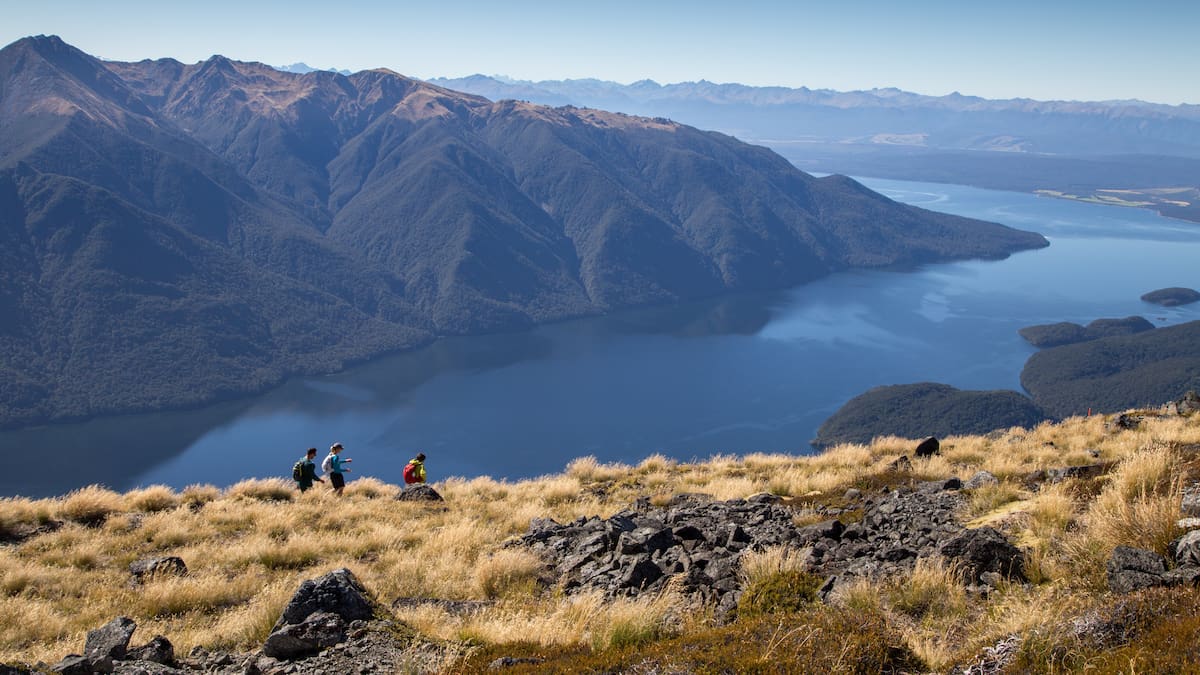
Lake Te Anau, as seen from The Kepler Track. Photo / Getty Images / iStockphoto
The current pace was allowing authorities to plan, rather than react.
“It’s enabling us to actually get infrastructure in place before things get too big too fast, like Queenstown did.
“Everybody wants to come to town now, and no one wants to leave. Why would you?”
While housing pressures had been more acute in previous years, Holmes believed the situation had stabilised somewhat, with fewer reports of acute shortages.
“It seems a lot more settled from my perspective.”
While some residents said there was an expectation that Te Anau was on the brink of a boom, Macnamara said she did not see it becoming the next Wānaka or Queenstown.
“We won’t – we don’t have a ski field.”
Ben Tomsett is a multimedia journalist based in Dunedin. He joined the Herald in 2023.