
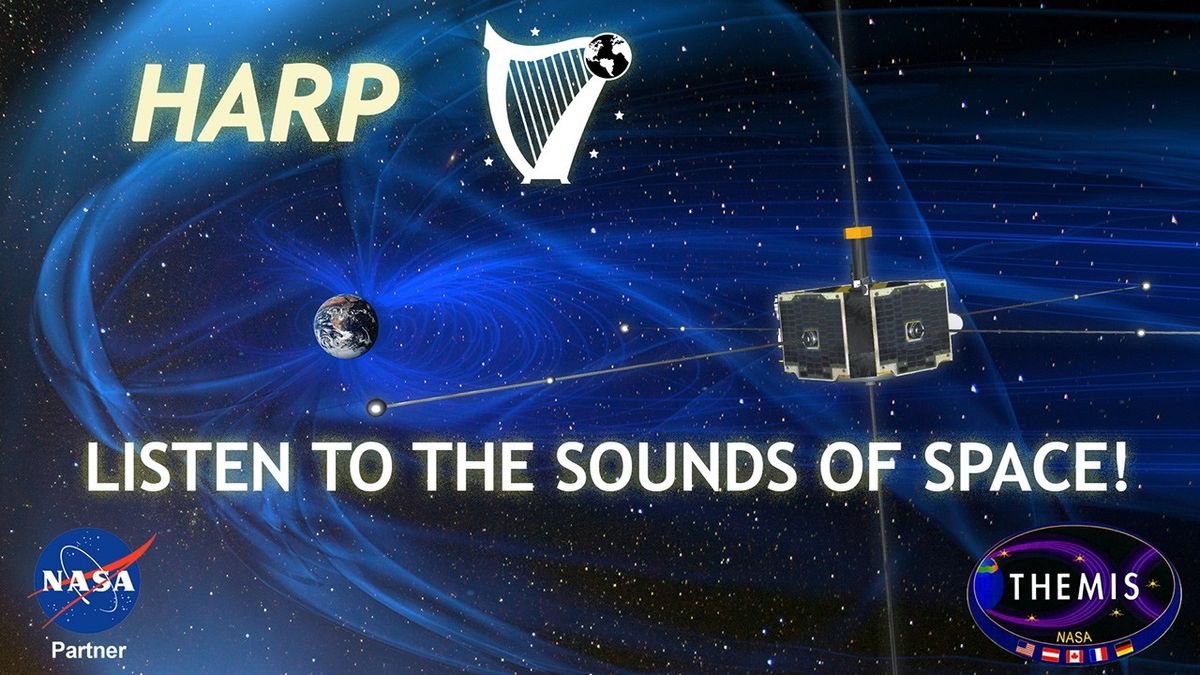
A NASA and NSF citizen science project called Heliophysics Audified: Resonances in Plasmas, or HARP, takes a unique approach to data. Instead of only using graphs and numbers, the project treats the Earth’s magnetic field as if it were a giant harp placed in space. Volunteers listened to audio representations that convert magnetic-field data into sound. This method lets participants explore a specific class of plasma waves that contribute to space weather, with the potential to reveal patterns that standard analysis might miss.
The project’s organizers expected a straightforward relationship: pitches should get lower the farther the data is from Earth and higher closer to Earth. When volunteers played back recordings derived from NASA’s THEMIS mission, they found an unexpected result. Some plasma waves showed the opposite trend, with lower pitches near Earth and higher pitches farther away. This surprising pattern highlights a detail scientists will consider as they refine models of geomagnetic activity.
HARP’s effects on volunteers
HARP volunteers played a crucial role in recognizing this anomaly. Their work helped researchers improve the understanding of how geomagnetic storms develop and how atmospheric and technological systems might be affected. One participant summed up the experience by saying, “I only signed up for this group because my friend was participating, but now I think I’m going to change my major to physics – this was just too cool.” This testimony reflects how citizen scientists can contribute meaningful observations to professional projects.
The findings are published in a new article in Frontiers in Astronomy and Space Sciences, in which the project expressed its gratitude to all the volunteers for their contributions. Volunteer efforts included refining the audio analysis protocol, beta testing the graphical user interface, and helping identify and label the various plasma waves that researchers will study for years to come.
Funding and sponsorship details are part of the project’s history. NASA supported HARP initially, and the National Science Foundation continues that sponsorship. At present, the project is not actively seeking new volunteers.
 Published by James Hydzik
James Hydzik is a technology geek focused on the junction of engineering, writing, and coffee. He joined Orbital Today in 2020 to help make sense of the Johnson government’s decision to buy OneWeb. Since then, he has taken on interviewing and editor-in-chief roles. James learned the ropes of editing and writing with Financial Times magazines, The World Bank, PwC, and Ericsson. Thus far, interviewing New Space movers has put the biggest smile on his workaday face. The son of an Electrical Engineer, James understands the value of putting complex topics into clear language for those with a lay person’s understanding of the subject. James is a European transplant from the United States, and as ex-KA3LLL, he now holds European amateur radio licenses. His next radio project is a portable 10GHz EME (moonbounce) station, as it combines his childhood interests in antennas and space.