
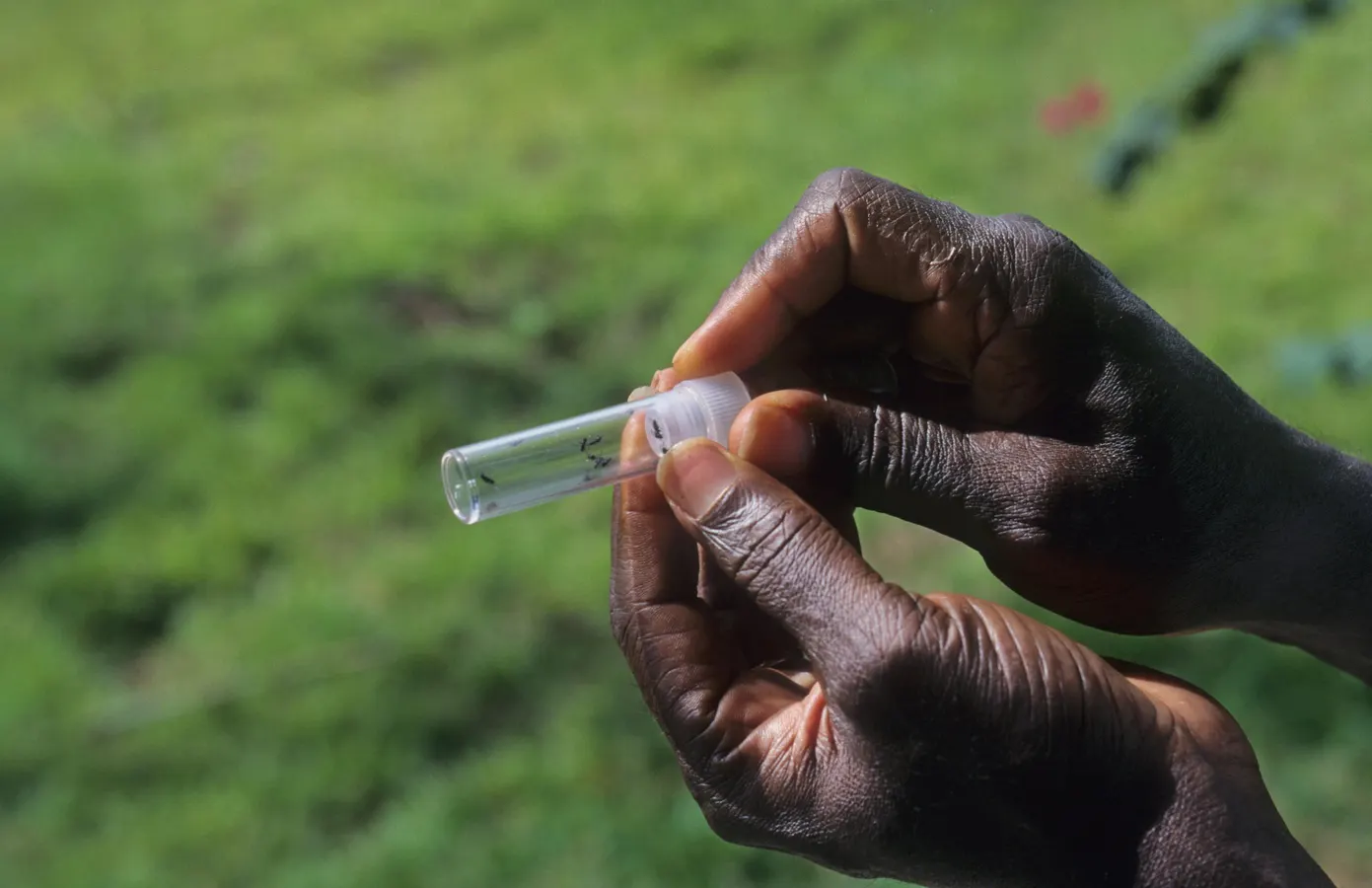
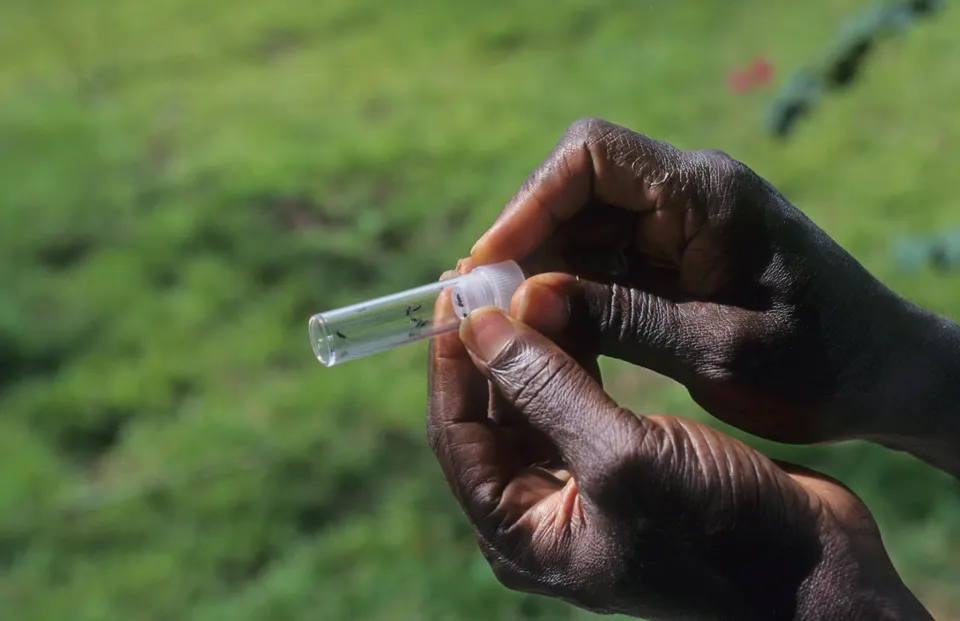
Collection of sandflies, which can transmit river blindness
Universal Images Group via Getty Images
Occasionally I’ll go watch a TV show taping. Big-name shows are sold out, with long lines and eager viewers turned away at the door. But the new shows starring unknowns face empty seats and limited demand.
The companies arranging these tapings offer a tool in order to even out attendance: priority access. If you go along to one of the less popular events, you’ll be prioritized later on for a more popular event. This reward helps the undersubscribed shows gain a live audience.
Something like this priority system exists in the pharmaceutical world—although of course the stakes are far higher. Back in 2007, Congress set up a priority voucher system for neglected tropical diseases (NTDs): illnesses that are common and serious, yet receive far too little funding and attention. This is because NTDs mainly (though not exclusively) afflict people in low- and middle-income countries, which aren’t priority markets for major pharmaceutical companies.
So millions of people continue to get bitten by snakes or rabid dogs, or infected by disease-carrying worms or mosquitos, with serious consequences for their lives, their studies, or their ability to earn a living. Yet these conditions don’t get the same attention that the pharmaceutical industry has lavished on, say, erectile dysfunction.
Of the world’s population, Mark Sullivan estimates, 1.5–2 billion people “have all of the drugs developed for them because that’s where the money is. It’s leaving roughly 6 billion people where there is very limited incentive to develop medicines.” Sullivan is the managing director of Medicines Development for Global Health (MDGH), an Australian nonprofit seeking to develop drugs for those 6 billion. Though he keeps a measured tone and a dry sense of humor, he’s clearly pained by the staggering gap.
The priority review voucher (PRV) system for NTDs addresses this market failure. Essentially, if the U.S. Food and Drug Administration (FDA) approves a medicine for a neglected tropical disease, the maker of that medicine also receives a voucher that accelerates the FDA review process for another drug. The voucher has become a hot commodity, selling for nine figures. And that commodification has become a crux of the model, attracting both investment and critique.
How It Began
The origin story of priority review vouchers seems to hark back to a golden era of bipartisanship and bold policymaking on health gaps, though it was only 20 years ago. In 2006, three economists published a paper in the journal Health Affairs, modifying a previous proposal, that suggested a new system for encouraging drugs affecting the world’s poorest people.
Those academics, David B. Ridley, Henry G. Grabowski and Jeffrey L. Moe, couldn’t have expected that much would come of this paper. So “I was astonished that it became law a little bit more than a year after we published the paper,” says Ridley, a health economist at Duke University’s Fuqua School of Business.
“It happened so fast because of a series of lucky events,” Ridley believes. With support from the Gates Foundation, Health Affairs sponsored a Washington, D.C. press conference. The proposal struck a congressional reporter there, Laura Blinkhorn, as a good idea. As a Peace Corps volunteer in Guinea, she’d known young people who died of infectious diseases. Later, as a journalist, she knew that the Republican senator Sam Brownback was also interested in targeting neglected diseases. “These guys should talk,” she suggested.
They did talk, and in 2007, the priority review voucher became law. No part of this sequence—an influential research paper, funding to promote research, a reporter connecting with a politician about a disease that doesn’t affect his own constituents, and quick across-the-aisle lawmaking—is now typical. “It came at a really serendipitous time,” reflects Blinkhorn, who is now a physician.
It helped that the new program didn’t require a lot of resources. Because applicant companies have to pay a fee ($2.8 million in 2018), the system basically pays for its own admin.
How It Works
While at the World Bank, Blinkhorn’s parents worked on river blindness (onchocerciasis) programs. River blindness is a disfiguring and life-altering disease. It causes the vision to worsen and worsen until affected people are left permanently blind. The main drug for river blindness, ivermectin, kills the parasite in the larval stage. But the advantage of moxidectin, an antiparasitic drug long used on animals, is that it can kill the adult worms.
Medicines Development for Global Health obtained the license for moxidectin in 2014, after a pharmaceutical company left a consortium trialling it. The nonprofit needed funding to test moxidectin as a medicine for river blindness, and thought the priority review voucher could provide a nudge. But investors were nervous at first, Sullivan reports. Though PRVs had been obtained by other organizations, they had not yet been sold. A lot of creative hand-holding was initially required to explain how the system worked, Sullivan reflects. “I’ve had different diagrams, I’ve used Willy Wonka as an example.”
For MDGH, the value of the golden ticket was always going to rest in the voucher’s resale to a commercial pharmaceutical company. “We were raising money against something that we didn’t even know really confidently what the value was,” Sullivan explains. They eventually secured investment from the Global Health Investment Fund. Without the PRV, Sullivan says, “we could never have promised that they would get their money back, and we would have really struggled to raise the funds otherwise.”
From the investor side, Glenn Rockman agrees that the PRV was critical. Rockman is now a cofounder and partner in Adjuvant Capital, a venture capital firm focused on global health, but was at the Global Health Investment Fund at the time of MDGH’s early moxidectin work. The fund wouldn’t have made the investment without the possibility of a PRV, Rockman says. Because the parasites are rarely found outside of endemic areas in Yemen and sub-Saharan Africa, “river blindness is uniquely difficult to monetize.”
MDGH obtained the funding, and then in 2018 the FDA approval and priority review voucher. Ghana’s FDA approved moxidectin as a river blindness treatment in 2024. Now, the Ghana Health Authority is distributing moxidectin, which MDGH provides on a not-for-profit basis with the support of global health funders. The World Health Organization (WHO) is also working on moxidectin guidelines that can support country rollout. WHO has called the drug “the first new treatment for river blindness in 30 years.” And health economist Mustapha Immurana has described moxidectin as “having great potential for elimination of river blindness in Ghana.”
Moxidectin is a success case for the priority review voucher program for neglected tropical diseases. Since the priority review voucher system began in 2007, two other programs have been added: rare pediatric diseases and “material threat medical countermeasures” (basically, dealing with terrorist attacks). Both have to be periodically reauthorized by Congress, unlike the original NTD program.
Not everyone has welcomed the expansion beyond tropical diseases, though it can be a delicate area to critique. “I think the concern is that there are some rare pediatric diseases that are rare but not ultra-rare,” Ridley says. “And so they actually can be profitable without the rare pediatric voucher program.” Senator Bernie Sanders has been a fiery critic of the pediatric PRV, arguing that it unfairly pushes some medicines to the front of the queue.
Neglected tropical diseases aren’t ultra-rare either. But the critical factor is that they’re not profitable. People like Ridley believe that the priority review system won’t work well if lots of vouchers are issued, bringing down the value of a voucher.
For a drug developer, “there are cutoffs depending on the stage of development that you’re at,” explains Sullivan. “Even at $100 million, if you’re in early Phase II [of a clinical trial], there’s not enough money in a PRV to warrant investment because you have to multiply your likelihood of success and the risk of that happening by the potential for return.” However, “with the value at $150 to 200 million, it starts to make more sense again.”
The difference between 6 months and 10 months for FDA review can be significant for a large pharmaceutical company seeking to beat competitors to market and start selling its products earlier. Novo Nordisk, which bought MDGH’s voucher after two other companies dropped out, used it to accelerate the review of a semaglutide tablet for diabetes.
While the purchasers of the vouchers have generally been large corporations, Sullivan says that the system overall has especially benefitted small drug developers like his. “To a small organization, it’s a transformative amount of funding.” MDGH recorded a net gain of A$41 million (approx. US$28 million) from the sale of its PRV.
PRVs have sold for between $21 million and $350 million. In 2026, they’ve gone for roughly $200 million, a figure that delights Ridley. “I hope that continues because I think that’s a meaningful incentive for drug development for tropical diseases,” he says.
How It Could Change
Plenty of observers are either tepid about the PRV or more forcefully opposed. A 2023 European Union report found mixed results of the U.S. system: drug development for tropical diseases increased after PRVs came into existence, but the overall impact was limited.
There are other arguments that the PRV doesn’t go far enough. It remains within the overall logic of—and indeed depends on—a profit-driven global pharmaceutical system. Some call for a more fundamental remaking of the system. And certain critics have called for the PRV scheme to be repealed.
One set of authors called the voucher system “misguided because it can be easily gamed.” And a 2024 commentary by Piero Olliaro and Els Torreele slammed the PRV as “a misconceived quid pro quo, whereby much is given for little public health return, promoting and rewarding monopoly pricing of high-revenue products, with no strings attached.”
Olliaro, a professor of poverty-related infectious diseases at the University of Oxford, says that it’s not necessary to throw out the baby with the bathwater. But what is necessary, in his view, is thorough reform in the way the PRV system is planned, conceived, designed and executed.
Olliaro wonders: “What’s the point in registering the drug, when the drug cannot be used because it cannot be afforded, or it’s not even produced?” A notorious example is miltefosine, a drug for leishmaniasis, a disfiguring and sometimes fatal parasitic illness. A public-private partnership developed the drug, with an agreement about affordable pricing. “So essentially everything was there for the product to be available and affordable,” he recounts. Yet following several sales of the drug, the company that ultimately made the FDA application “simply decided to ignore the agreements that had been signed,” according to Olliaro.
Miltefosine was used to treat leishmaniasis well before the licensee applied to the FDA. That company, which had not carried out the research for the drug, spent minimally on the application ($10 million), compared to the windfall of the PRV (sold later for $125 million). And since FDA approval, miltefosine has been hard to get in the needed quantities for a litany of reasons related to manufacturer decisions: large minimum order requirements, long lead times, and non-registration in endemic countries.
The perpetually optimistic Ridley continues to closely track and support the PRV program he helped birth. He admits that there will be mistakes: sometimes over-rewards, other times under-rewards. “We got some things wrong. We made some mistakes early on,” he acknowledges. One flaw was that early on, to reduce the burden on the FDA, companies were required to notify the agency a year before they intended to use their vouchers. But that was too early for all companies to know, and one firm ended up wasting its voucher, Ridley says. The advance notice period has since been shortened to three months.
Rockman has experiences of PRV-related investment that were successful (moxidectin) and those that were less so. In one case, it became clear that the FDA would probably not award a priority review voucher, on the grounds that the drug wouldn’t represent a significant improvement. There’s some subjectivity in this determination, according to Rockman. He calls this uncertainty a suboptimal part of the PRV process. Still, “we’re not deterred from making PRV-based investment.”
Some PRV supporters think that the system could usefully be expanded beyond just one country. “Relying on the U.S. as our sole means of incentivizing pharmaceuticals for low- and middle-income countries…is not quite right,” muses Sullivan of MDGH.
The only three markets where a PRV would likely be feasible, given market size, are the U.S., the EU and Japan. Ridley adds that while drug profitability in China currently doesn’t compare to those, that could change as the country becomes wealthier.
Ridley and the German development foundation DSW were both involved in efforts to bring a version of the PRV to the EU. This would be additive in DSW’s view, potentially doubling the reward for a company developing an NTD drug.
Though their proposal was very similar to the existing system in the U.S., a significant difference was that only new products would qualify (those with primary active ingredients approved more than two years earlier wouldn’t be eligible). This responded to criticism of the U.S. scheme for awarding some vouchers for drugs that had already long been in development. An analysis of all NTD vouchers up to 2024 found that “FDA approval occurred a median of 8.7 years after first regulatory approval or use in an endemic country.”
Another point of contention has been that a PRV isn’t conditional on making the drugs affordable or accessible. The priority review voucher helps with development but doesn’t guarantee access, acknowledges Lisa Goerlitz, DSW’s head of advocacy. But she argues that it shouldn’t be viewed as a cure-all: “The PRV is just a piece of the puzzle that helps bring the drug to life.” One possibility for reforming the PRVs would be to add access and novelty requirements. Sullivan wishes that PRV recipients would also be required to reinvest the value in global health.
“I always thought: if we manage to get this adopted, I can retire,” Goerlitz says wistfully. However, the European movement has stalled since EU politicians agreed on reform of EU pharmaceutical legislation in 2025. A priority review voucher wasn’t a priority for either EU legislators or pharmaceutical lobbyists, Goerlitz explains. “It was just too complex to add another thing.”
Meanwhile, research on a possible PRV in Japan is underway. Ridley believes that more generally, possibly due to Covid-19, “leaders in Japan are currently much more interested in infectious disease than in the past.” A Japanese PRV would likely have a lower value, but even an additional $30 to $50 million there would be helpful to an organization like Medicines Development for Global Health, Sullivan says.
His organization is continuing to leverage the PRV system for a possible leprosy treatment. “We’ve been successful in raising additional funds for our next drug and our next disease areas on the basis of a potential PRV, and we’re going to continue to push that as an opportunity,” Sullivan says. He sees the system as a win-win: “It’s a way of people getting involved in global health without it just being a pure donation and the money is gone.”
Overall, the benefits of the PRV system have been somewhat limited. But as political will and resources are also limited, the pragmatic choice is to back it, supporters maintain.
With wealthy nations slashing their overseas development budgets, “there has never been a more urgent time” for policies like priority review vouchers, Goerlitz says.