
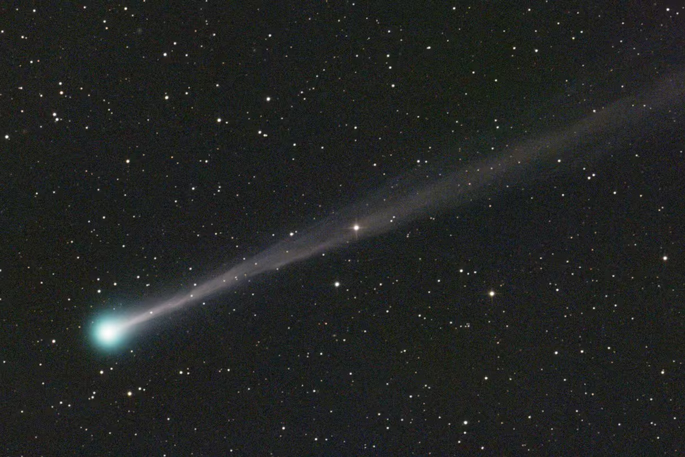
A visitor from the outer edges of our solar system is passing our planet this week as it hurtles around the sun, with a chance the extraterrestrial could be visible at the end of the month.
Comet C/2025 R3, as it’s officially known, was discovered in late 2025, says Josh Aoraki, astronomy educator at Te Whatu Stardome in central Auckland.
Originating from the Oort Cloud, a ring of small, orbiting objects known as planetesimals between 0.3 and 3.2 light-years (between 3 and 30 trillion kilometres) away, comet R3 is made of mostly ice, rock and dust.
“Occasionally they fall toward the sun, where they then become visible,” Aoraki said.
R3 reached its closest point to the sun yesterday, too close to be visible, he said.
The website earthsky.org reports that R3 will be at its closest to Earth on April 26, when it will be just 72.3 million km away (about half the distance to the sun).
However, it will be easier to spot at the end of the month, appearing low on the western horizon just after sunset.
In May, the comet gets higher into the sky after dusk, and, therefore, easier to spot.
Aoraki says that R3’s close encounter with the sun could also bring about its demise, as it heats up and melts, breaking into fragments.
“If it survives its encounter with the sun, there is a chance that it will be visible in the evening sky near the end of the month (and) into May,” Aoraki said.
“But it will likely not be visible to the naked eye and will require telescopes or binoculars to see.”