
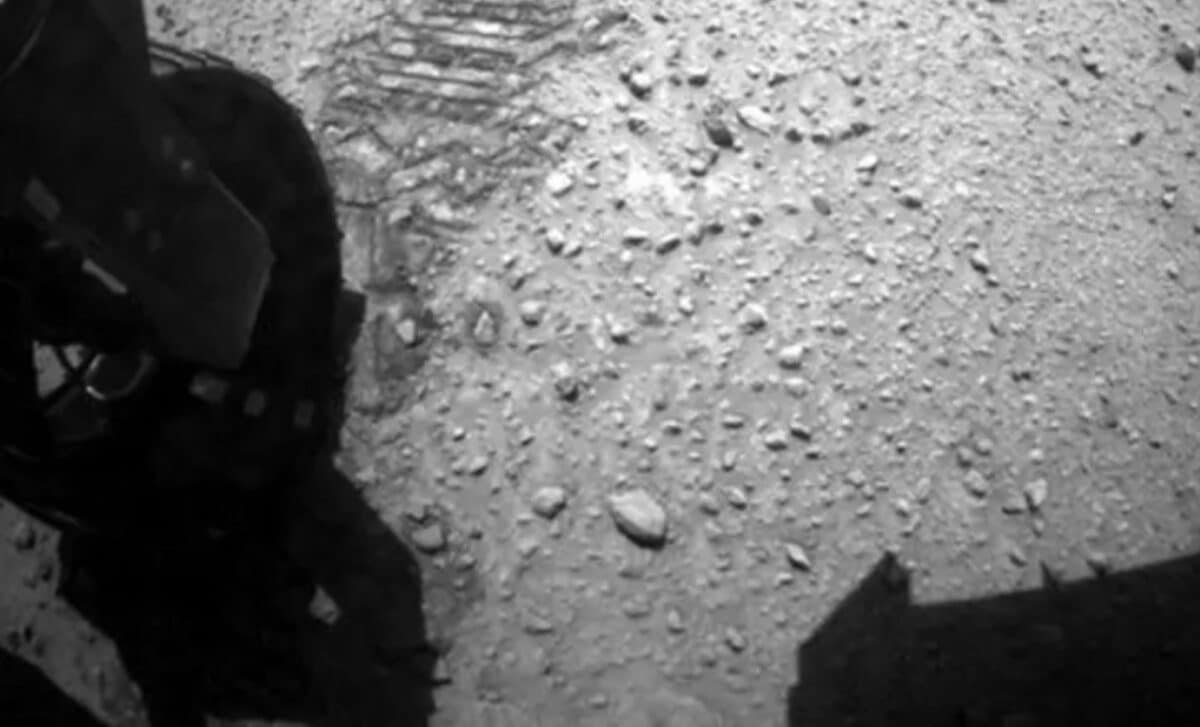
A claim that NASA photos show insect-like life on Mars is making waves and raising eyebrows. The images might look convincing at first glance, but most scientists say they are seeing something much more ordinary.
The story started when William Romoser, an emeritus professor at Ohio University, shared images taken by NASA rovers. He argued that certain shapes on the Martian surface resemble insects and even reptiles, pointing to what he described as wings, legs, and body structures.
A Claim Based on Shapes in Rover Photos
William Romoser built his case entirely on visual interpretation. He said the images show a range of insect-like forms, some appearing to have wings or segmented bodies. He presented these findings at a meeting of the Entomological Society of America.
“While the Martian rovers, particularly Curiosity, have been looking for indicators of organic activity, there are a number of photos which clearly depict the insect- and reptile-like forms.”
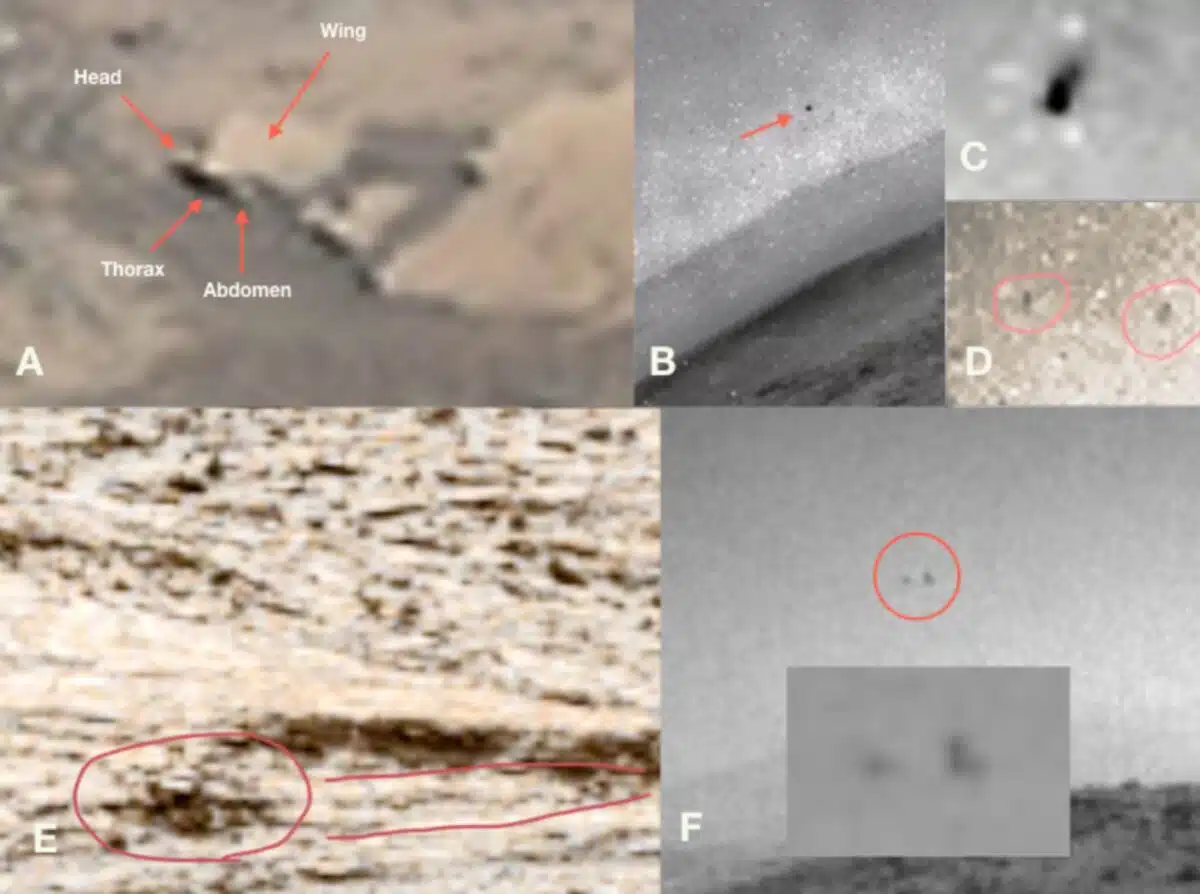 Close-ups of Martian terrain with markings pointing to alleged insect-like features. Credit: William Romoser
He even suggested that some of these forms might be capable of movement or flight, pointing to what he interpreted as wing-like structures and articulated features.
“Numerous photos show images where arthropod body segments, along with legs, antennae and wings, can be picked out from the surrounding area, and one even appears to show one of the insects in a steep dive before pulling up just before hitting the ground,” he added.
But the argument stops there. There are no physical samples, no chemical traces, just shapes that seem familiar when viewed a certain way.
The Brain Fills In What It Expects To See
Many researchers are not convinced. Instead, they point to pareidolia, the tendency to see recognizable patterns in random visuals. David Maddison from Oregon State University explained that this happens even to experts. As reported by Space.com :
“I, personally, have pareidolia with respect to insects, beetles in particular,” he stated. “I’ve worked on beetles for decades; I have collected many thousands of beetles around the world. Through the years I have built into my brain a pattern-recognition system for picking out beetles.”
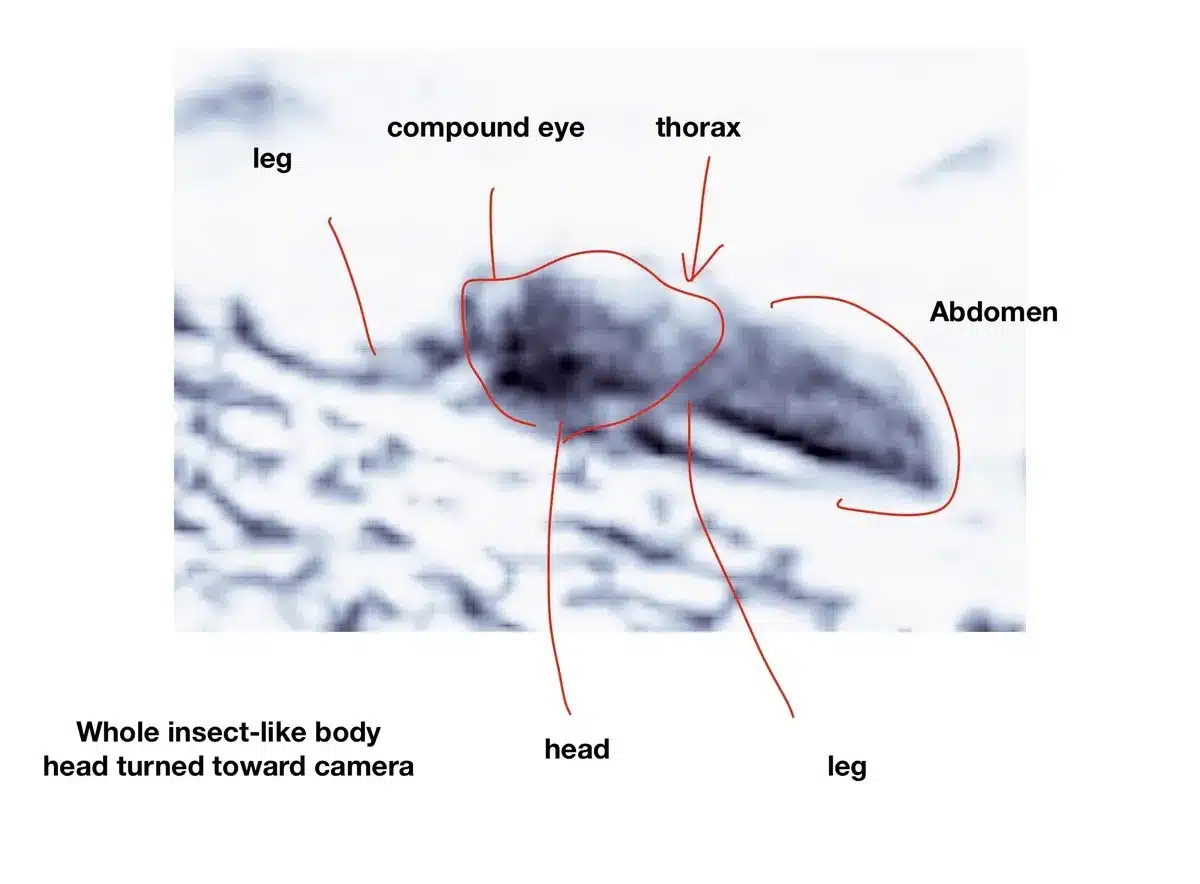 Annotated close-up of a Mars rover image highlighting a shape labeled as an insect-like body with head, thorax, abdomen, and legs. Credit: William Romoser
That kind of misreading becomes more likely in environments like Mars, where images can be grainy and lack context. Maddison said the supposed insects fall well within what you would expect from ordinary rocks and shadows.
“I do not think there are insects on Mars. The photographs that are in that press release you sent are entirely unconvincing, as they fall within the range expected in zillions of non-insect objects photographed in lowish resolution on a Marscape,” he said. “It is vastly more parsimonious to presume the blobs are simply rocks.”
Putting Space Imagery Into Perspective
For scientists like Nina Lanza at Los Alamos National Laboratory, the issue is not just what is seen, but how it is presented. She pointed out that cropped images without scale can easily mislead. As indicated in the same source, she said this is simply not a reliable way to assess possible life.
“They’re little clips of larger images and there’s no scale bar on them … you could imagine a lot of different shapes in there. That’s not a good way to do this kind of assessment.”
There is also a broader concern. Big claims like this can stick in people’s minds, even if they are later challenged. In this case, the original press release was eventually removed, and no further comments were shared. Meanwhile, researchers continue their careful search, knowing that real evidence of life on Mars will need to be much harder to dismiss.
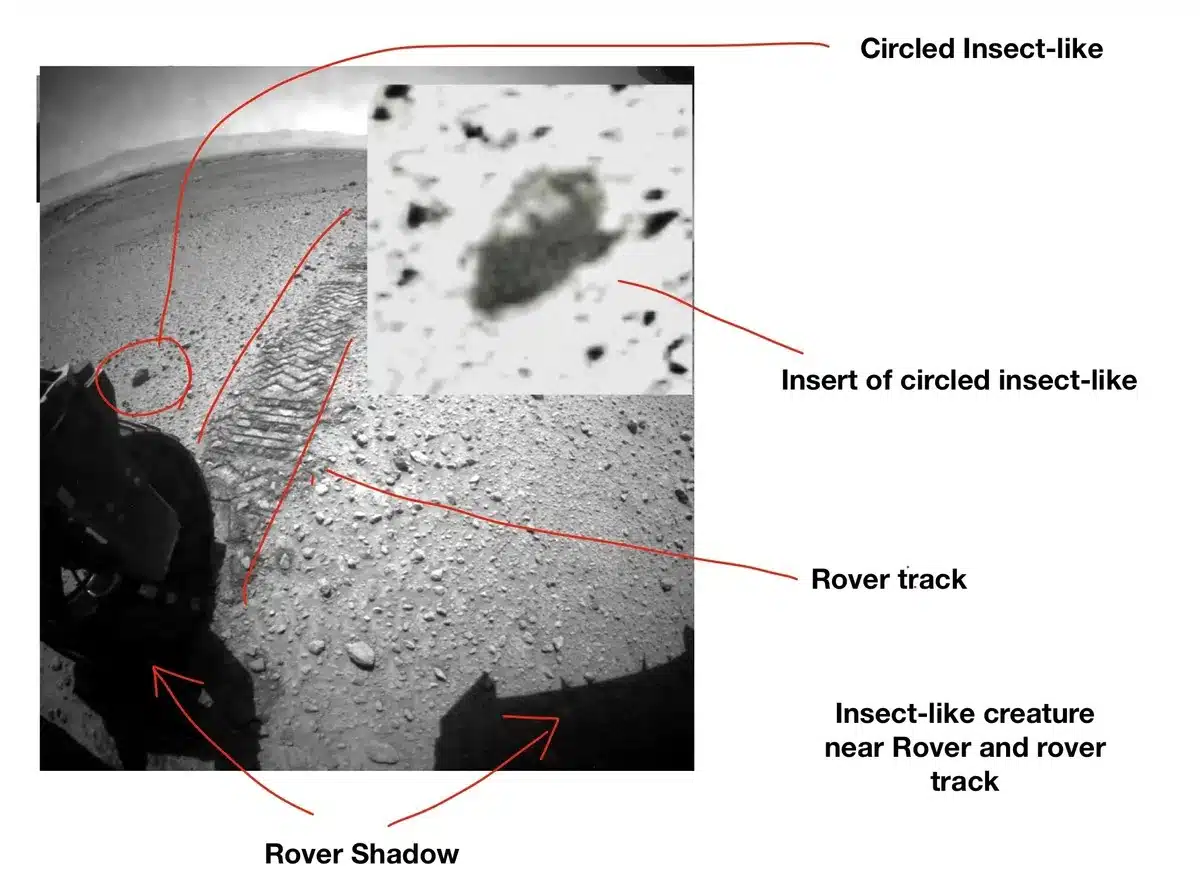 NASA rover photo highlighting a small, ambiguous object interpreted as a possible biological shape. Credit: William Romoser