
She wrote that Cunliffe’s request was not a simple exercise to establish how a particular school managed its records.
“It is a carefully designed, system-wide exercise intended to map legislative non-compliance across the school sector.
“We are troubled that a research project supervised by the Auckland University Law School has resulted in a mass OIA campaign that is imposing a significant and disproportionate burden on under-resourced schools.”
Cunliffe has previously used the OIA process to reveal shortcomings in school child protection policies and highlight issues at his own children’s primary school in northwest Auckland.
He told the Herald exempting schools from the OIA and open governance regime would “raise significant concerns” and undermine democratic principles.
The Ministry of Education says transparency and accountability are important parts of publicly funded education, but acknowledged the difficulties schools face in dealing with such requests.
Anaru told the Herald the union hoped to initiate a full review of the problem.
“Unlike government departments, schools do not have in-house legal counsel, dedicated compliance staff, or any funded resourcing to manage what has become a growing administrative obligation.
“When a principal receives an OIA request, it is typically the principal themselves – or a small number of senior staff – who must locate, review, assess, and respond within the statutory timeframe, all while continuing to lead their school.”
Spanz president Louise Anaru (right) is fighting for a review of the OIA regime as schools struggle to cope with the burden of requests for information. Photo / Focal Point
If it was not possible to exempt schools entirely from the OIA regime, Anaru said the union wanted to reduce the OIA charging threshold, create a dedicated education ombudsman and a dedicated ministry team to support schools with compliance.
In the letter penned to UoA, Anaru wrote that Cunliffe’s OIA highlighted the “significant administrative burden” imposed on schools, in this case for a “single piece of student coursework”.
“The OIA is a transparency mechanism, not a tool for building litigation portfolios.”
She said the time taken to respond to the request was time stolen from the young people schools were educating, and as such, should not be considered a “trivial” matter.
“A number of our members have sought legal advice at their own cost in order to respond appropriately.
“For a sector already under severe resourcing pressure, this is a poor use of scarce resources.”
Spanz was now discussing the matter with legal counsel and had sought other guidance to support schools and understand the “quantum of the burden and to develop practical solutions for reform”.
Cunliffe’s latest OIA sought information on policies and procedures regarding trustees’ use of personal devices and accounts for board business.
Anaru’s letter highlighted a “pattern of behaviour”, noting Cunliffe’s previous “well-documented history of adversarial engagement with the school sector”.
In 2018, Cunliffe uncovered what he said was a nationwide failure by schools to properly protect children, after discovering his own child’s school lacked a required child protection policy.
After extending the investigation to other schools, OIA responses revealed patchy compliance with the Vulnerable Children Act.
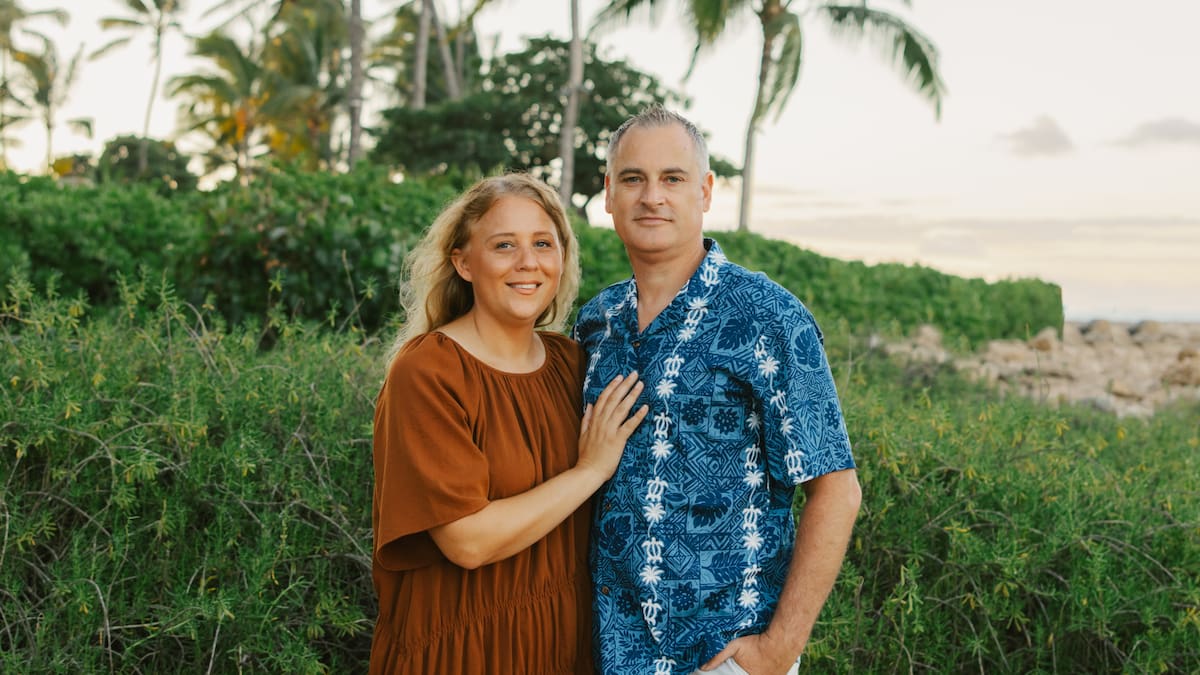
Regan Cunliffe with his wife, Rachel. Photo / Supplied
Speaking to the Herald, Cunliffe said he consulted with the Ombudsman before sending his school trustees requests in February.
He strongly opposed any legislative attempts to exempt schools from open government laws, arguing such moves would undermine democratic principles.
If responding to OIA requests was burdensome, it pointed to broader issues around school governance, Cunliffe argued.
The UoA has been approached for comment.
The NZ School Boards Association has written to the country’s schools advising them to check inboxes for Cunliffe’s February OIA request and respond within 20 working days.
Ministry of Education deputy secretary of policy, Andy Jackson, said schools were self-governing Crown entities. They were responsible for responding to formal requests for information they held, reflecting their accountability to communities and the public interest in transparency.
He said any shift in responsibility would require legislative change. While the ministry could not advise boards on OIA responses, support was available through the School Boards Association or Ombudsman.
Rachel Maher is an investigative reporter covering Auckland issues and education. She started at the Herald as a breaking news journalist in 2022, before joining the Auckland team this year.
Sign up to The Daily H, a free newsletter curated by our editors and delivered straight to your inbox every weekday.