
SINGAPORE – Step into any Western gallery, and one is immediately buffeted by nudes, mostly of women. In Singapore, different rules apply. Where they are displayed, they tend to be clustered on one or two walls that come with the requisite warning advisory.
This is despite the cornerstone movement of Singapore art being the Nanyang artist quartet of Cheong Soo Pieng, Chen Wen Hsi, Chen Chong Swee and Liu Kang, whose penchant for Balinese nudes was until recently accepted as canon – and without acknowledgement of the elephant in the room.
Now, the National Gallery Singapore’s (NGS) first R18 exhibition expressly probing this libidinous impulse is opening on April 24, following a long gestation period since before the Covid-19 pandemic.
After convincing wary regulators, the 11-year-old NGS ushers in its new decade ready to breach the ramparts.
Of her brainchild Passion Is Volcanic: Desire In Southeast Asian Art, co-curator Adele Tan, who good-humouredly jokes that the process has been “an extended pregnancy and now parturition”, says: “Art, beauty, love, sex and desire have been wedded to one another for a very long time.
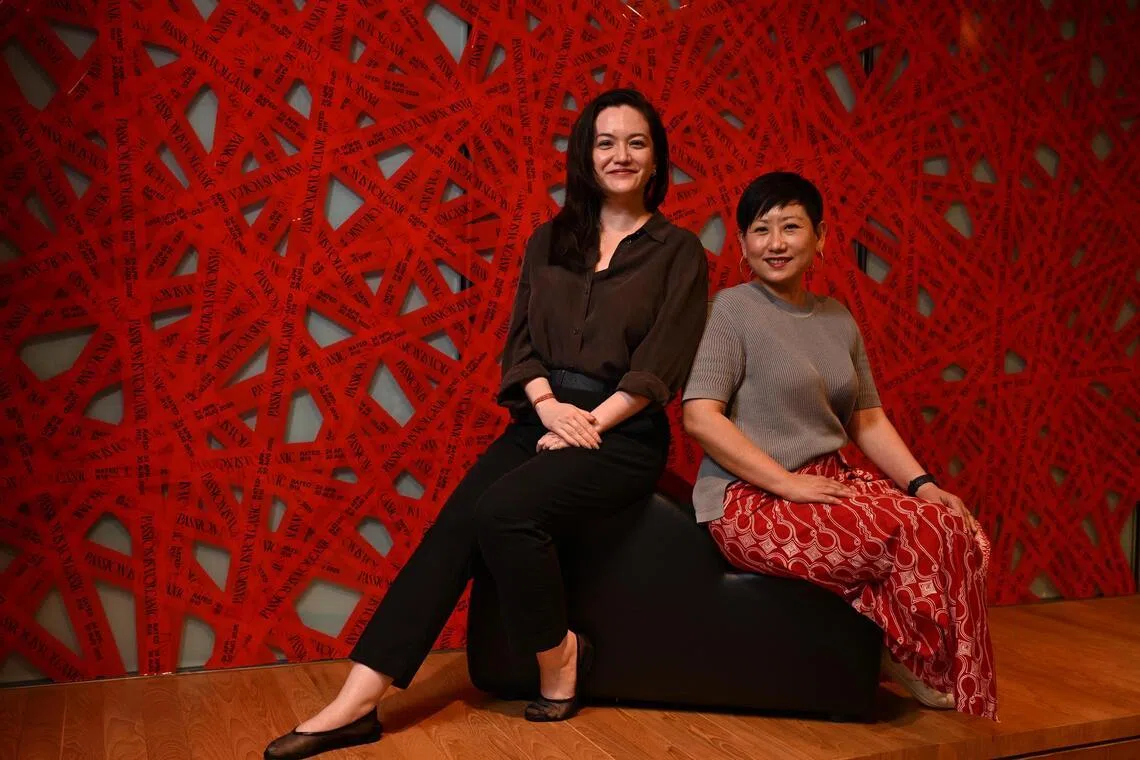
Co-curators Adele Tan (right) and Kathleen Ditzig of National Gallery Singapore’s new R18 exhibition, Passion Is Volcanic: Desire In Southeast Asian Art.
ST PHOTO: CHONG JUN LIANG
“When we went around the region to borrow artworks, they said, ‘Wow, you are doing this in Singapore? What took you so long?’ Everyone’s ready for us to grow up.”
NGS has been ready for this show for a while. Some 60 per cent of the 70 works are drawn from the national collection, with a long list of works making their debuts.
Three are by the forgotten Tan Peng – the first Singaporean artist to come out publicly as gay in 1993. There are also two by Teng Nee Cheong, the late Singaporean painter of florid, Asian tradition-infused nudes; and a recently acquired sketch by Ng Eng Teng, better known for his large-scale sculptures like Mother And Child (1996), which faces the Padang.
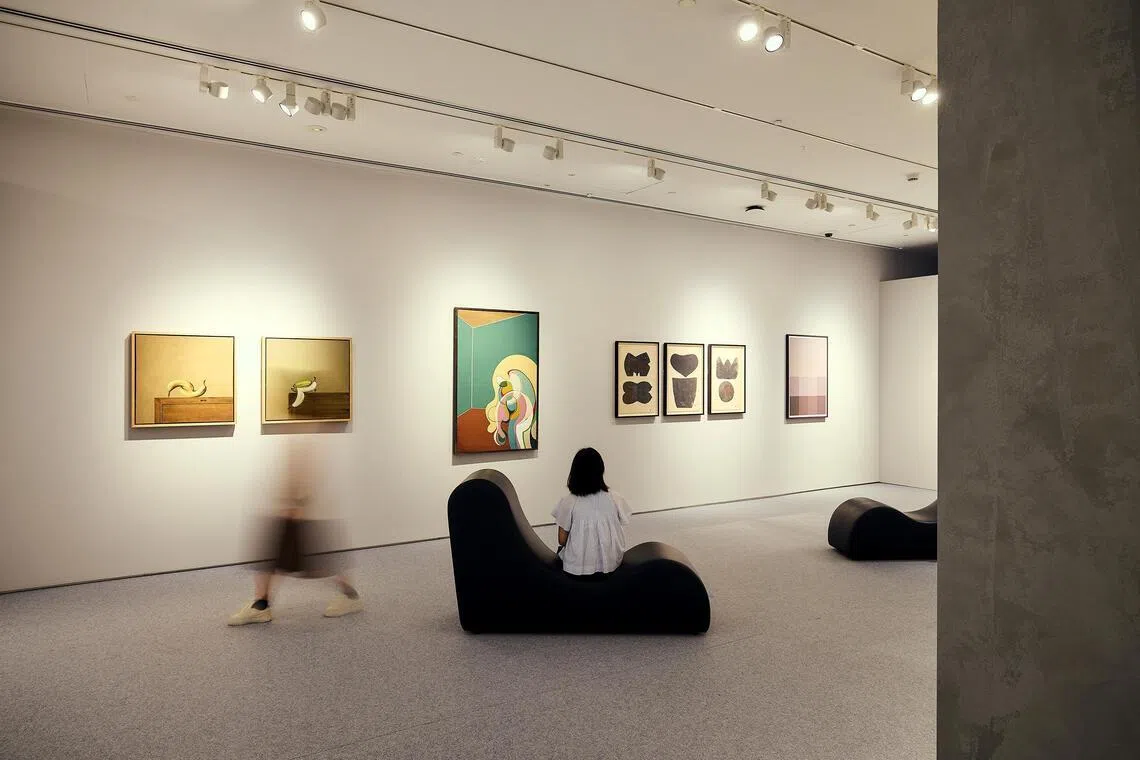
Sensationalism and provocation are not the curators’ intent. This is established with a deliberate softening of the environment: dimmer lights, tasteful and sensual accent chairs, and carpeted floor – the last being another first for the gallery, Dr Tan excitedly points out.
The exhibition’s final form on the fourth floor is a carefully negotiated one that comes with guardrails. Even Thai artist Pinaree Sanpitak’s child-friendly interactive breast cushions – titled Noon-nom, which translates to the nourishing “milk support” – are walled off from public view, despite extending outside the gallery.
There will be assiduous identity card checks at the door and a ticket price of $5 for Singapore citizens and permanent residents, and $8 for foreigners.
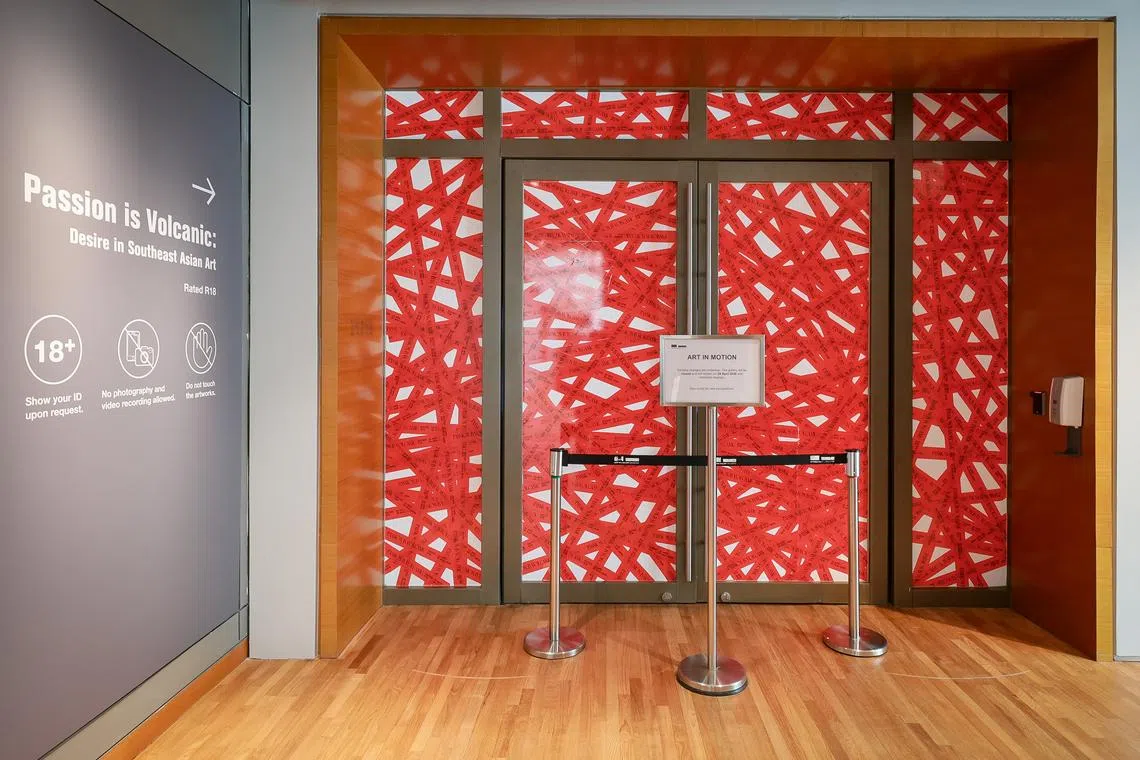
Photography is forbidden at the exhibition, and identity cards will be checked at the door.
ST PHOTO: GAVIN FOO
A bigger shock might be that photography is forbidden, which means visitors are forced into a more analogue – and careful – way of looking. Favourite pieces will have to be sketched or committed to memory, and not snapped for the Instagram boast.
Co-curator Kathleen Ditzig suggests that the controlled way people view the erotic today was also a sticking point for Western societies’ conceptions of themselves and their modernity.
In ancient Pompeii, risque images were omnipresent and their unearthing in the 18th century prompted the first construction of a museum for these “erotic” objects in Naples, Italy.
Such institutions come with a moral dimension. Dr Ditzig says: “There are some things that can be done in public and there are certain things that can be done in private, right? It’s this construction of the domestic. What are the politics of the expression of private pleasure?”
Indoors, however, visitors will find the works nowhere near as explicit or controversial as the taboo red tapes might tease.
There is the obligatory wall of female nudes – Dr Tan “didn’t think we needed to belabour that classical point” – while other works bend towards semi-abstraction, recall pre-modern Asian myths and portray relationships in a tender way.
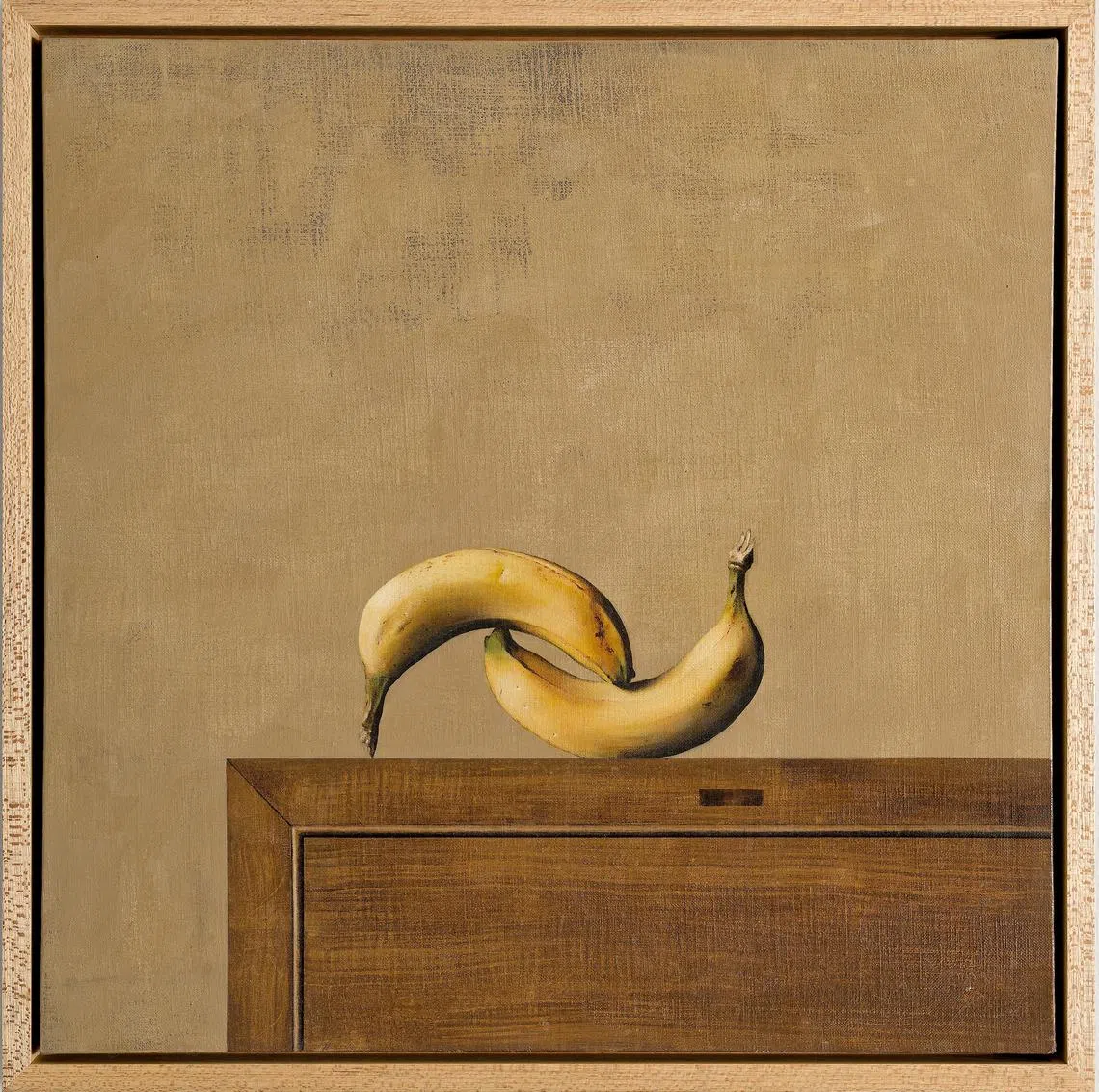
Malaysian artist Ahmad Zakii Anwar’s Sixtynine.
PHOTO: AHMAD ZAKII ANWAR
The result is far more fertile and interesting. Witness Malaysian artist Ahmad Zakii Anwar’s delicately positioned bananas, indicatively titled Sixtynine, or Singapore artist Wong Keen’s monumental nude abstracted into a background landscape. Before it, a thirsty hippo is primed to take a sip of water from a lake – an outrageous addition drenched, like the rest of the work, in a blue dreamscape.
Dr Tan says there are legal guidelines that demarcate the pornographic for the gallery. “For what we thought might be too sensitive or too difficult as a first entree for this exhibition, we also tried to manage the choice of imagery,” she adds.
Which is not to say that the curators have compromised their mission to spotlight underrepresented voices.
Like its recent rehang of the permanent Singapore Gallery, they have paid special attention to women’s experiences, along with queer histories and the unsaid interior lives of artists, says Dr Tan.
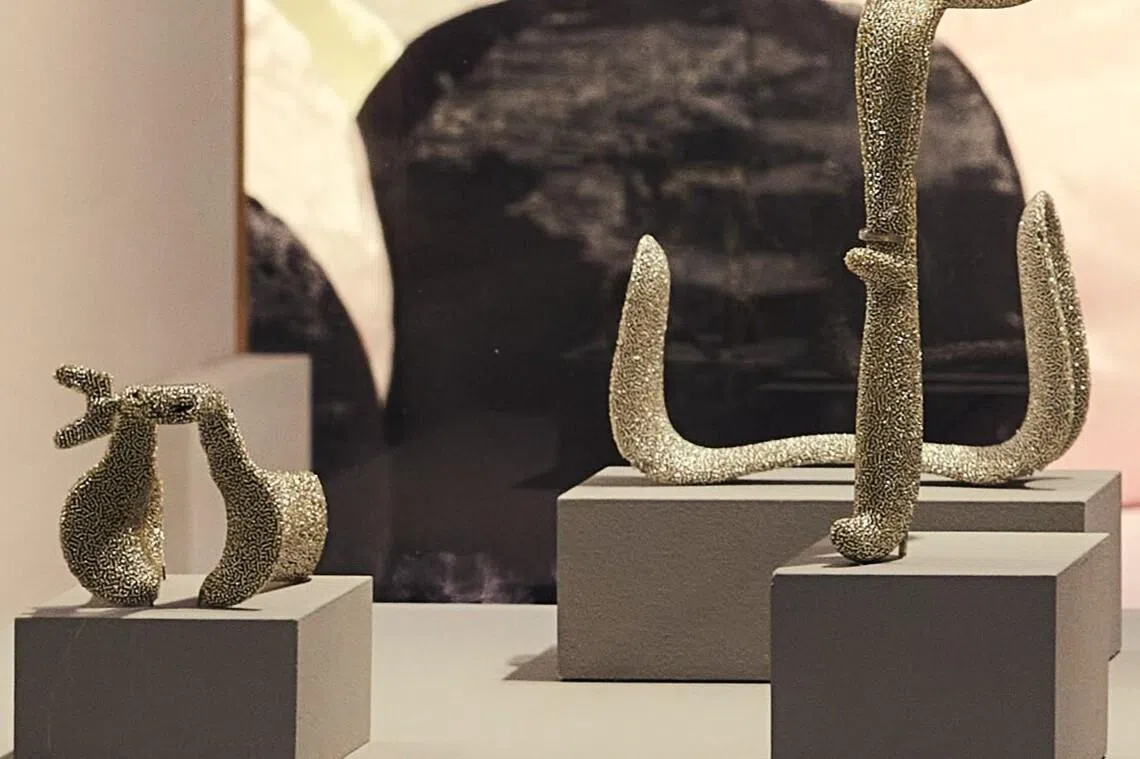
Vietnamese artist Nguyen Thi Thanh Mai decorates specula, used in gynaecological exams, with beads.
PHOTO: NATIONAL GALLERY SINGAPORE
Vietnamese artist Nguyen Thi Thanh Mai decorates specula used in gynaecological exams with beads. Both beautiful and painful, they are placed next to veneration vessels.
“I, as a woman, want to acknowledge that a lot of times eroticism comes with pain and the spectre of violence. We shall never forget about that,” Dr Tan says.
In Bali, Dutch artist Rudolf Bonnet’s portraits prove that men looked at men as much as men looked at women – a counterpoint to a waterfall harem painted by Liu Kang.
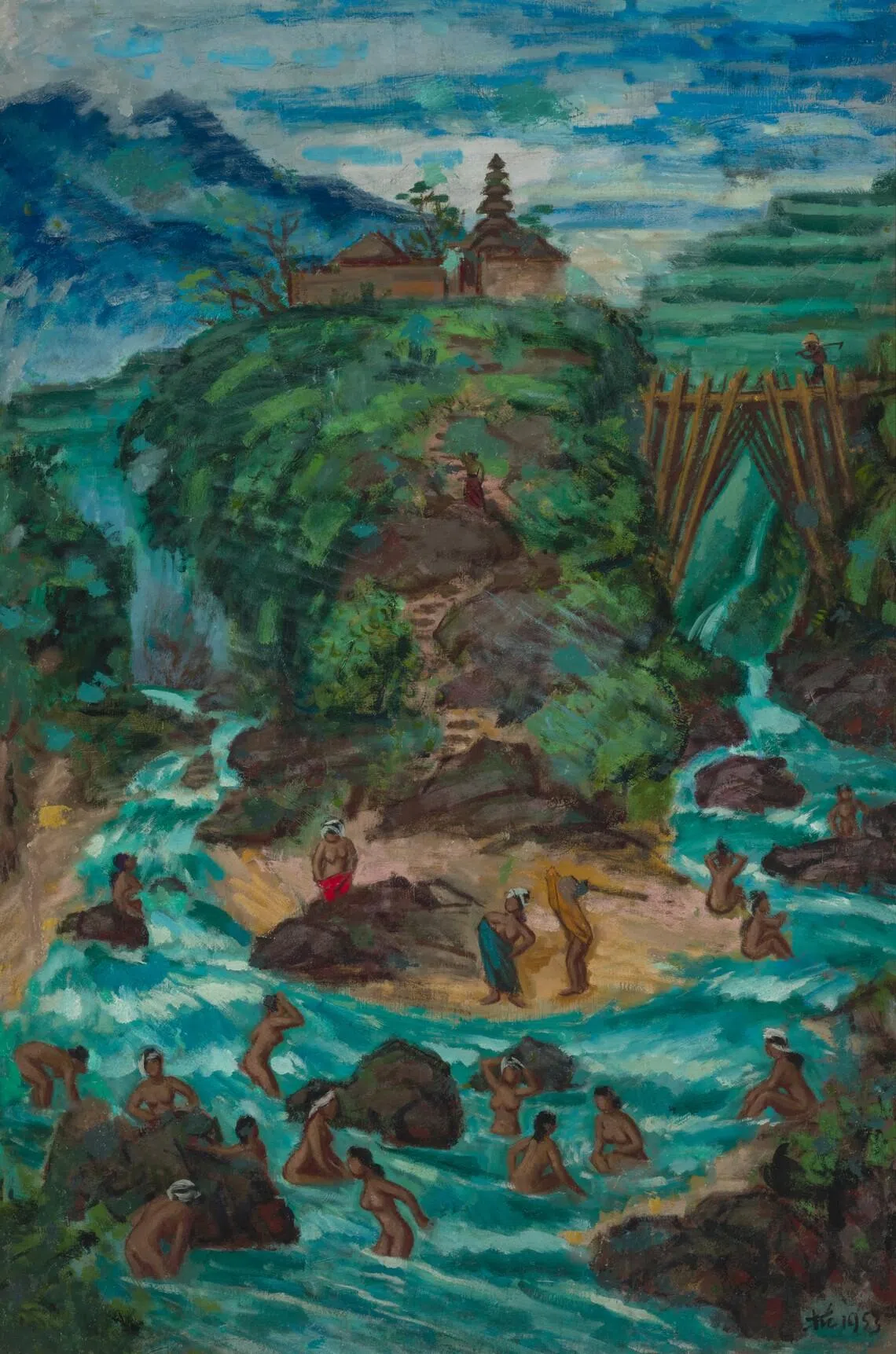
Singaporean artist Liu Kang’s Scene In Bali.
PHOTO: NATIONAL GALLERY SINGAPORE
In the course of preparing for the show, Dr Tan had to persuade her bosses and the authorities of serious curatorial intent.
She rebuts notions that desire and sex are frivolous topics: “We have aimed to create a very respectful and culturally grounded space for visitors to engage with these ideas.
“Because we are in Singapore and in South-east Asia, we will talk about these objects and subjects with both intellectual rigour and parental care.”
The show has a further anomaly in stretching time to the pre-modern, the longue-duree perspective that includes a sculpture of two Buddhas kissing, which dates back to the 14th or 15th century and is on loan from the Asian Civilisations Museum.
This is near Chinese artist Ding Yanyong’s painting of Tang Dynasty beauty Yang Guifei and Filipino artist Agnes Arellano’s marble sculpture of herself as the pregnant moon warrior goddess, Haliya of the Bicolano (an ethnic group of the Philippines).
Dr Ditzig says Arellano had wanted a child when making the work and, nine months after finishing the sculpture, her wish was fulfilled.
Dr Tan says this approach was also a way of easing people into the exhibition from the more legible perspective of heterosexual love, as well as reaching out to those who may be more interested in Asian myths and popular objects, such as a racy betel nut cracker, than modern art.
“These are things that are enduring and deeply rooted,” she says. “They have been remobilised for contemporary times and you can build a story around them. You start to move from heterosexual romance into something that speaks to queer identity.”
NGS taking on this subject of fundamental human experience also allows curators to excavate artists in the national collection, and re-acquaints visitors with the sexual histories of Singapore and the region.
In addition to Singapore’s first openly gay artist Tan Peng, there is also Vietnam’s first openly gay artist Truong Tan; Indonesian artist Emiria Sunassa’s Moonlight Bathing (circa 1940s), probably one of the earliest nudes by a South-east Asian artist; and Singaporean Grace Quek, also known as Annabel Chong, whose participation in the 1995 film The World’s Greatest Gang Bang is here recast as a work of gender-challenging performance art.
Of the successful staging of the show, Dr Tan says she is ecstatic and that “we should all give ourselves a collective pat on the back”.
“Nothing here is so outrageous that causes such ire and consternation that everything collapses.”
As the exhibition awaits its first visitors and public feedback, Dr Ditzig chooses to paraphrase Indonesian painter Basoeki Abdullah, who had this to say to critics in his time: “The nude is one of the oldest subjects in art history, and whether a society can accept that is often an indicator of its modernity.”
Where: Level 4 Gallery, National Gallery Singapore, 1 St Andrew’s Road
When: April 24 to Aug 30, 10am to 7pm daily
Admission: $5 for Singapore citizens and permanent residents; $8 for foreigners
Info: Go to str.sg/3YEHt