
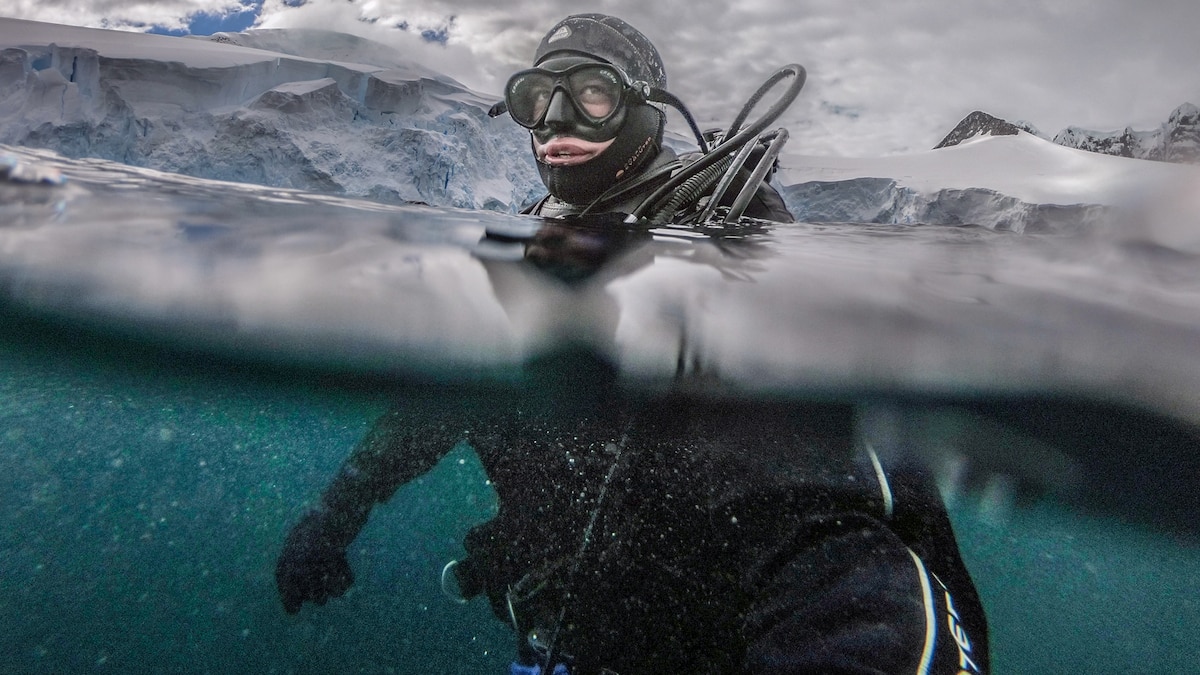
Reporting in this article is presented by the National Geographic Society in partnership with Rolex under the National Geographic and Rolex Perpetual Planet Ocean Expeditions.
From its desolate, frozen crust, Antarctica seems like a place unsuited for life. But just offshore, the depths of the Southern Ocean tell a different story. Hundreds of feet below the surface, there are translucent icefish guarding their eggs, octopuses lolling in the undersea current, and alien-looking isopod crustaceans creeping among a colorful menagerie of sponges and sea stars. “It blows your mind,” says marine biologist and National Geographic Explorer Cristian Lagger. “At the bottom of the sea, Antarctica is a rich continent with many species, colors, textures, and shapes.”
During a recent expedition, Lagger peered into those frigid depths from the control room of the Schmidt Ocean Institute’s research vessel, Falkor (too), as live video from its remotely operated vehicle, SuBastian, streamed on a monitor. His research team had reached a previously undocumented patch of an ocean floor trench, where SuBastian explored a gently sloped area from a depth of more than 3,000 feet to about 1,000 feet. Lagger and his colleagues felt like astronauts exploring a new frontier.
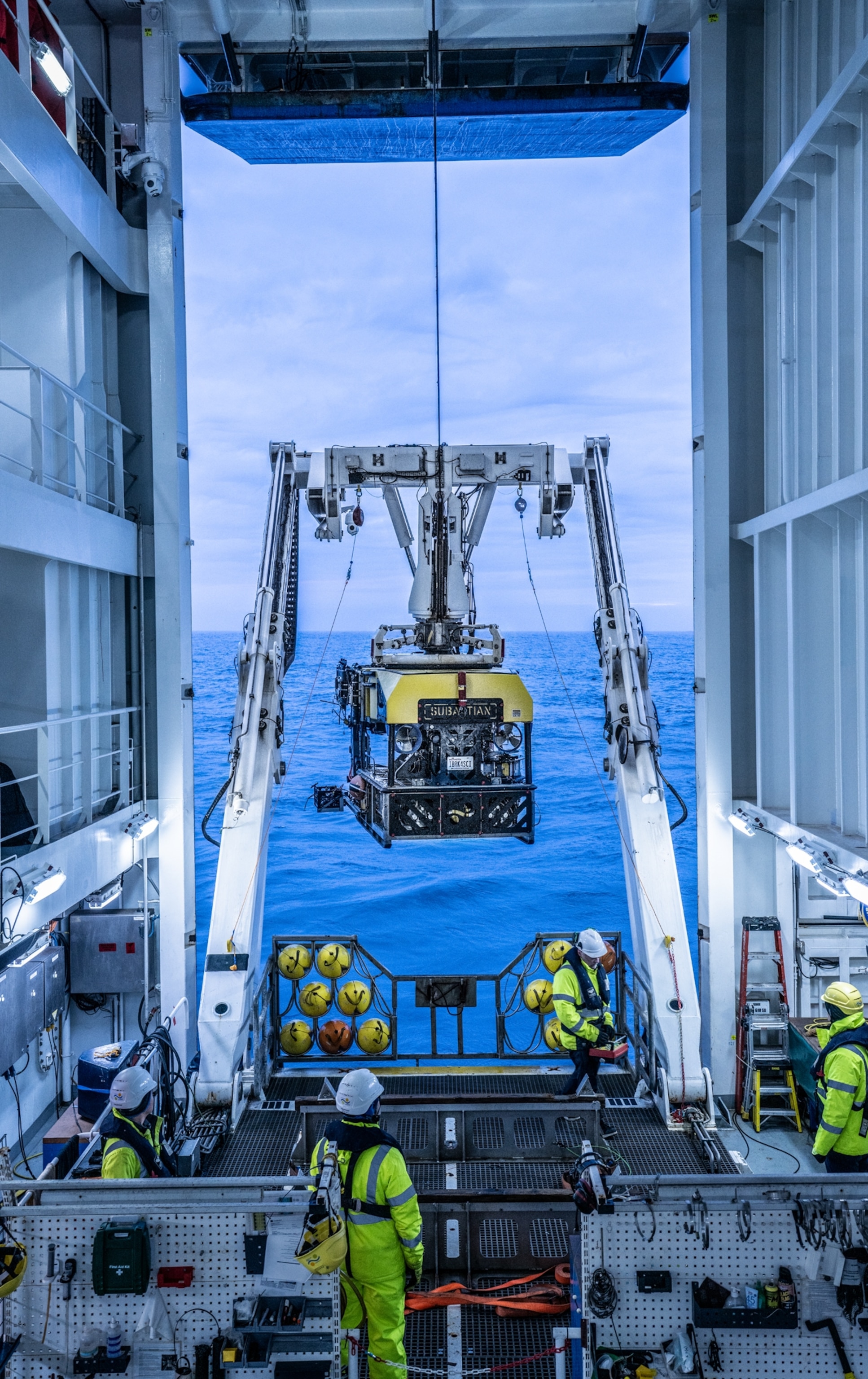
Lagger’s team used the Schmidt Ocean Institute’s remotely operated vehicle to explore the deep reaches of the Southern Ocean.
Luján Agusti
The Southern Ocean plays an outsize role in the health of our planet by absorbing more human-caused carbon dioxide than any other ocean and regulating the climate through its currents and seasonal ice. But as a recent NASA-supported study notes, current carbon sink estimates are limited because “harsh conditions there make collecting good data difficult.” So, little of the seabed has been studied and much remains unknown. By probing its deep reaches, Lagger and his team, who are based at the National Scientific and Technical Research Council of Argentina, hope to discover new species and update carbon storage estimates.