


NZEI President Ripeka Lessels, the head of the country’s largest education sector union.
Photo: NZEI supplied
Hundreds of principals and thousands of teachers remain opposed to the government’s curriculum overhaul as consultation closes on Friday.
Thirty-nine local and regional principals associations and six teacher subject associations have now signed a letter started by teacher union the Educational Institute Te Riu Roa (NZEI) and the Principals’ Federation a month ago and published in newspapers on Thursday.
The letter said six draft curriculums for Years 0-8 in health and physical education, learning languages, science, social sciences, technology, and the arts were not fit for purpose.
The government wanted the learning areas finalised by the middle of the year with schools teaching the new science, social sciences and health and physical education curriculums next year and arts, technology and learning languages from the start of 2028. They would join English and maths, which primary schools had been teaching since the start of 2025.
Signatories to the letter included Māori Principals’ Association Te Akatea and subject associations for teachers of history, social sciences, physical education, drama and art.
There were also principals associations from north to south, including Auckland, Canterbury and Wellington as well as Te Tai Tokerau, eastern and western Bay of Plenty, New Plymouth, Hawke’s Bay, Nelson, mid and north Canterbury, and Otago and south Otago.
Principals’ Federation president Jason Miles said the drafts must be put on hold.
“It’s not going to take much for the minister to say ‘we need to pause, we need to re-engage with the sector, we need to re-write the drafts in their current forms’ and that’s what we’re asking,” he said.
Miles said the drafts ignored the Treaty of Waitangi, concentrated on knowing and doing things without the third leg of understanding that was in the current curriculum, and had been developed with little input from the education sector.
NZEI president Ripeka Lessels said there was so much opposition the government should pause work on the curriculum.
“The change is ill-thought, is ill-consulted-on, and the change is an ideological change, it’s not a good curriculum development change,” she said.
Education Minister Erica Stanford had ignored their demands so far.
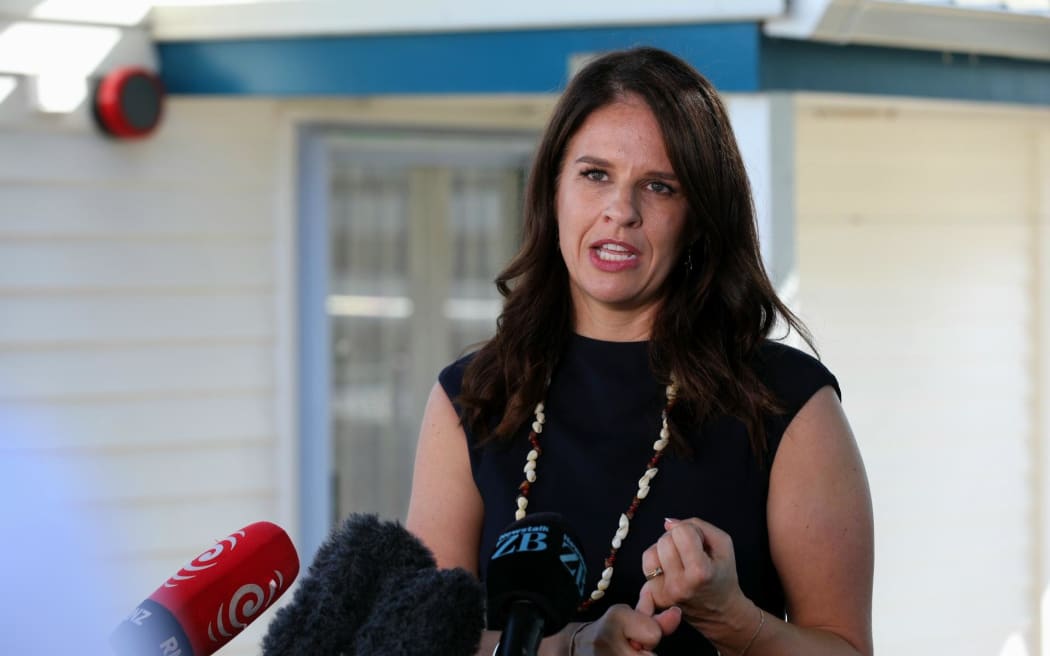
Education Minister Erica Stanford.
Photo: RNZ / Nick Monro
Miles said it was too early to say what might happen if the government forged ahead with its plans.
“We wouldn’t want to preempt any actions,” he said.
“We want to engage, we want to openly sit down with the ministry and look at the draft curriculum and how we can have input into it as professionals. I’d rather put our energy into that than think about what we’re going to do if the minister doesn’t listen.”
Wellington Regional Primary Principals Association president Shirley Porteous said a lot of the opposition was because the government was moving far too fast.
“I’ve heard a lot of feedback that we want the pace to change so whether that is ‘stop’ or ‘slow down considerably’ will be in the hands of the ministry but we certainly cannot continue at the pace we’re at,” she said.
But Porteous said teachers were not thrilled with the content of the draft curriculums either.
“I found it very insightful working with my teachers and watching their faces as they realised just the vast number of things that they are going to have start teaching within one week that they’ve got to now fit in, let alone the content,” she said.
“For those of us who have had the chance to go deep with the content of each curriculum area we are extremely concerned about the actual content and the shift in terms of what we are being asked to teach children.”
Education Minister responds
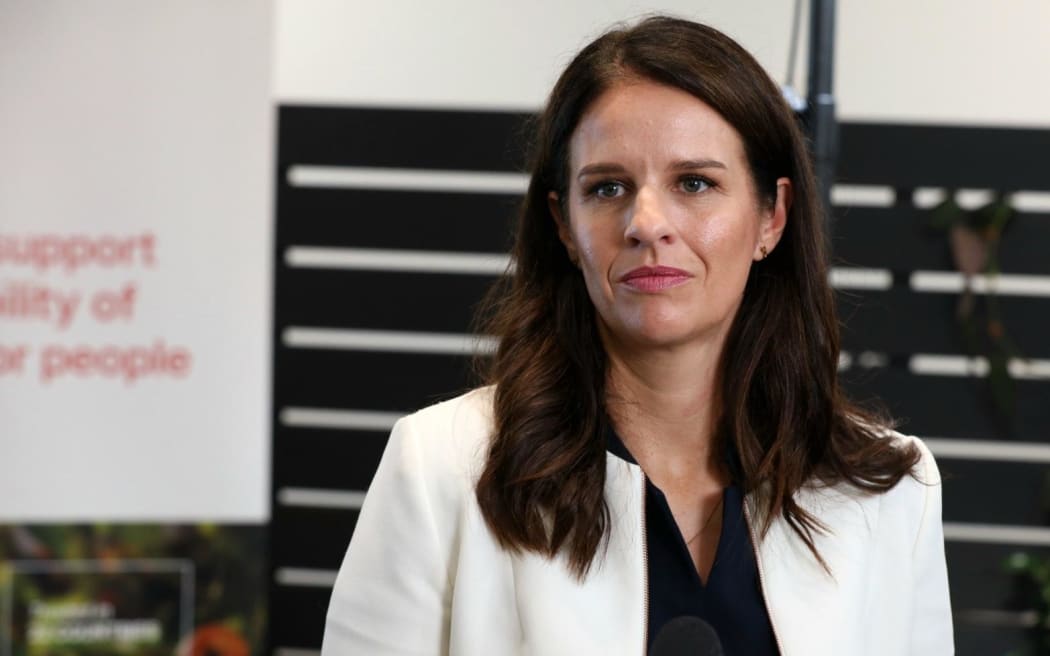
Education Minister Erica Stanford
Photo: Nick Monro
Education Minister Erica Stanford said she had a clear focus of lifting student achievement and closing the equity gap to create more opportunity for students through a world-leading education system.
The goverment had started “an ambitious reform programme which has prioritised delivery and achievement”.
“We are focused on meaningful and timely change, and we are already seeing early improvements in literacy and maths. If I had paused every reform the unions have asked me to stop over the past two-and-a-half years, we simply would not have delivered any progress for our young people.”
Stanford said she was surprised by claims of a lack of resourcing.
“The government has invested heavily to support schools, this includes $70 million for structured literacy, $20 million for maths resources in every primary classroom, professional learning for tens of thousands of teachers, new science resources, writing tools, tutoring support, and a $750 million boost to learning support. This is exactly what full resourcing looks like. Regarding future funding, like any government, we work through the Budget process in the usual way.”
She said NZEI primary principals have recently negotiated a curriculum change allowance worth $15,000 over 30 months, alongside $10,000 per year for leadership in literacy and numeracy. “That is a significant investment, and it recognises their role in implementing these changes for our young people. The NZEI negotiated these payments for principals to help lead this work and are now calling for the work to be paused.”
The pace of the curriculum rollout had been changed once and she had made it clear schools could implement changes at a pace that worked for them.
“I am actively working with groups like the Auckland Primary Principals’ Association to further refine the pace based on useful, practical feedback of their members. I will have more to say on curriculum rollout soon.”
Sign up for Ngā Pitopito Kōrero, a daily newsletter curated by our editors and delivered straight to your inbox every weekday.