
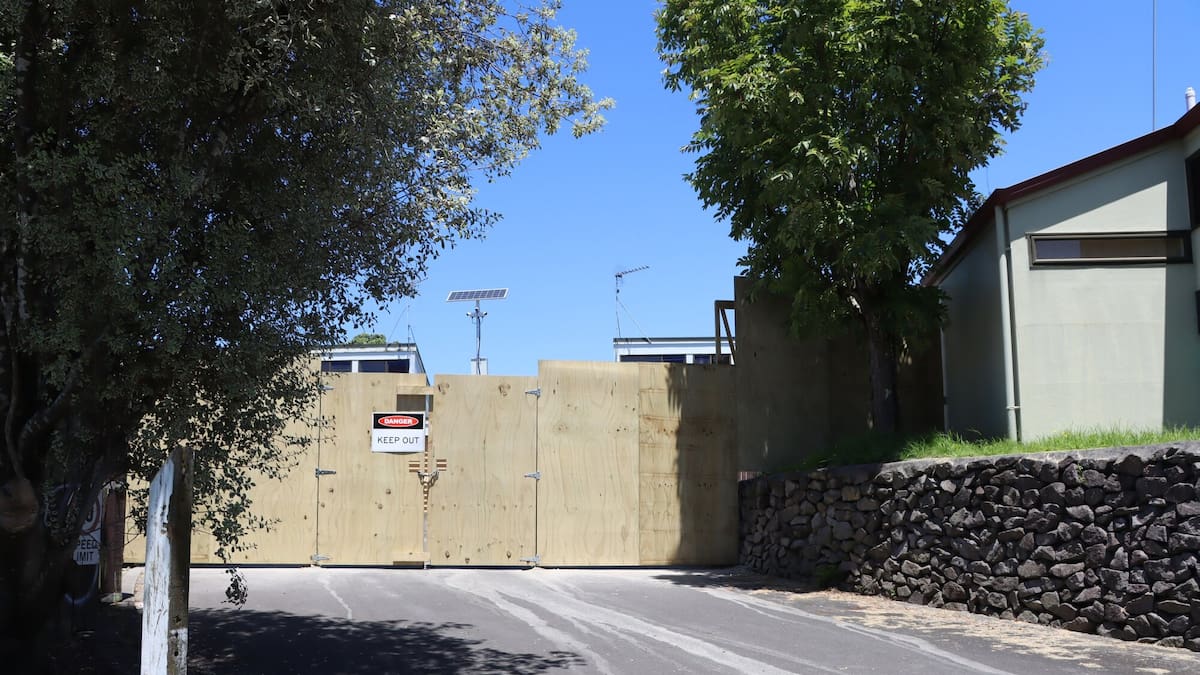
Accessible Properties terminated 11 tenancies on August 18 after testing and an in-depth building survey revealed “significant damage” to the buildings’ structural integrity.
The housing provider supported all tenants into other permanent accommodation and covered their moving costs.
Accessible Properties tenancy services general manager Tania Wilson said at the time that it was working through next steps for the properties, which could include remediation, redevelopment or sale of the site.
In a Thursday statement last week, Wilson said Accessible Properties had decided to demolish its 12-unit complex at Jacaranda Close.
“The properties are not suitable for occupation in their current condition and it’s not financially feasible to upgrade them.”
Demolition would start in May, she said.
“We are now working through the other two options for the future of the site – redevelopment or sale.”
Nine Kāinga Ora homes to be sold
In July, Kāinga Ora launched an investigation after Accessible Properties alerted the government agency to “weather-tightness issues” in a home similar to those the agency owned.
While none of the Kāinga Ora tenants reported significant leaks or mould, Kāinga Ora offered tenants the option to move in August while it investigated.
All accepted, and the agency had been considering next steps for the homes, which could include remediation, redevelopment or potential divestment.
Information received under the Official Information Act last month from Kāinga Ora said it intended to sell the nine homes.
It said Kāinga Ora received weather-tightness reports in September, advising that three of the properties were not safe for occupancy.
The remaining units were habitable but required recladding within six to 12 months and remedial work to interior components.
In a Wednesday statement this week, Kāinga Ora Bay of Plenty regional director Mark Rawson said no remedial work would be done on the homes before the sale.
Rawson said it continually reviewed its properties that required redevelopment to ensure they were still “fit for purpose”.
“We’ve weighed up several options for this site, taking a careful, value-for-money approach.”
Rawson said several factors informed decisions about whether homes were retained or sold – age, condition, location and long‑term redevelopment potential were key considerations.
“Through this feasibility work, it became clear that addressing the leaking building issues would not represent value for money.”
The decision to sell was made late last year, he said.
The site was subject to Right of First Refusal (RFR) requirements under Treaty settlement obligations, Rawson said.
He said Ngāti Ranginui had now confirmed they would not be exercising their RFR over Jacaranda Close.
“With the RFR process now concluded, we are reassessing the next steps of the sale process.”
Rawson said proceeds from the sale would be reinvested in Kāinga Ora’s public housing portfolio.
“It’s important to note that we are not reducing the number of Kāinga Ora homes. For each existing Kāinga Ora home sold, a newly built home is delivered elsewhere.”
Nine Kāinga Ora homes will be sold after the agency investigated ‘weather-tightness issues’ at its properties on Jacaranda Close in Brookfield last year. Photo / Ayla Yeoman
The information received from Kāinga Ora last month showed property reports were commissioned in 2017 after rainwater got into the garages at five properties.
Actions taken in response included garage wall linings being replaced and repainted, mould being cleaned, and drainage being upgraded, it said.
Kāinga Ora acquired the land from the Crown in 1986 for the purpose of state housing, paying between $39,599 and $41,696 per property.
An Auckland consultancy company submitted the resource consent for the properties for Kāinga Ora, which was approved in 1997.
Kāinga Ora said it did not have a record of who the contractor was that built the homes.
Megan Wilson is a health and general news reporter for the Bay of Plenty Times and the Rotorua Daily Post. She has been a journalist since 2021.