
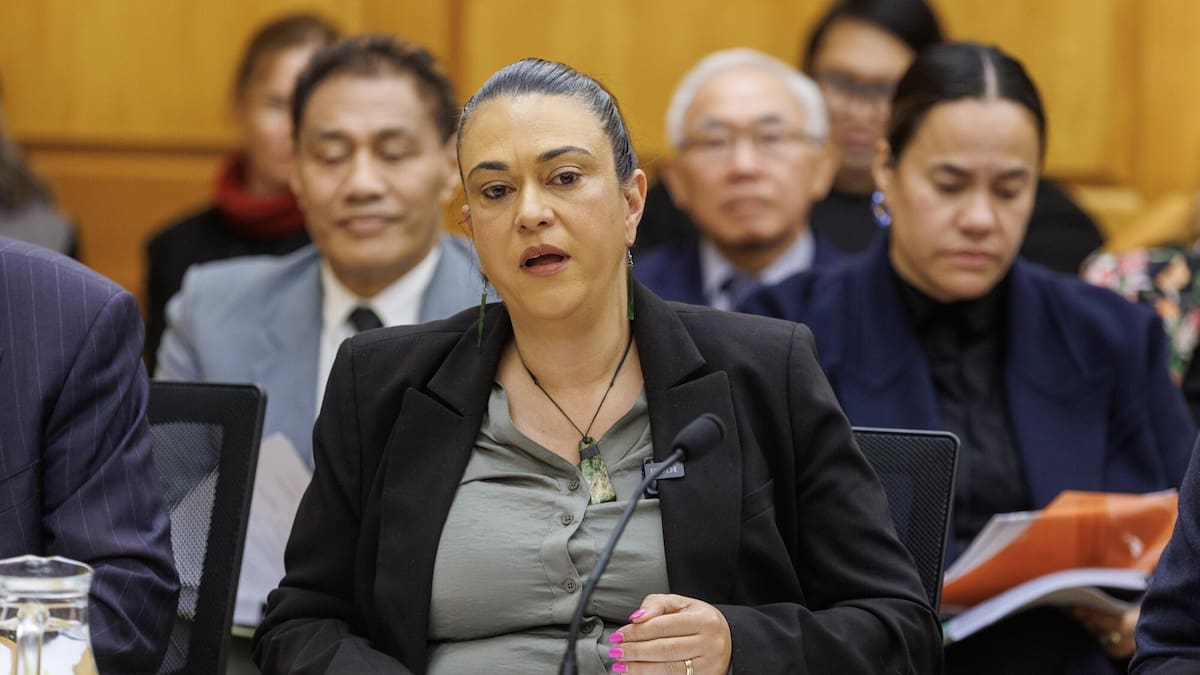
“It’s easy as a minister to visit the main city centres, where these sites get a lot of visits from ministers, and they have a connection with Wellington.
“There are many small towns like Timaru or Oamaru, which were my last two visits, that probably haven’t seen a minister or even a leadership team from Oranga Tamariki,” Chhour said.
“I thought it was really important to make that connection and bridge that gap.”
The minister said some youth justice and care residences in smaller towns had probably “been ignored for a while”.
She said the conversations she had with people on the ground revolved around making the process for getting Oranga Tamariki support as streamlined as possible, for less populated areas of the country.
The minister was also told that rolling out electric vehicles across the board might not be practical for those in rural sites, and a change of vehicle could be more suitable for the terrain they were working in.
She agreed.
Chhour said that in some cases the agency was “shipping services” such as social workers into small centres that don’t have an Oranga Tamariki site, like parts of the West Coast.
She also said people were having to travel quite far to receive help in some cases, which could be a problem.
Speaking in Parliament about her visits, Chhour thanked staff for their work: “They make the lives of children and their families better.”
Chhour said, “No disrespect to my [Oranga Tamariki] officials on the Terrace” in central Wellington, but there were extraordinary benefits to visiting the sites in person.
By the numbers
The latest annual report on the Government’s Child and Youth Strategy points to a reduction in youth offending rates – but also shows positives around education and parenting.
The Government appears confident it can achieve a 30% reduction in the number of serious and persistent youth offenders, compared with a June 2023 baseline figure.
The offending rate per 10,000 children and young people aged 10 to 17 was 140.3 in the 2024/25 year. It was 163.1 in 2023/24.
Offending rates have fallen significantly since the 181.9 people per 10,000 children in the 2019/20 period, officials noted.
The report also showed 169,300 – or 14.3% of children and young people – were in material hardship in 2024/25, 6% categorised as severe – a 0.8% increase on the year before.
In addition, the number of children in benefit-receiving households rose again, from 222,285 in 2023/24 to 230,700 in 2024/25.
The Minister for Child Poverty Reduction, Louise Upston, was quoted in the report acknowledging a range of challenges remain.
“We are focused on practical solutions, including breaking cycles of welfare dependency, creating more jobs, and improving outcomes in areas such as education, health, housing and law and order to help keep children out of poverty in the long term,” Upston said.
The minister added she would continue to work and support those outside of Government who work directly with children and young people, to give them a good start in life.
Upston added it was pleasing to see most parents were coping well with parenting – and rates of food insecurity have improved.
In addition, 2024/25 is the third year in a row where school attendance rates have increased.
“We’re working hard to keep these numbers improving,” Upston added.
She said the Government “set bold targets to improve school attendance and reduce youth offending, and it is encouraging, in particular, to see improved outcomes being achieved for each of these areas.”
Azaria Howell is a multimedia reporter working from Parliament’s press gallery. She joined NZME in 2022 and became a Newstalk ZB political reporter in late 2024, with a keen interest in public service agency reform and government spending.